
Cook County Assessor Candidate Questionnaire: Pat Hynes
A volunteer firefighter and Lyons Township Assessor, Pat Hynes is a Democratic candidate in the March 17 primary for Cook County Assessor.

Ahead of the March 17 primary, the Harvey World Herald circulated a questionnaire to Cook County Assessor candidates. For those who have answered, there responses are published. Responses have not been edited.
1. Why are you running for the Cook County Assessor’s Office?
I’m running for Cook County Assessor because this office is too important to be mismanaged. The assessor’s office affects every homeowner, every renter, every small business, and every local government. And right now, people don’t trust that the system is working the way it should. Cook County’s property tax assessments are built on outdated and error-filled data, leaving taxpayers with little confidence that their bills are fair. It doesn’t have to be this way. With more than 30 years of experience in the property tax field, I am ready to restore integrity to the system by correcting the property tax rolls and ensuring assessments that the public can trust.
2. What experience do you bring to the role, and how would you describe your leadership style?
I have 30 years of experience in the property tax industry from working at private appraisal practice, to over two decades as a field inspector at the the Cook County Assessor’s Office and now serving as the Lyon’s township Assessor where in 2025 we were awarded best Outstanding Achievement In Property Assessment (Large Jurisdiction) by the Illinois Property Assessment Institute. My leadership style is rooted in a commitment to accuracy and fairness for our tax payers and ensuring that our office works together as a team to always keep those as our north star. I also believe strongly in making sure our team has proper training and continued education so that everyone can be the best at their job as possible and serve
our tax payer effectively.
3. In what ways could the office collaborate with community organizations to improve the public’s understanding of the assessor’s functions?
Partnering with community organizations has been, and will continue to be, a key part of our outreach efforts. These partnerships should extend beyond collaboration with other government offices and include places of worship, nonprofits, community groups, and small businesses. By working directly with these trusted organizations, we can better reach residents where they already gather and seek information.
Our office can strengthen these partnerships by hosting workshops, attending community meetings, maintaining ongoing relationships through dedicated outreach staff, and creating short informational videos for our website and social media. Collaborating with community organizations also allows us to share information through their existing networks and communicate directly with their members.
In Lyons Township, we have also seen that language can be a significant barrier when residents try to understand their assessments or ask questions. Partnering with community organizations that understand the specific needs of their communities will help us communicate more effectively, provide language-accessible resources, and
ensure residents receive clear answers and the assistance they need.
4. Southland property owners are regularly swamped by rising property tax bills, with perceived irregularity and unpredictability. This is particularly frustrating in municipalities plagued by de-population, disinvestment, poor infrastructure, subpar housing quality, and underperforming schools. How would you help bring predictability and reform to the assessment system for taxpayers, specifically, residential property owners?
What has happened, and in many places is still happening, in the Southland during recent assessments is deeply concerning. I presented at the Illinois Property Assessment Institute analyzing what occurred in Park Forest, where volatile spikes in assessments have contributed to significantly higher delinquency rates. Many homeowners in the Southland are now facing the real risk of property tax foreclosure because they simply cannot afford these sudden and dramatic increases in their tax
bills. Unfortunately, this pattern is present throughout much of the region.
There are also basic assessment issues that must be addressed. In some communities, such as Harvey, vacant lots are being taxed as if there is still a house on the property when there is not. These types of errors create unfair tax burdens and undermine confidence in the system.
The first step is to ensure that all properties are listed and assessed correctly by following fundamental assessment best practices. Accurate property records, consistent data, and proper classification are essential to creating a more predictable and stable assessment system. When assessments are fair and reliable, municipalities are better positioned to support economic development, strengthen commercial corridors, and reduce pressure on residential property owners.
5. How will you collaborate with county leadership to reform the property tax system?
It is essential to work closely with county leadership to ensure the entire property tax system functions smoothly from beginning to end. This includes producing accurate assessments, calculating tax bills, issuing them on time, and ensuring payments are properly collected. Clear communication and accountability must start within the Assessor’s Office. Collaboration with county colleagues is also important to develop both short- and long-term solutions that improve the system and ensure that everyone pays their fair share, and no more.
6. If elected, what major policy initiative would you intend to embark upon during your tenure?
TIF District Reform
Tax Increment Financing (TIF) districts are intended to be an economic development tool that encourages growth and expands the taxable base within an assessment district. When managed effectively and with a clear purpose, TIF districts can strengthen local economies and ultimately help reduce the property tax burden once they expire. These districts should be administered with the goal of returning value to taxpayers and restoring revenue to the tax base before the end of their term. However, when TIF districts are mismanaged, poorly monitored, or created without a clear strategy, they can function as a backdoor property tax increase outside the limits set by PTELL. For this reason, TIF districts should be subject to strong fiduciary oversight, clear performance standards, and mechanisms that allow for the dissolution of underperforming districts.
State Support for Tax Rate Reduction in Southland Cook County
Excessively high property tax rates in the Southland region of Cook County are largely driven by a structural imbalance between the tax levy and the underlying commercial and residential property values within these communities. Creating space for economic recovery is essential to lowering property tax rates and attracting new investment. Addressing this imbalance will require coordinated action among local, county, and state governments, along with strategic capital investment and expansion of the built environment to strengthen the tax base.
Truth in Property Tax Referendum Advertising
Taxing districts can seek property tax levy increases above the limits set by PTELL through voter-approved referendums. In many cases, advertising supporting these referendums includes estimates of the property tax impact on a typical property within the district. However, these estimates often lack independent oversight. Taxpayers deserve clear, transparent, and independently verified calculations that accurately project the potential impact of proposed referendum questions so voters can make informed decisions.
7. In what ways, if any, would you make data practices within the office more accessible and transparent to the public?
Ensuring that we maintain property sketch cards, property descriptions, and additional key data points for all 1.9 million parcels in Cook County—something that does not currently exist—is essential. These records form the foundation of accurate assessments and should be supported by field inspection reports, a wide range of real estate data, aerial imagery, and other reliable data sources.
Customer service at the Assessor’s Office would also be one of my top priorities. Staff should be well trained to help taxpayers understand and navigate sometimes complicated assessment issues. The Assessor’s Office should be a place where residents can access the resources they need to resolve concerns, including assistance
with filing an appeal.
We would also work to improve accessibility through better phone service and online tools so that residents can easily reach the Assessor’s Office and find the information they need, even if they are unable to visit in person.
8. How will you address erroneous exemptions or misclassified properties and build trust with property owners?
First, I would ensure that we have sufficient staff dedicated to reviewing past records and building permits so the office can consistently identify properties that should be added to the tax rolls and keep records up to date. Addressing erroneous exemptions and misclassified properties also requires strong staff training and proactive outreach so that exemptions are properly tracked and applied.
Finally, we must closely follow the market and rely on accurate, well-maintained data to produce fair and reliable assessments the first time. By maintaining strong internal processes, investing in staff training, and improving data quality, we can correct errors more efficiently and build greater trust with property owners.
9. How would you define “success” in this role?
Success in this role would mean improving the accuracy and integrity of the data used to create assessments – producing the best assessment book the first time, identifying and adding back the billions of dollars’ worth of properties that are currently missing from the tax rolls, and establishing a first-of-its-kind public-facing Department of Economic Development focused on supporting our neighborhoods and small businesses.
10. Is there anything else you were not asked about that you would like to communicate to voters?
Cook County tax payers deserve predictable and fair property tax assessments now more than ever. I hope to earn your support on March 17th!
We’re filling the void after the collapse of local newspapers decades ago. But we can’t do it without reader support.
Help us continue to publish stories like these
Author

Related Articles
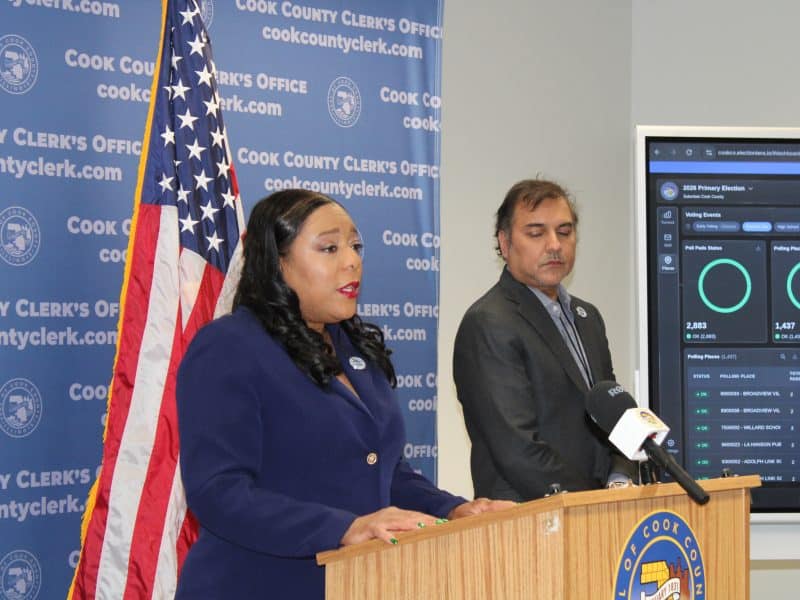
Cook County Clerk launches election tool to monitor real-time activity
The platform allows the clerk, which oversees elections, to track turnout, mail-in ballot activity, and aggregated data across the suburbs, promoting voter confidence.
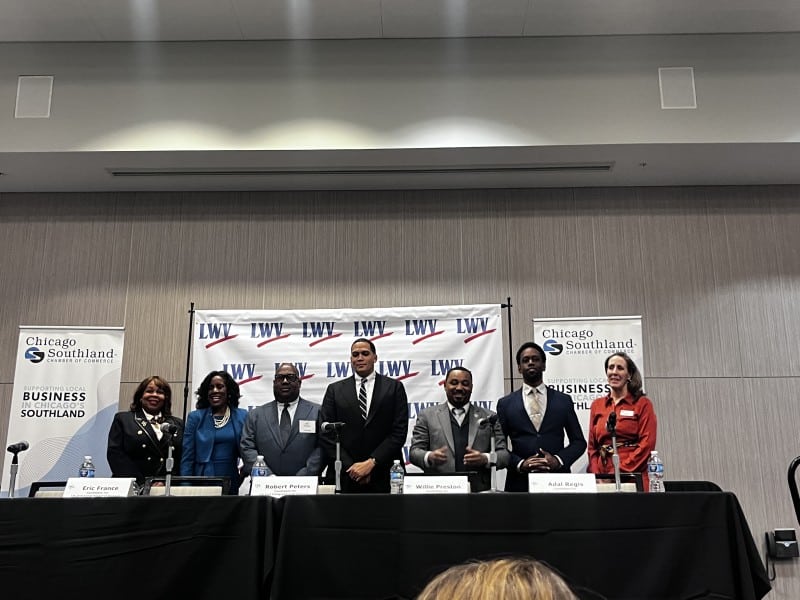
Southland voters seek economic development ahead of 2nd Congressional district race
After a forum featuring candidates in the race for Illinois’ 2nd Congressional district, Southland voters reflected on the objectives they seek from their ideal candidate.

PHOTOS: In Dixmoor, a Cook County commissioner’s home languishes
While the 5th district’s Kisha McCaskill claims tax exemptions that reduce her bill on a Dixmoor home, it’s become an eyesore without proper upkeep.

