
How Black women are challenging the idea that adoption is ‘white folk stuff’
Films like 2009’s “The Blind Side” have amplified superficial images of Black adoptees, some critics say. Two women launched a daring podcast that offers much fuller tales of what it’s like to be Black and adopted.
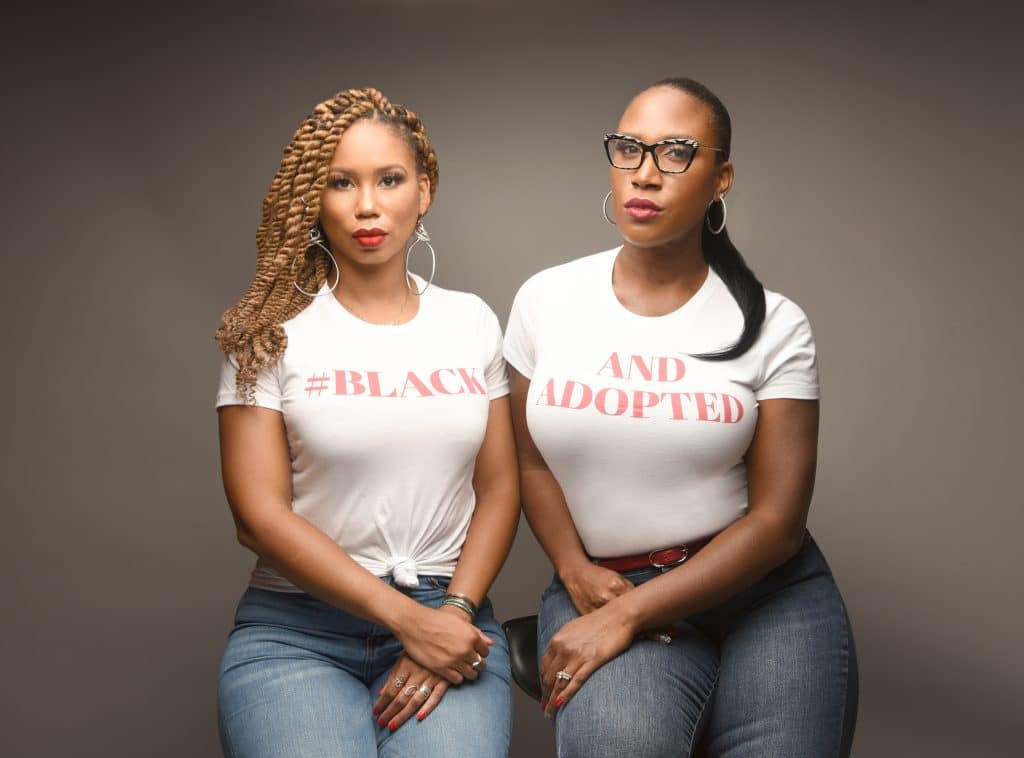
Sandria Washington spent nearly four decades of her life believing she was the biological daughter of Alexandria, nicknamed “Ella,” and Carlos Washington, but at age 38, she discovered a family secret that her parents wanted to remain undisclosed.
It was a fateful Thanksgiving holiday in 2017. “I thought you already knew, but I wanted to let you know you’re adopted,” a cousin wrote in an Instagram message. “I want you to have an opportunity to know your story and be happy.”
Washington didn’t know how to react. Her family never shared how they knew about it. “I had never heard any whispers,” Washington said. “Nobody had ever teased me. Nobody had let something slip. I had never seen any paperwork and so I just didn’t know what to do with it,” she continued.
Born and raised in Chicago, she spent her formative years living in the south suburbs, then moving to Harvey, graduating from Thornton in 1998. The youngest of two children, she and her older brother lived with their parents as a family until they separated when Washington was around five or six years old.
Ella then decided to raise her two children on her own.
Things seemed pretty normal until 2009 when her health declined. After two years of rehabilitation following a surgery to remove a blood clot, Ella passed away.
Washington said her mother’s passing inspired her to take her own life more seriously. “When my mom passed, it really amplified it for me,” said Washington, who had taken an Ancestry DNA test in 2014.
She wanted to learn more about her family’s history but had little information since her grandparents and aunts had already passed. “I was kind of on these parallel journeys of looking for family stories and then also just focusing on my health,” Washington said.
The bonds Black families built have always contested the nuclear family household structure. Play cousins and neighborhood nephews abound. However, conversations about Black adoption remain elusive although it’s increasingly common.
Washington, now 43, is trying to change that. She partnered with friend and professional development leader Samantha Coleman, 43, and launched a podcast, “Black to the Beginning: The Black Adoption Podcast.”
Now in its fourth season, it’s touched other Black adoptees with similar stories and backgrounds of their own.
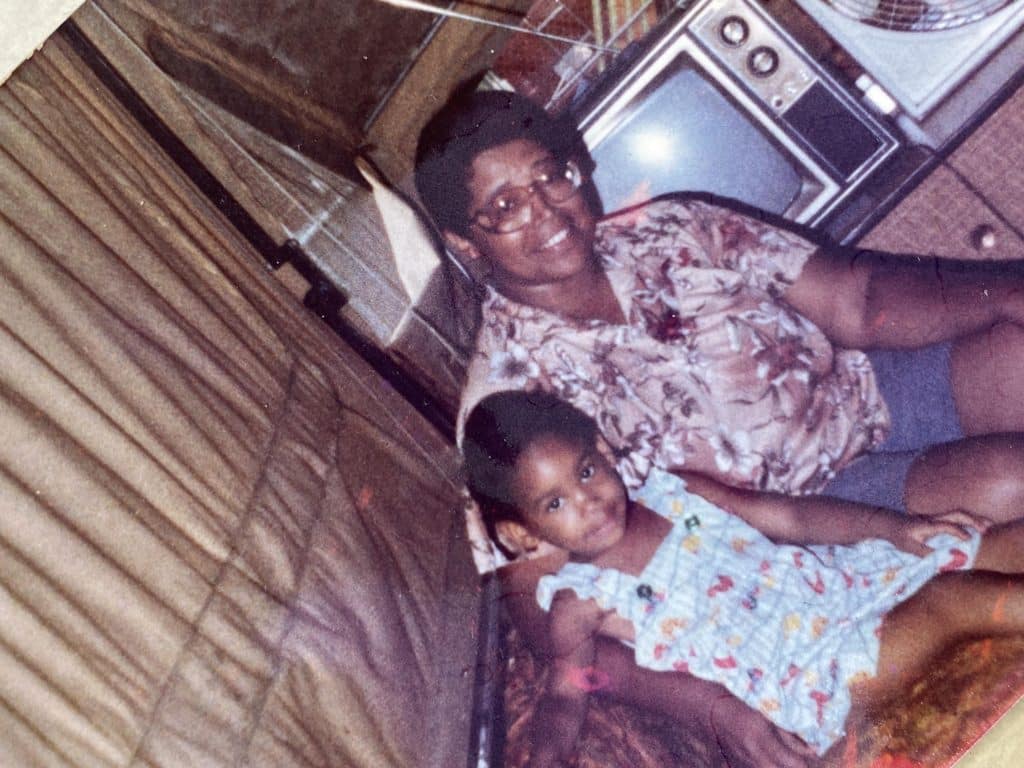

At 26, Coleman’s mother had revealed she was adopted. She said it was a “gut punching” moment but was “relieved” since she always felt different than everyone else.
“I don’t know anything about Black folks, in particular, being adopted by Black people,” Coleman said. “You know, even back then it was like, that’s some white folk stuff right there—like no one’s talking about Black people.”


Black children are overrepresented in the foster care system. In 2018, Black children represented 14% of the total population but 22% of children in the foster system, according to a report from the Annie E. Casey Foundation. By comparison, white children represented the nation’s largest child population at 49% and 43% of the foster care population.
Forced family separation isn’t new. Removing children from parents extends as far back as enslavement, when newborns were readily ripped from mothers. Its contemporary sister—the child welfare system—is frequently contested for systemic abuse and neglect.
Kinship care without government or state involvement has become customary in communities of color.
Months after that fateful Instagram message, Washington’s aunt confirmed she was adopted during an emotional phone conversation.
“I remember standing in the kitchen hearing her words for the first time, and it was like one long tear fell down,” Washington remembered.
She continued: “I was just trying to process it because I had used those few months between then and Thanksgiving to just even wrap my mind around the possibility that it could be true.”
Washington’s parents never revealed how she was adopted. Instead, she recalled her aunt saying, “[Ella] popped up one day and said,’We got the baby girl.’” And the conversation ended.
Angela Tucker had a different adoption experience than Washington and Coleman. She’s a transracial adoptee—adopted by a family of another race. The author of “You Should Be Grateful: Stories of Race, Identity, and Transracial Adoption” and founder of Adoptee Mentoring Society, a Washington-based organization that helps adoptees build community, said she felt “tokenized” growing up as Black girl in a white household.
“What happens for me and for many transracial adoptees is that we become tokenized and the stereotypes that are thrust upon us,” Tucker said, adding, it wasn’t until college she “had to reckon” with her own “blackness and my identity.”
White families may be deemed more favorable over Black families in providing Black children with a loving home and positive environment. There’s also the appeal of the white savior. But those narratives can sometimes have violent consequences.In 2018, two white mothers committed murder-suicide, driving a car off a mountain cliff while all they and their six adopted children—all Black—were inside. The parents had a documented history of abuse allegations against them. The children were never removed from the homes.
Tucker said there’s a significant difference between Black and white families and their viewpoints on adoption. Black families are less likely to talk about adoption in the community for many reasons, including embarrassment and shame.
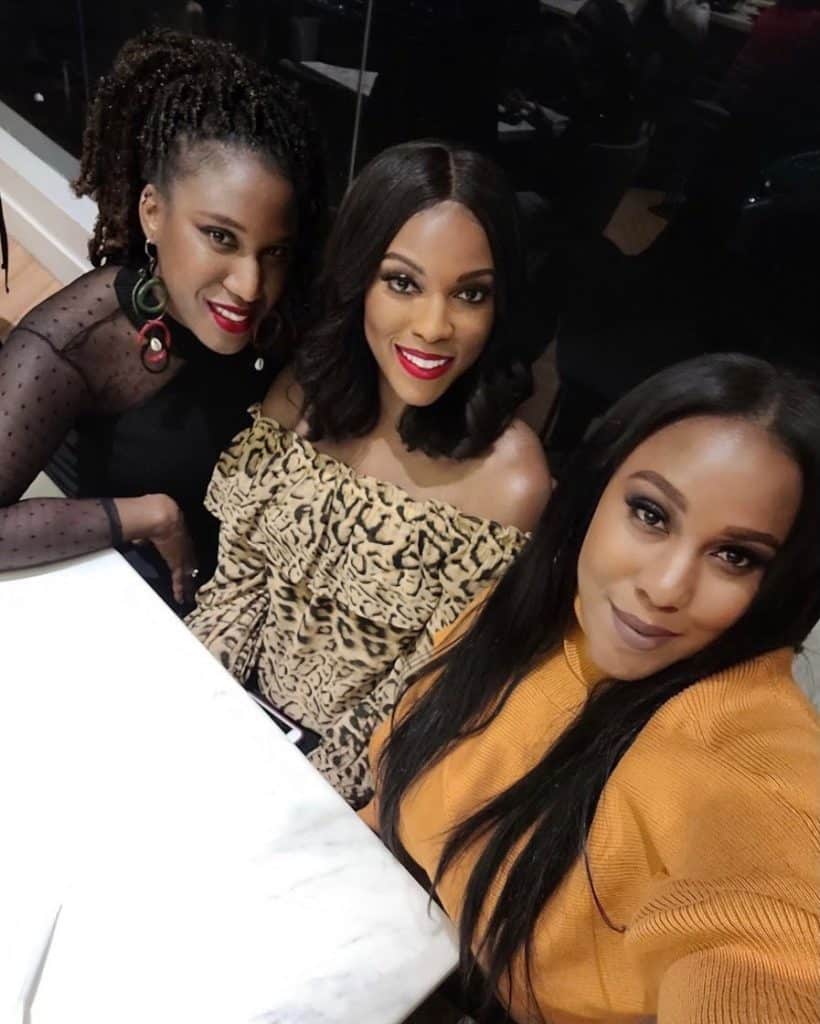
“They may feel embarrassed that they had this child [and] gave it up for adoption, or choose not to talk about it or don’t want to tell that child later on that they may have been adopted,” Tucker explained.
However, Coleman contended this behavior dates back to slavery, where Black people were “conditioned” to silence and met with harsh consequences if they verbally shared how they felt.
Washington wondered how the family secret had affected her own mother. “I don’t know if it’s something that she thought about every day or if it’s something that maybe crossed her mind at certain times of the year, or if she saw something on TV that might have triggered her memory,” Washington said.
The DNA test Washington initially took in 2014 eventually helped her discover her biological parents and four sisters. She has spent the past five years establishing relationships with her biological parents and four sisters.
“[I’ve been] building relationships with my sisters and slowly building a relationship with my birth mom and, you know, just trying to figure out […], even at this point, what does that look like five years later [since I found out]?” Washington said.

“There’s more transparency and more people in this Black adoption conversation who feel like they have agency and they’re empowered to finally tell their truth,” Washington said.
The podcast duo will soon be featured in “A Year of Black Joy: 52 Black Voices Share their Life Passions,” an uplifting anthology about the Black experience. It will be released October 10, and is available for pre-order now.
We’re filling the void after the collapse of local newspapers decades ago. But we can’t do it without reader support.
Help us continue to publish stories like these
Author

Related Articles
County commissioner committed ghost payroll at Harvey library, trustee alleges
Harvey library trustee Chapelle Hooks reported paid library consultant and Cook County Commissioner Kisha McCaskill (5th) to county and state lawyers alleging McCaskill paid a library administrator who had already been terminated.
Harvey library trustee blasts board for six-minute meeting
Harvey Public Library District trustee Chapelle Hooks criticized the board for holding two meetings this year that totaled 10 minutes of official business.
Harvey Park District blocking commissioners from performing duties, lawsuit alleges
Longstanding commissioners and the executive director have blocked La’Keisha Brown-O’Neal, elected in 2025, from accessing facilities, her email, and documents, according to the complaint.

