
“We belong in all of these spaces” : Chef Damarr Brown heats up Chicago’s restaurant scene
The award-winning 2023 James Beard chef and Harvey native talks about his grandmother’s influence on his cooking, representation in the culinary world, and his technique.

Post-church meals kickstarted Chef Damarr Brown’s culinary journey at only eight years old.
Now, the acclaimed chef and Harvey native is igniting Chicago’s Hyde Park neighborhood through southern cuisine.
Brown was recently named Emerging Chef of the Year at the James Brown Foundation Restaurant and Chef Awards, often depicted as the Grammys of the culinary world. In 2022, he competed on Bravo’s “Top Chef” where he finished in the final four and was voted “Fan Favorite.” Food & Wine Magazine later named him one of their 2022 Best New Chefs.
Although earlier in his career, this much success seemed far from reach for a Black chef.
Southern food was a staple in Brown’s childhood. Because of the Great Migration, his grandparents and their parents traveled from different parts of the South and continued their culinary traditions and techniques, passing them on to later generations.
Growing up on 156th Street, Brown spent a lot of time in the kitchen with his mother, grandmother and aunt. Before heading to Treasure from the World Church in Calumet City, his grandmother would start meals in the crockpot. The aroma of pot roast, carrots and potatoes filled the kitchen when they returned. Brown assisted with tasks like cleaning green beans and making lemonade.
His mother noticed his interest in cooking and introduced him to television programs starring culinary icons Julia Child and Emeril Lagasse.
“[Emeril] would be roasting a chicken one minute and playing the drums the next… it all just seemed very exciting,” Brown said. “I think I’ve always carried that with me, that having fun in the kitchen and enjoying what you’re doing was really important.”
Brown continued to cook as a teenager, now expanding his craft to the neighborhood. He realized he could cook full-time after one particular church meal.
“I was cooking this meal of fried chicken, mac and cheese and collard greens…At the end of it, [my grandmother] was like, ‘This is so good,’” Brown recalled, “and ‘I’m so proud of you,’ and that was one of the only times where she kind of glistened up about it.”
Although his grandmother was always proud of him, she wanted him to stay humble. She would even describe his food as just “okay.”
“My grandmother, I think like a lot of grandmothers, never wanted my head to get too big,” Brown said. “There’s this saying in my family of not keeping your highs too high or your lows too low, so she encouraged me to stay in the middle.”
“After having that feeling from feeding my community and making my grandmother really proud, I was like, ‘I could probably do this forever,’” Brown continued.


Brown studied at the Cooking and Hospitality Institute of Chicago (now Le Cordon Bleu College of Culinary Arts in Chicago). Towards the end of the program, he began searching for an externship, specifically for a chef who looked like him.
His friend directed him to mk The Restaurant, the now-closed River North upscale eatery where executive chef Erick Williams ran the kitchen. Brown had never seen someone who looked like him in charge of a kitchen like mk’s, making this opportunity particularly exciting.
“He had this pristine white chef coat on with the ‘mk’ emblem on the left side and ‘Erick Williams’ written under it, and he looked like all the other chefs as far as technique, how he was dressed and the kind of food he was cooking,” Brown said.
Brown had few Black culinary role models and colleagues at this point. Upon entering mk and meeting Williams, his dream of becoming a chef—a Black chef—became more tangible.
“I had been reading all these old French cookbooks, looking at all these old television shows with all these caucasian chefs,” Brown said. “This was the first time that I had seen, in person, this Black guy who was in charge of this classic French kitchen, and he was doing all those same techniques I had been reading about for years.”
This was Brown’s first time working in a professional kitchen, which he described as very “fast-paced” and “intimidating.” Nonetheless, Brown worked his way up from a prep cook to sous chef. After working at mk for seven years, he briefly carried his sous chef skills over to Alinea group’s Roister in Fulton Market.

Brown would soon reunite with his mentor. In November 2018, Chef Williams opened Virtue, a Southern American establishment in Hyde Park, with Brown serving as the chef de cuisine. According to Williams, the duo works on “kindness and respect under pressure” to maintain Virtue’s success.
“Damarr has more patience than I do, however, we work together on service to the community,” said Williams.
Brown described Virtue’s food as “personal.” This was his first opportunity professionally cooking Southern dishes he grew up eating.
Chicken, blackened catfish and summer squash–with a twist on Brown’s childhood classics–are just a few dishes that spice up Virtue’s menu.
“You won’t be disappointed by any [choice]. The menu is both simplistic [and] pleasing to your taste buds,” said Tamarra White, an Avalon Park resident. “I make sure [to] visit Virtue at least once a month.

Over time, Brown realized that everything his mother, grandmother and aunt taught him were actually techniques, and it took him a while to appreciate them as such.
“I spent at least the first ten years of my career…having full-circle moments where [I realized] the way my grandmother cleaned collard greens was technique—the way she made pan gravies and the way she spread beans out to pick out the broken ones…that was all technique and should be valued,” Brown said.
Brown’s work isn’t over yet. His goal is to continue to push equity in culinary spaces and hopes people will see him as a positive example.
“We belong in all of these spaces, not as the background but the forward and the leaders,” Brown said. “I hope the narrative we’re pushing at Virtue [and] the success we have inspires someone, and they can look in our windows and see themselves.”
We’re filling the void after the collapse of local newspapers decades ago. But we can’t do it without reader support.
Help us continue to publish stories like these
Author

Related Articles
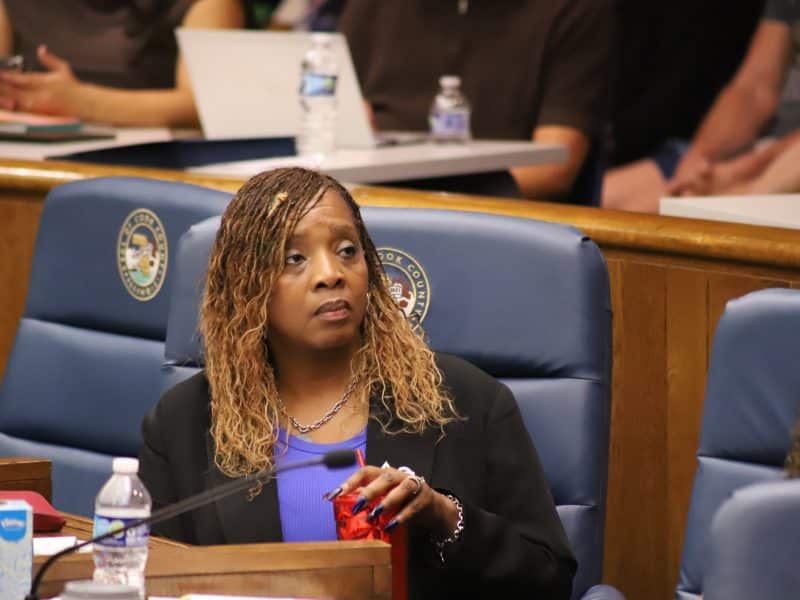
Kisha McCaskill filed for library board seat where husband is president
She has a paid library contract that translates to $2,000 a month. She eventually withdrew from the race for a two-year term, but not before daughter Amari McCaskill filed as a write-in candidate for that very seat. As a county commissioner, Kisha McCaskill represents the Southland and Chicago’s Far South Side.
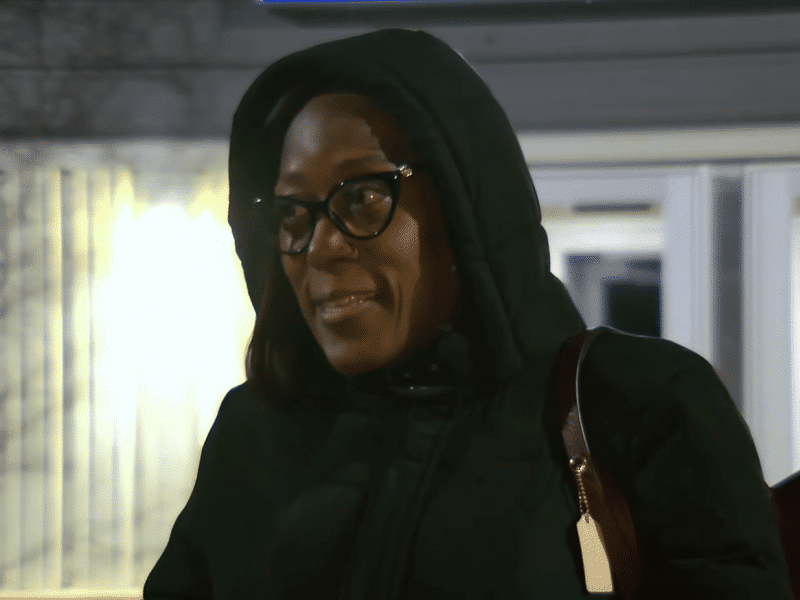
Harvey Park District cancels meeting, leaving residents in freezing cold
A representative at the headquarters indicated via phone call earlier that day that the meeting would be rescheduled. But since no notice was posted online or in-person, residents still showed up.
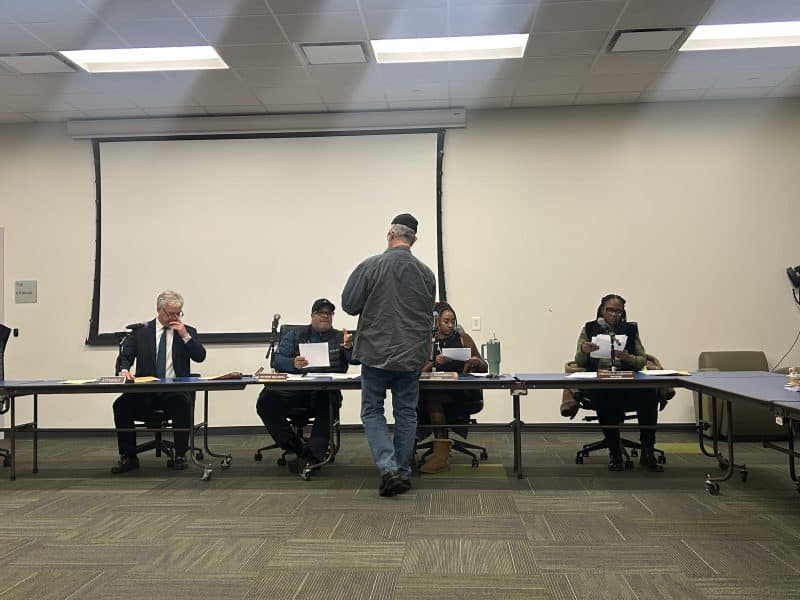
Harvey library trustee files another lawsuit over alleged ADA violations
Charwana Morgan has been requesting remote participation in board meetings due to her severe medical condition. After numerous rejections by the board, she is now fighting back with an updated lawsuit.

