
How a land trust revealed administrative shortfalls in Harvey’s water customer service center
Erika Tukes attempted to start water service at her mother’s home. Then, her uncle illegally moved in. Water department representatives let him use an outdated will from 2001 to start water service at the home in his name. It got worse from there.

Linda Cobbs inherited a charming home on a quaint block off the bustling 160th Street corridor.
She currently resides in Kentucky, so her daughter spent the summer getting the home ready before she returned. Linda granted her daughter permission to handle legal matters for her until her arrival.
Linda’s brother Douglas was livid their mother, who passed away in May, gave Linda the home. That didn’t stop Douglas from changing the locks and illegally occupying the property.
In June, per his request, water department workers turned the water off in his mother’s name and resumed service under his own. To validate his address, he used an expired will from 2001, which lists him and siblings as “co-tenants,” fraudulently passing it off as mail.
He resided there for a month. The family served him with an eviction notice. Douglas paid the water bill in full, turned the water off, and vacated the property.
But the situation worsened. “The harm started once we tried to get that water turned on because no one knew how to handle it,” said Erika Tukes, Linda’s daughter.
“It” was a land trust. That’s how Linda Linda inherited the property, and the paperwork Tukes brought to City Hall. Simply put, land trusts are a way to hold and manage properties. Increasingly, they’re used to build intergenerational wealth. Linda’s mother established the trust in 1973.
For three months, city staff gave the women the run-around as they determined how to approach the matter.
Land trusts can confuse the most savvy of real estate experts. Most law schools don’t teach land trust litigation, one legal expert told the HWH.
To establish a land trust, two documents have to be drafted: a trust agreement and deed. The former explains how the property is to be governed while the latter proves and transfers ownership. An attorney usually assists with this process.
Only seven states, Illinois included, recognize land trusts as a method of title.
The “unknowing” didn’t bother Tukes—so much as the inability to admit to it did, she said.
As complaints about the water department grow citywide, the debacle weakens confidence in Harvey’s performance as a water supplier.
Mountainous hurdles
In late July and early August, Tukes contacted the water customer service center to inquire about necessary documents to turn the water on in her mother’s name.
A homeowner would need a copy of the deed and personal identification, according to the city’s website.
A representative said Tukes needed a copy of the will, the land trust paperwork, a copy of Linda’s identification, and a notarized letter stating Tukes could speak on Linda’s behalf.
When she brought the items to City Hall, Deputy City Administrator Chandralyn Ellis was looped in. Ellis gathered the documents and consulted with city attorney Louis C. Raymond regarding next steps, Tukes said.
For weeks, Raymond had numerous requests—and they frequently changed. Get a meter reading. Pay for water transfers. Hire an attorney. Complete estate transfer documents.
Raymond even had the family complete property transfer documents showing Linda as both the buyer and seller—even though no transaction had occurred. “Even someone who has no real estate background knows that makes no sense,” Tukes said.
Each time, they complied. Raymond notarized the paperwork. The email chains got longer. Legal fees mounted—nearly $1,000, according to Linda. Still, no water.
On August 17, a laborer went to the property to conduct a meter reading. That was required prior to service, Ellis told Tukes.
She missed them.
Tukes was at City Hall with Linda, who made a near 300 mile trek from Kentucky, per Raymond’s request to meet them. But upon arrival, Raymond abruptly needed to reschedule.
As they waited in the water customer service center vestibule, mayoral staff taunted them. “‘Look at ‘em,’” they mocked, Linda said. “I was sitting there in tears.”
Tukes later spoke with Krista Shelton, a mayoral assistant, and urged Shelton to reach Ellis, Raymond, and others on her behalf, Tukes said. “She’s like, ‘Nobody would respond to me.’”
In one of the few instances she was able to speak with Raymond in-person, Tukes regretted it. “I said ‘Hey, you see that level of frustration you have? Imagine that times 100,’” she said. “‘His exact words to me [were], ‘The difference is, I don’t have to help you.’”

In an email to the HWH, Raymond declined to comment, deferring the matter to City Administrator Corean Davis. Davis did not respond to requests for comment.
According to Linda, her brother knows Mayor Chris Clark, who Linda said helped her brother get the water turned on.
Tukes sent numerous emails, including to Clark, who did not respond to requests for comment.
City spokesperson Glenn Harston II did not respond to requests for comment.
Little accountability or oversight
Illinois’ oversight entities are largely designed for private utility companies, leaving consumers in places like Harvey with little resources to remedy issues with municipal-owned utility services.
Tukes sought assistance from the Illinois Attorney General’s Office and the Citizens Utility Board, an organization that advocates for residential utilities consumers statewide, to no avail.
The state’s municipal code allows for cities to own, operate, and regulate their own utility services, limiting services the Attorney General’s Office could provide consumers, a spokesperson told the HWH.
And municipal-owned services, they added, don’t fall under jurisdiction of the Illinois Commerce Commission, which regulates public utilities.
Generally, CUB advises consumers to escalate issues at the village-level or contact their state dignitaries, which may have an appointed staffer assigned to constituent services, a CUB spokesperson said.
The title company trustee jumped in, even having to explain legalese to Raymond and others.
“A facsimile is only when an Assignment of Beneficial Interest is done. This was not an assignment; it was an acceptance of interest because the primary beneficiary passed away. Feel free to call me on this,” she wrote.
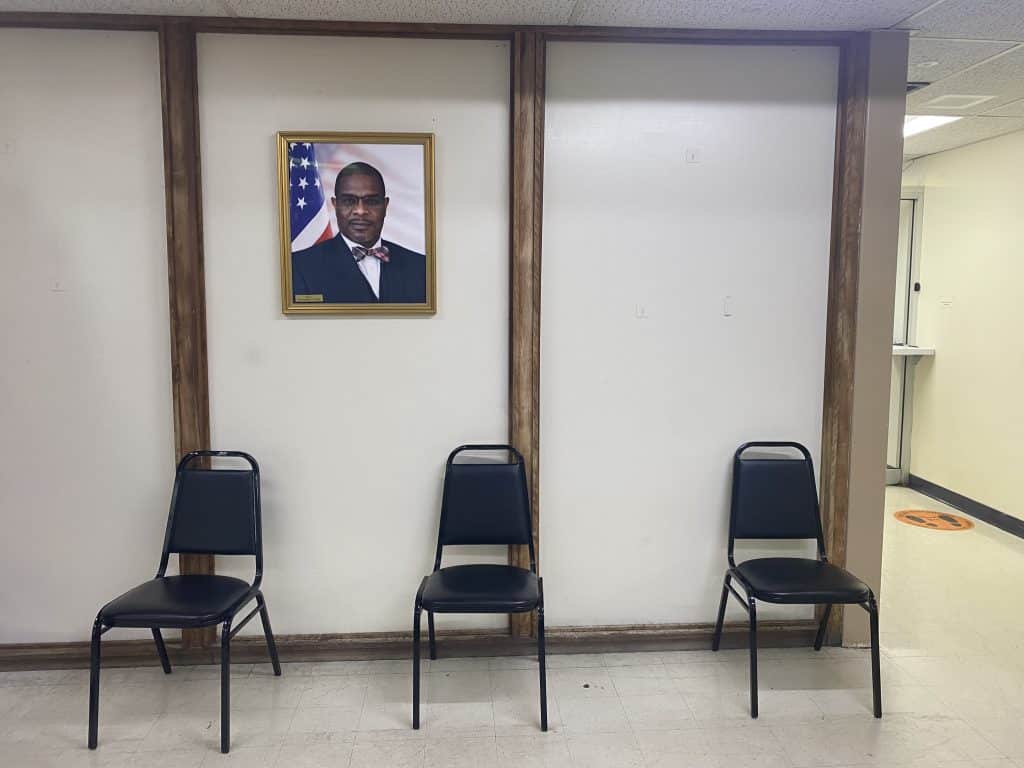
The pair’s trust in Harvey was so low they never bothered to contact Alderwoman Colby Chapman (2nd). Linda surmised Chapman helped Douglas get water turned on at the home.
But Chapman had no clue about anything, she said: neither the mayor’s office nor the water department ever alerted her of problems at the property, which sits in her ward, Chapman said.
Tukes was alarmed to see such a small community have bureaucratic woes she hasn’t even experienced in a large city like Chicago, where she lives, she said.
“Trying to meet the attorney and see the mayor was like trying to meet President [Joe] Biden,” Linda said.
City staff could have collected the paperwork and followed up in two or three weeks after they had done their research, Tukes suggested.
The family just wanted a better customer service response, they told the HWH. At one point, Raymond refused to give their attorney his phone number to talk, Tukes said.
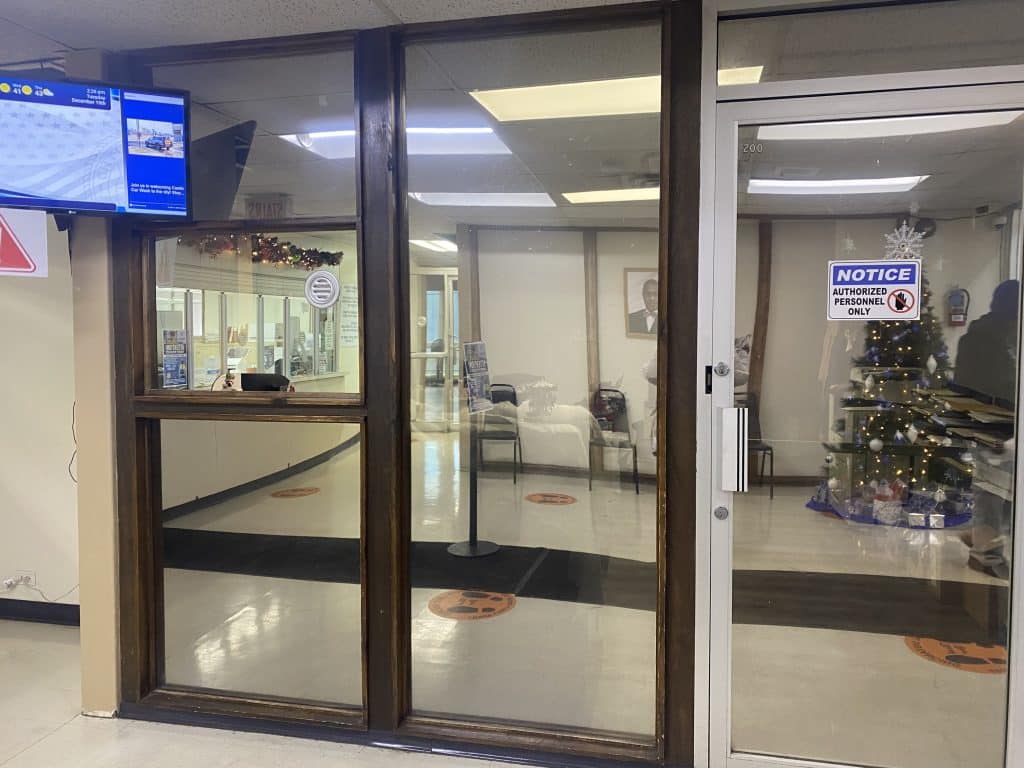
Complaints regarding the water customer service experience are frequent.
“As many times I’ve been in there now, I’ve seen people come in there completely frustrated, and not get help,” Tukes said.
Chapman echoed that sentiment. Some workers “are proactive about customer service,” she said, but that’s not the case for “the vast majority.”
‘Need answers’
In mid-September, a laborer abruptly came and finally turned the water on, but conundrums remain.
Douglas used a will—outdated, no less—which describes how one would like a property distributed upon death and whose or maintain the property prior to, to start water service without issue. Tukes brought a recent will—and more—and was sent on a goose chase.
Douglas broke into a home. It’s unclear if the police were involved at any point.
“Why didn’t that immediately happen?” Chapman griped. And “from a compliance standpoint,” it’s alarming Douglas could use antiquated paperwork to begin service at a property he illegally occupied, she continued.
The mess underscores a broader problem with transparency and efficient governance in Harvey, Chapman said, that even has alderpersons feeling left out of city happenings.
Chapman requested “no trespassing signs” from the city for abandoned properties in her ward and financial invoices, but has yet to receive anything, she said. She once complained the city’s complaint system was down for several weeks. She didn’t receive much information from mayoral staff about when that’d be resolved, she said. Now, it’s back online.
It’s a metaphor for Harvey’s administrative processes: “If the elevator isn’t working, then how do we maneuver through the building? These are questions that really need answers,” Chapman said.
Tukes sympathized with water customer service representatives, saying they were probably just doing “what they were trained to do” when they started service for Douglas. But she’d like policy change so Harvey’s processes are updated to prevent issues for Harvey residents in the future.
She and her sister are preparing the home for Linda, who’s healing from surgery.
Upon return to Harvey, Linda intends to do “Meet the Mayor” —available to Harvey residents to speak with Clark for 15 minutes and discuss their concerns—and meet Raymond.
It’s ”not to be confrontational,” she said. Instead, she wants to partner to educate other residents on land trusts.
She’s also trying to reconnect with her brother. He’s ignored her, she said.
“I love my brother, he’s a part of me, and my mother would not want us to be like this,” Linda said.
“I think it’s necessary to clear the air and find some peace.”
We’re filling the void after the collapse of local newspapers decades ago. But we can’t do it without reader support.
Help us continue to publish stories like these
Author

Related Articles
EyeOnWater helping Phoenix residents avoid high water bills by spotting leaks
The free online tool allows users to track water usage and set up leak alerts.
All hell breaks loose at Harvey Park District board meeting over alleged mismanagement
The board abruptly adjourned less than 10 minutes after two commissioners called foul on operations, leadership, and finances.
‘Lessons from the Harvey experience:’ MWRD to improve community outreach for future stormwater projects
The Metropolitan Water Reclamation District plans to increase small-group public engagement surrounding future projects involving eminent domain and the acquisition of private property.

