
In light of layoffs announcement, Harvey City Council debates city spending and noise violations
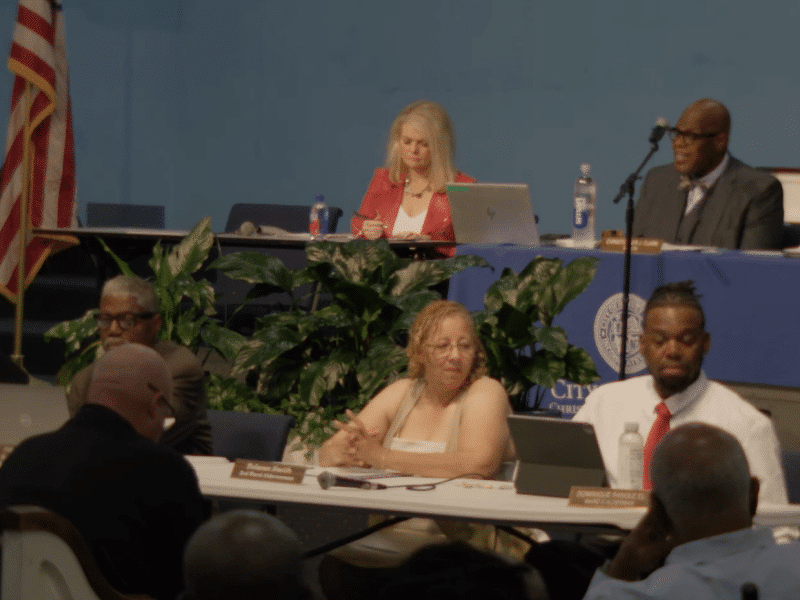
Harvey City Council approved expenses and raised fines for noise violations at its July 28 meeting, decisions that came just three weeks before plans to lay off 10 percent of its workforce.
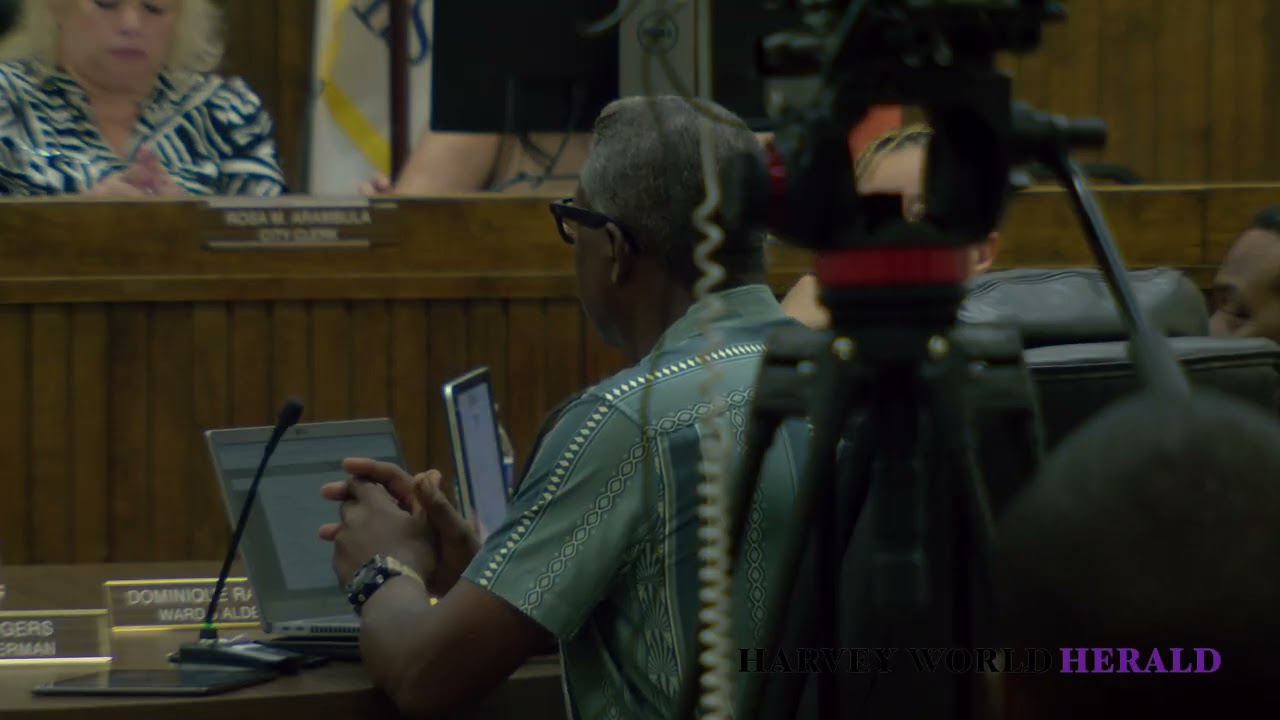
The Harvey City Council meeting on July 28 concluded with the approval of Spending and increased fines for noise violations, financial discussions coming three weeks before the city planned to lay off 10 percent of its workforce.
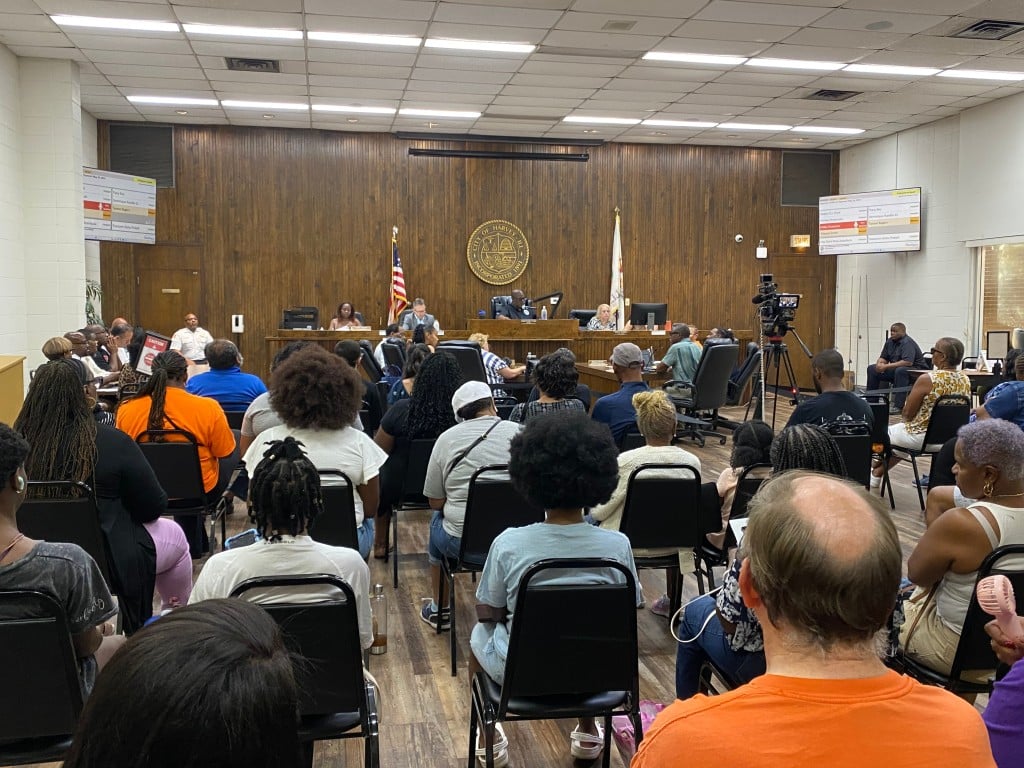
Concerns over the layoffs, delinquent audits, and larger questions about Harvey’s fiscal health surfaced in a packed finance committee meeting earlier that evening.
“We are three or four years behind on financial reporting” to the state comptroller’s office, resident Amanda Askew said, which could give them an incentive to “take a portion” of the city’s funding because they find Harvey to not be a “fiscally sound city.”
But Ald. Tyrone Rogers (6th) later highlighted progress. He noted Harvey’s debt has declined from $164 million in 2019 to an estimated $149 million, the council “working diligently” despite challenges.
Council approves spending amid calls for more financial clarity
The council approved payment lists from May 26, June 23 and July 28, which detail vendor payments for city services, infrastructure projects, and events. The July 28 list included more than $180,000 to BNF Construction for inspections and permits, $6,000 for plan reviews, and thousands for Fourth of July events, including a moonwalk rental costing over $24,000.
Mayor Chris Clark stressed that events, specifically, were in-kind donations from local businesses to support special programming for residents.
Still, two alders dissented to the bills list. Generally, council packets, including the list of expenditures, are prepared and provided to alders upwards of one week prior to sessions for alders. Finance committee meetings, where members review the bills lists and hear from comptroller Louis Williams, are held prior to the regular council meetings. According to the pair, that leaves little time for them to ask questions.
“Without having any further insight, I ask the chair as well as the members, could we refer this back to the finance committee,” Ald. Colby Chapman (2nd) said, “all bills list for further review as the residents stated they need additional oversight, transparency, and fidelity regarding the bills list?”
Ald. Tracy Key (4th) echoed Chapman’s concerns, noting that the finance committee had met just an hour earlier. He questioned how the council could approve thousands of dollars in spending with almost no time for follow-up.
Finance chair Ald. Tyrone Rogers (6th) said Chapman had emailed him 12 questions before the finance meeting.
For questions he did not have answers to, “These questions would have to be referred to the mayor’s office,” Rogers said. “We don’t have that particular pertinent information.”
Rogers also pointed out that additional questions Chapman raised during the council meeting were never raised during the finance meeting, despite Chapman having the time to do so.
Noise ordinance update raises equity and enforcement concerns
The council voted to amend fines for noise violations, approving an updated ordinance that increases base penalties for noise violations to $175 for residential violations and $500 for commercial properties.
The changes aim to address recurring complaints about fireworks, loud music, and car rumbling citywide. While most council members supported the update, Chapman questioned its impact on low-income residents in a city where more than 25 percent of residents live below the poverty line, about twice the statewide rate.
“I think that a one-time cost at $500 is extremely high for our community and for our annual earnings here in our community,” Ald. Chapman (2nd) said, calling for a tiered system.
Ald. Dominique Randle-El (5th) agreed that cost can be an issue, but said the solution is to follow the law. “If you are not financially able, then one thing you should do is obey the law.”
It’s a “common sense ordinance,” Randle-El said. “It does not dawn on you that maybe I shouldn’t sit in front of his house, okay, and let my trunk rattle while drinking some Hennessy. Nobody wants to hear that.”
Mayor Clark said the city’s approach would start with education, noting that officers give warnings before issuing fines. “You can tell if they’re doing it because they just don’t know or they’re doing it because they just don’t care.”
Resident presses for accountability during public comment
Melissa Crawley announced plans to file a lawsuit against the mayor. In June, she was detained after she was seen streaming live on social media outside of the mayor’s home. The mayor has a gate surrounding his home and multiple police vehicles provide security.
When the HWH reached out to Clark for comment, he directed the HWH toward statements he made on his personal Facebook page, along with video footage from his home’s doorbell camera.
Qualifying that the video does not show the entire footage, he decried Crawley’s presence at his home, writing “if you come by the house of an elected official or anyone else for that matter, acting irrational, illogical, irate, and erratic (case in point), you may end up being arrested.” He added that a rational person simply walks up and rings the doorbell.
While Crawley’s actions “may not have been a threat,” Clark wrote, “the behavior could be considered assault.”
We’re filling the void after the collapse of local newspapers decades ago. But we can’t do it without reader support.
Help us continue to publish stories like these
Author

Related Articles
Harvey approves redevelopment agreement with LLC associated with attorney saddled with complaints over real estate litigation
Turlington Homes will redevelop 10 city-owned properties along 151st St. and Turlington Ave., with sale prices ranging from $168,000 to $248,000.
Thornton Township trustees pass ordinance to authorize recurrent bills before board approval
The ordinance will allow pre-approved township services to be paid before meetings. Meanwhile, the township is working on uploading all ordinances to its website.
69 city employees furloughed days after Harvey declares ‘financially distressed’ status
The vote marks the beginning of hopes the Illinois Department of Revenue will assist the city, which is in financial distress. But not without a slowdown of city services after furloughs and layoffs.

