
Private property rights and eminent domain, explained
Here’s what you need to know about private property seizure, the challenges faced by communities, and resistance strategies.
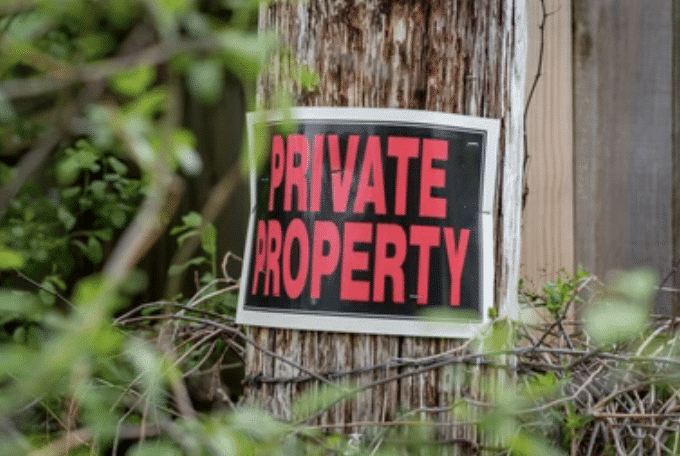
As a water retention pond threatens to displace longtime Harvey residents, some are left wondering, is this eminent domain?
The Metropolitan Water Reclamation District has signed an intergovernmental agreement with Harvey to acquire the properties of several longtime residents 153rd Street & Myrtle Avenue for a stormwater management and park project.
The power to conduct private property seizure is derived from the “Takings Clause” of the Fifth Amendment of the United States Constitution and is designed to balance the needs of the community with the protection of individual property rights.
But it can be pretty wonky, especially for those without a legal background.
Here’s what you need to know about private property seizure, the challenges faced by communities, and resistance strategies.
What is eminent domain?
Eminent domain is the inherent power of a government to take private property for a public purpose. There are two qualifications that must be met for a governmental authority to exercise eminent domain to claim private property: just compensation and public use.
This relocation typically involves compensation or relocation assistance, which is currently being offered to Myrtle Ave. renters and homeowners.
How are states protecting individual rights?
In 2005, the Supreme Court’s ruling Kelo v. City of New London gutted federal protections against eminent domain, granting local governments the authority to seize private property from one individual and transfer it to another private entity.
According to the Institute for Justice, a nonprofit organization and national civil liberties law firm, following that ruling:
- 47 states have fortified protections of property owners against government takings.
- Twelve states have amended state constitutions to prevent eminent domain for private gain.
- Eleven state supreme courts have either enhanced safeguards for property owners or outright rejected the principles of Kelo.
In 2006, Illinois passed Senate Bill 3086, which limited the taking of private property for private development.
Why is eminent domain so hard to challenge?
Sometimes, legal aid is financially out of reach.
According to a survey from the Legal Services Corporation, a Washington, D.C. based organization which helps people secure legal aid, over half of low-income Americans weren’t sure if they could find or secure affordable legal assistance, if need be, in 2022.
In some cases, urgent public projects may limit the time available for residents to mount an effective opposition.
How can residents support one another?
When facing the threat of eminent domain, community members can adopt a proactive approach by developing a well-thought-out contingency plan.
Engage with developers or government entities to negotiate community benefits agreements or land trusts. These agreements can secure commitments for affordable housing, local employment opportunities, and cultural preservation.
Power Switch Action, formerly known as the Partnership for Working Families, has a toolkit on how to ensure community representation in the community benefits agreement process, what makes for an effective CBA, and creating accountability measures.
Should a cultural landmark, historical site, or community asset be affected, the National Park Service recommends contacting your state historic preservation office to learn how to navigate local zoning and land use laws.
Lastly, mutual aid, crowdfunding, and partnerships can help cover legal fees.
My property’s been condemned for a new development. I need legal assistance. Where do I go?
If you cannot afford an attorney, consider pro bono legal services in your area. Organizations such as the Illinois State Bar Association or American Bar Association’s directory of pro bono programs can connect you to attorneys.
Legal Aid Chicago or Prairie State Legal Services provide legal assistance to low-income individuals. Local law school clinics provide similar options.
Reach out to law schools in your area, such as University of Illinois College of Law, Northwestern Pritzker School of Law, or Chicago-Kent College of Law, to inquire about their services.
Research nonprofit organizations that focus on property rights, housing, or community advocacy that might have recommendations or resources for legal assistance.
You can also consult with attorneys who understand the intricacies of the process, evaluate compensation offers, and guide potential legal challenges, such as contesting whether the property is necessary for the project or is actually a public purpose.
Note: The contents of this report are for informational purposes only and do not, and are not intended to, constitute legal advice.
We’re filling the void after the collapse of local newspapers decades ago. But we can’t do it without reader support.
Help us continue to publish stories like these
Author

Related Articles

Mayor Chris Clark has died
He was elected in 2019 and re-elected in 2023.
Kisha McCaskill filed for library board seat where husband is president
She has a paid library contract that translates to $2,000 a month. She eventually withdrew from the race for a two-year term, but not before daughter Amari McCaskill filed as a write-in candidate for that very seat.

Harvey cancels public forum and City Council meeting
A public forum was set to discuss upgrades along Broadway Avenue.

