
Policing the police: The long road to independent oversight of Harvey cops
For years, city leaders have expressed the need for external oversight of Harvey police. So, what’s the holdup?

Ezra Hill’s pockets are set to get $3 million heavier. But it’s no gloating matter. Hill spent 31 months in Cook County jail for a crime Harvey police officers attempted to frame him for, a federal jury decided in June 2023.
Hill received an arrest warrant for attempted murder in March 2014 related to a drive-by shooting that year. Hill, a former boxing coach, let a few teenagers borrow his Honda Civic to find work. They used the car to shoot at rivals, driving back to Hill’s place.
No physical evidence linked Hill to the crime. Police arrested Hill and the teenagers, who said Harvey police instructed them to implicate Hill, the Chicago Sun-Times reported. The teenagers later recanted those statements.
“Ezra’s trial demonstrated that what happened to him was not simply carelessness, and that is troubling,” said Paul Vickrey, one of Hill’s attorneys.
The costs of police misconduct are unequivocal. It erodes trust in policing. It’s also expensive. In 2023, the Harvey Police Department cost taxpayers nearly $1 million in City Council-approved police settlements. For context, that figure represents almost one-third of the city’s net revenue in its general fund for the current fiscal year.
Cops robbing drug dealers during the crack epidemic. Federal raids at Dixie Hwy. police headquarters. Convictions of former officers who extorted tow companies and strip clubs. And now, an Harvey officer with a drunk driving record who killed two people in a vehicle chase in Hazel Crest last fall. One family filed a lawsuit, still pending.
For years, leadership has railed against or reneged on efforts to bring external oversight. And while the department’s issues are glaringly obvious, the road to police reform is filled with fiscal policy woes, political challenges, and procedural hurdles.
Bankrolling institutional change
According to a 2020 federal survey, almost half of departments nationwide employ less than 10 full-time officers. These smaller departments, where misconduct and brutality often go unchecked, often struggle with police reform. That’s a financial and staffing issue, experts say.
“[I’ve] never worked with a civilian oversight agency that had more staff or more money than they knew what to do with most of the time,” said Katherine McEllhiney, Executive Director of the National Association for Civilian Oversight of Law Enforcement. The nonprofit primarily helps support existing agencies and resources for jurisdictions nationwide to help establish more effective police oversight.
Community-involved processes generate greater trust in police, McEllhiney said, but oversight agencies “are scrambling to have the resources to carry out the mandate that they’ve been given.”
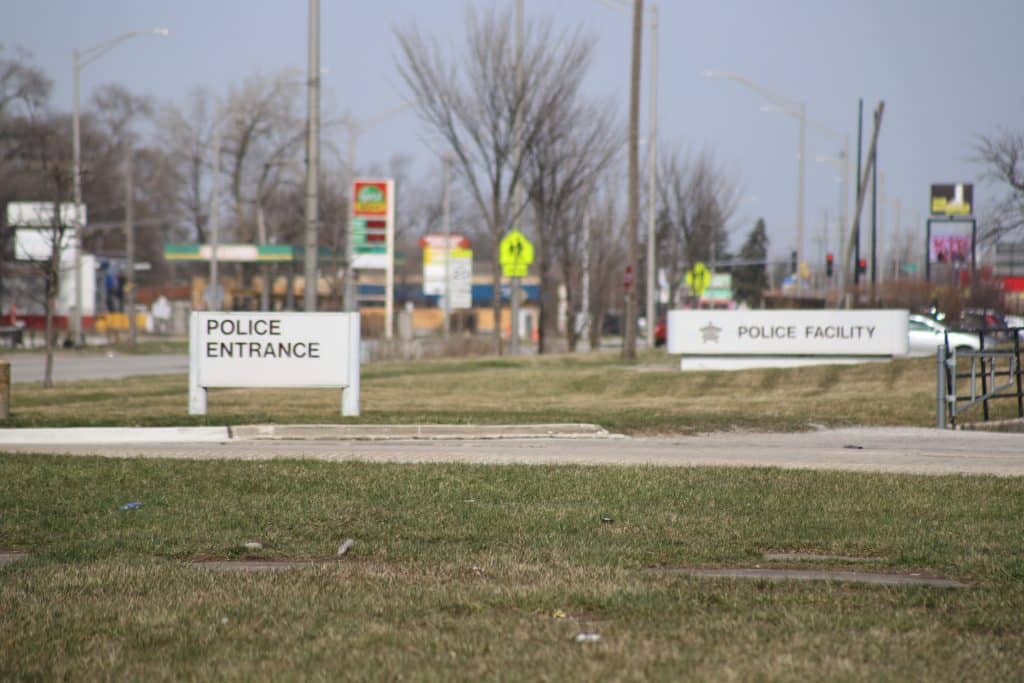
Oversight is also about political will. It’s unclear, however, if external oversight of Harvey police has City Council support.
Alderwoman Colby Chapman (2nd) endorsed community-driven and external police oversight ahead of the 2023 council races.
“A lot of our residents, I feel like they’re scared to say something,” Chapman said. “Black and Brown individuals especially, and the police—I mean, they’re like oil and water. [Residents] got to feel like they can trust [Harvey police], and they don’t feel like something traumatic is going to happen to them based on them speaking out their truth.”
“I don’t know what [Chapman’s] initiatives are,” Alderman Dominique Randle-El (5th) wrote to the HWH via text message. “But if [it’s] good for Harvey I will support it as I always have done.”
Alds. Tyrone Rogers (6th), Telanee Smith (3rd), Shirley Drewenski (1st), and Tracy Key (4th) did not respond to multiple requests for comment.
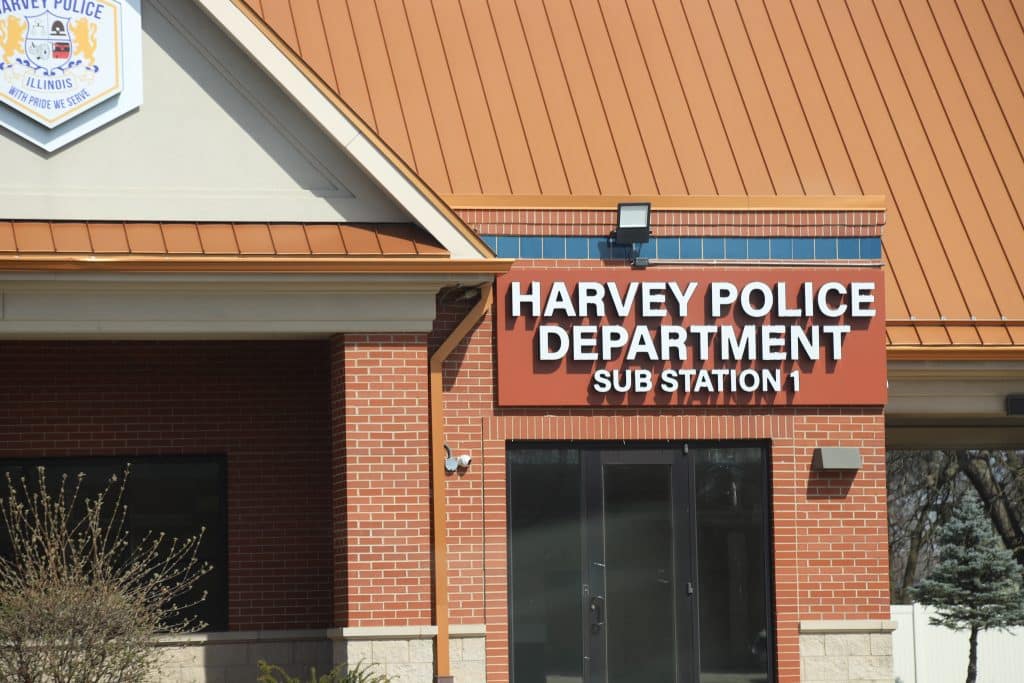
Mayor Chris Clark, who staunchly supported external oversight as alderman, hasn’t publicly endorsed the matter since becoming mayor in 2019. The mayor didn’t respond to requests for comment.
However, it’s unlikely Clark would endorse external oversight, which would put police and their relationship with city leaders under scrutiny, also. The mayor and Chief Cameron Biddings, an ally who Clark personally brought into the department in 2020 from nearby Dolton, recently requested a co-worker at Clark’s day job to investigate an aldermanic critic. One expert told the HWH the move, which presented a conflict of interest, was dangerous for Clark to abuse executive authority.
Oversight tends to ruffle rank-and-file, also. Chief Biddings did not respond to multiple requests for comment.
Organizational crisis and failed oversight efforts
In 2007, the United States Department of Justice’s Civil Rights Division began investigating Harvey PD. It found an inadequate record keeping system, “a department devoid of supervisory oversight and accountability, that tacitly endorses heavy-handed uses of force that were likely avoidable,” the report, published in 2012, read.
The report added the department didn’t take a hard stance on excessive force or recommend internal affairs investigations. The DOJ recommended the evaluation of use-of-force policies and an early intervention system to identify potentially problematic officers before they’re hired.
An internal audit commissioned by the Eric J. Kellogg administration and prepared by the Illinois Association of Chiefs of Police in 2011 found the department ignored tips or submitted substandard incident reports.
In 2014, City Council voted to ask the Cook County sheriff’s office to conduct an audit of Harvey’s police department. Council members overrode Kellogg’s attempted veto. Published in August 2015, the Sheriff’s Office audit echoed problems identified in the IACP’s audit, many unresolved.
One-tenth of investigations, the Sheriff found, led to arrests. Many crimes were never assigned to a detective, a symptom of the department’s widespread problems like failure to log basic investigative tasks. Kellogg used federal money meant for police investments for personal use, the report detailed.
Cook County Sheriff Tom Dart offered for the Office to act as an inspector general for the city. In 2015, the Council approved an ordinance that would allow it to do just that. Then-Alderman Christopher Clark (3rd) and Alderwoman Shirley Drewenski (1st) also supported the measure. “We are a city under siege and we need help,” Clark told the Better Government Association at the time.
But Kellogg vetoed it, and the Council never moved to override that decision.
The HWH asked the Sheriff’s Office if the offer was still available. A spokesperson declined to comment.
The department’s internal affairs division disbanded during Kellogg’s third term. The Clark administration re-established it. In 2020, the city appointed an unnamed Internal Affairs Commander to ensure police oversight, the city announced in its official publication. Policy expert Leigh Anderson acted as a consultant to facilitate that work. Eventually, Anderson quietly exited that role, now assisting with oversight of Cleveland Police Department. Anderson could not be reached for comment.
Anthony Reese currently serves as the department’s Inspector General.
In November 2021, former internal affairs official Olivia Cobbins resigned. She alleged corruption, coverups, and a mayoral administration that was aware and failed to intervene. In response, Clark fired then-Chief Joseph Moseley II. “We have a corrupt department,” Clark said at the time.
Criticism of both mayoral and police leadership flared as residents watched chiefs come and go.
But collaborative efforts to restructure the department are underway. Illinois State Police is now working with Harvey police leadership to review policies, supervision, and patrol allocation. It acts upon a long-ignored recommendation from the Sheriff to collaborate with other law enforcement to bring organization to the HPD.
However, both measures still fall short of enacting external oversight.

Frameworks and lessons from around the Windy City
There are varying oversight models, each with its advantages and limitations. But tension over how much input and control civilians, municipal leaders, and police should each have undergirds them all.
Since May 2019, Chicago’s operated under a consent decree to force policing changes, with the monitoring team billing the city $15 million since, WTTW News reported.
There have been unsuccessful ordinances calling for complete civilian oversight of officers, capping the police budget, and restructuring the external investigative body. In 2023, Chicago managed to launch civilian-led district councils that—in conjunction with the Chicago City Council—has the power to write policy, nominate a director of police oversight at the investigative body, and further community policing and restorative justice. The councils have been off to a rocky start, the Chicago Tribune reported.
Still, Chapman supports similar programs for Harvey. “I think the best way that you can combat [tenson with police] is through community partnerships,” she added. Harvey police currently host a Citizens Police Academy so residents can build understanding.
“I’m really at a place of just being hopeful to just being able to work collaboratively,” Chapman said. “That has not happened and 19,000 people are feeling it because of that.”
We’re filling the void after the collapse of local newspapers decades ago. But we can’t do it without reader support.
Help us continue to publish stories like these
Author
Related Articles
Man killed in possible retaliation after mass shooting rocks Harvey house party
A four-year-old boy was shot during a house party on the weekend, along with four others. Now, a man has been killed in retaliation.
State’s attorney drops felony charges against Harvey alderwoman
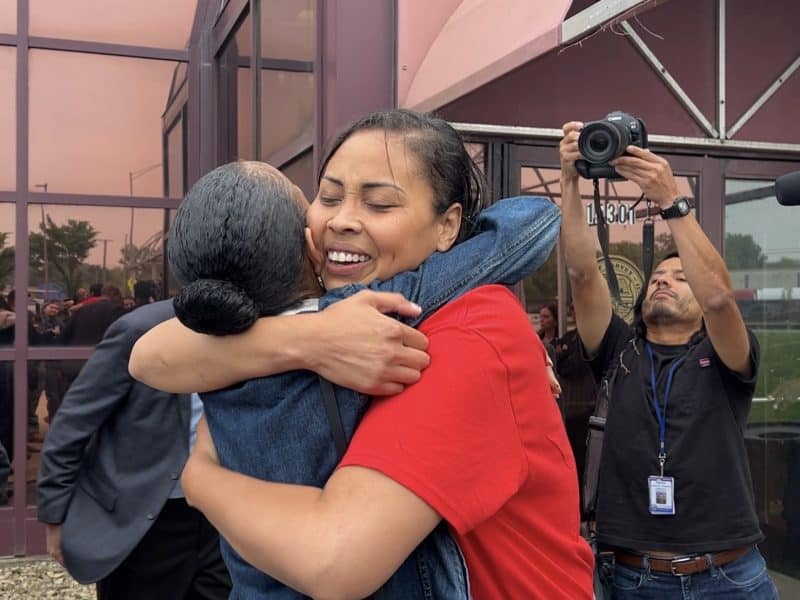
At a court hearing Wednesday, the Cook County State’s Attorney Office dropped felony battery charges against Ald. Colby Chapman (2nd) pertaining to an alleged assault of a Harvey police officer in April.

Ald. Colby Chapman arrested moments after announcing 2027 bid for mayor
One day after misdemeanor charges against her were dropped, the alderwoman is now facing a felony charge alleging she assaulted a Harvey police officer in April.

