
For 30 years, faith-driven volunteers addressing south suburban homelessness crisis
An organization based in Country Club Hills offers permanent and shelter housing for those struggling to get on their feet.

In the early 1990s, south suburban faith leaders tried to work with village officials in the region to address homelessness. They were met with pushback.
So, faith leaders allowed the homeless to sleep in their churches. It was inspired by similar efforts in west suburban Aurora and rooted in Chicago Heights.
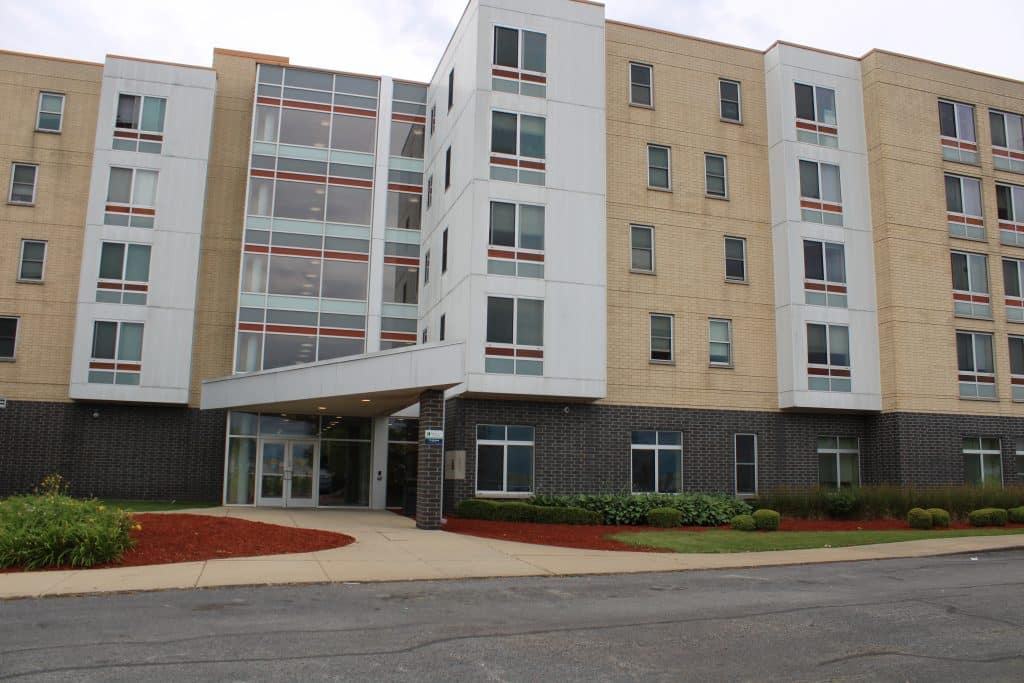
The group faced opposition from political leaders to transform a vacant grocer into a shelter, but the village did fund 100 beds for what would become South Suburban Public Action to Deliver Shelter (PADS), now based in Country Club Hills.
It’s volunteer-driven and community funded. PADS provides permanent housing for 400 people, a year, said Executive Director Doug Kenshol, and funding is a big challenge. PADS serves 125 to 150 people a night in its shelter program with a waiting list of 200 people, Kenshol said.
There aren’t many, if any, municipal-run shelters in the region. Those without a home seek refuge in a myriad of places, including abandoned homes, cars, and with favorable weather, park benches. The COVID-19 pandemic forced churches to close, and PADS to relocate some guests to hotels. An influx of federal COVID-19 dollars and increased state funding has bolstered services for providers statewide, but challenges remain. For providers, Illinois requires a 25 percent match.
“This is much harder in the south suburbs compared to wealthier areas like DuPage County. The concern is that state funding might end up concentrated in already well-funded areas, leaving gaps in support where it’s needed most,” Kenshol said.
In an interview with the HWH, Kenshol detailed challenges facing those grappling with homelessness and how policymakers can aid people on the ground doing the work.
This interview has been lightly edited for brevity and clarity.
HWH: What are some of the significant challenges in doing your work in the south suburbs?
Kenshol: The biggest challenge for 33 years has been a lack of money. From the first conversation asking for money to buy a building and being rejected, we’ve struggled with funding.
[…] In the last 10 years, we’ve focused more on affordable housing because we needed opportunities for people to move on from the shelters.
The kind of shelters you see, our shelter, prior to the pandemic, would have been everyone sleeping in one room in the church, right? That’s congregate. They’d be on the church floor all in one room. So congregate means all in one room; non-congregate means we now know that that’s not particularly safe. We always knew it wasn’t dignified; there’s no privacy. But now we also know it facilitates the spread of disease. So, the federal government has earmarked capital to build non-congregate shelters, places where people can have their own room.
There is capital available to us for the first time to potentially buy buildings. You know, going all the way back to our origin 33 years ago when the agency wanted to buy a building, but there was no capital. For the first time, there’s capital available where we could potentially buy buildings.
We found a hotel at a bargain price a year and a half ago. The municipality blocked it. We’re looking for properties again today.
HWH: Which municipality was this?
Kenshol: Yeah, I don’t want to say […] but we got blocked, and now we’re looking again. We’re on the hunt for properties that are for sale that we can buy, but we need to match it up with a municipality that will say yes. Here in the south suburbs, every municipality feels, and with some justification, that they are struggling financially. They don’t want to lose a hotel because a hotel pays not just property taxes, but also sales and hotel tax to the municipalities.
[…] But we’re looking to buy up to 150 hotel rooms, and we want to buy a small apartment building. The apartment building will be to provide basically a transitional shelter for families because it’s tough to serve a family through a hotel room. We have families with five or six children in this community, and you can’t stuff them all in one hotel room. But you can’t let the minors be in their own separate hotel room unsupervised either. So we really need two bedroom apartments that we would use on a rotating basis just like we would a hotel room.

HWH: What are some of the challenges you see facing the people who come to you for assistance?
Kenshol: […] there is a high incidence of mental illness and addiction within the population. Someone may come to us with paranoia. They’ve been employed, had an apartment, but get into a fight with their landlord because they’re convinced the landlord is spying on them. They change the locks to lock the landlord out of the building, and it spirals downhill as the paranoia affects them.
[…] We serve some people who come to us, like before the pandemic. Before we were in hotel rooms, we were in the churches. One night, an ambulance dropped someone off in the evening, around 8:08 p.m., at the shelter, and the ambulance took off before anyone could talk to them. The individual they dropped off had no fingers on either hand. It was someone who had been homeless, got frostbite from living outside, had their fingers amputated, and the hospital, instead of doing the right thing by sending them to a rehab center and helping them with occupational therapy, dumped them at the shelter, where we had only volunteers—no professional staff, no facilities. The individuals couldn’t feed or bathe themselves, and we had no trained staff on-site. It was all volunteer based to help them.
That just illustrated the horrendous cost of unsheltered homelessness. It’s unconscionable that someone who could have been productive and working in any number of fields now has their chances of employment significantly diminished. They went from being productive, tax paying citizens to being dependent on help and resources from others. The brokenness of a hospital system that would allow someone like that to be discharged completely inappropriately is also unconscionable. This stuff tends to happen when hospitals have social workers working during the week, but at night and on weekends, if a discharge is happening, there’s not always a social worker around to catch something. So, something like this can happen.
HWH: What do you think policymakers across Cook County and the state should be doing to address this web of problems you speak to?
Kenshol: Well, obviously it should have been addressed 40 years ago. Thankfully, it’s starting to get readdressed today. The governor is the first governor in my lifetime to really take homelessness seriously. He has created an interagency task force, a real plan to end homelessness, and provided an $85 million increase in funding last year to move the ball forward.
But that $85 million is still a drop in the bucket. We need to work with this administration and future administrations to keep making incremental increases. […]
Cook County has never spent its own money to address homelessness. Cook County passes through a little bit of HUD funding. Cook County receives what’s called an Emergency Solutions Grant from the federal government, and they receive CDBG funding— Community Development Block Grant funding—from the federal government and pass a little bit of that through to homeless service providers. But Cook County does not have a line item in its budget to use taxpayer money to help address homelessness in Cook County.
So, another reason there’s never been permanent shelters in suburban Cook County is that the county hasn’t paid for them. […] The county should pay the 25% match if that’s what we need to get money from the state of Illinois. Why are we scrambling to try and figure this out?
HWH: Why doesn’t Cook County step up to the plate and use its resources to make sure that state funding comes to suburban Cook County?
Kenshol: That’s something we hope to advocate for going forward. We have this once-in-a lifetime opportunity to buy buildings. Initially, the response—not from elected officials who have all been supportive, but from staff members at the Department of Planning—their initial support for doing projects in the south suburbs was poor.
HWH: The county Department of Planning?
Kenshol: Yes, they prioritized the projects in Evanston and Oak Park because elected officials in those communities knew they had the support of the elected officials there. The mayors wouldn’t fight the effort to create a shelter. It’s a little more difficult to build projects in the south suburbs because it’s hard to find a municipal leader who will say, ‘Yeah, you could build a shelter in my city.’ That doesn’t mean it can’t happen, but it means that it’s going to take longer, and the county must help.
We’re filling the void after the collapse of local newspapers decades ago. But we can’t do it without reader support.
Help us continue to publish stories like these
Authors


Related Articles

People over politics: How Kiana Belcher is fighting the Southland political machine
Dolton trustee Kiana Belcher’s most striking qualities are her bluntness and humility. She’s tapping into both to upend politics that prioritize hubris over public service.
County commissioner committed ghost payroll at Harvey library, trustee alleges
Harvey library trustee Chapelle Hooks reported paid library consultant and Cook County Commissioner Kisha McCaskill (5th) to county and state lawyers alleging McCaskill paid a library administrator who had already been terminated.

A month later than usual, first installment of property tax bills due by April 1
The first installment of property tax bills are usually due in March. However, county leadership pushed state lawmakers for an extension to give taxpayers more breathing room after the second installment of 2024 bills were late.

