
Huee G’s bringing his dreams—and yours—closer to reality and beyond
“It looks like you’re walking on water, but it looks like there’s no separation between the sky and the ground—and that’s the music I want to make.”

Huee G almost buckled from grief after the death of a dear friend. It wasn’t just a couple of bad days. He began eating his pain away, even losing hair. Anxiety and depression were some of the “darkest places I’ve ever been.”
Now, he’s in therapy. “Having someone unconnected to you changes the conversation, allowing for honesty and openness.” That’s what Huee G’s attempting to accomplish with his music.
On one end, he’s the mirror to his listeners, the product of an entire generation who lost friends to gun violence as social media and Drill music, in some ways, glamorized it all. On the other end, he’s that very unconnected person—frank and open-minded—whom a Harvey twenty-something can listen to and feel listened to.
Gentle melodies, pointed piano keys, and raucous drums make frequent appearances. But sonically, Huee G, real name Thuran Peterson, draws from a bevy of musical and artistic forms. The sorrow of rap-crooner Rod Wave. The self-deprecating yet heartening comedic style of Bernie Mac. Soul music or radio shows introduced to him growing up with his grandparents. Or even minimalistic styles of Bon Iver, a folk group based in Wisconsin, where he’s traveled to write in tranquility. Depression is a key theme, but Huee G, 30, isn’t entirely nihilistic. Growing up, the nighttime would bring gunshots. In the early morning, however, “I had a little crack through the window where I could see the sun.” He’s making music to match that feeling, he said.
On “Dreams to Reality,” his personal favorite track written at the peak of his troubles, he encourages others to seek that sunlight: ‘It’s all about love, that joy and that peace if you ever had noticed,’ he sings. His “Way Too Long” rap freestyle demonstrates a hungry Huee frustrated with the slow burn of independent artistry. The standout, however, is the explosive “Drowning,” where a bashful Huee G lambasts those who abandoned him in time of emotional need.
Without judgment and for posterity—that’s the Huee G philosophy. It’s “an opportunity to leave something behind, something that contributes to our cultural legacy.” That “our” is both on a community and familial level: in 2022, Huee married his high school sweetheart, and the two welcomed their first child last spring, with another baby girl on the way.
In an interview with the HWH, the acclaimed rapper waxed poetic on the social responsibility of today’s musicians, marriage and fatherhood, his mental health and healing journey, and being a therapy advocate.
This conversation has been lightly edited for brevity and clarity.
HWH: You’re touching on the importance of history. Could you share the story behind your stage name “Huee G?”
Huee G: The name “Huee G” originated when I was at Thornton High School. I was in Black history class. […] I learned about Huey P. Newton and was intrigued by his activism. Then, learning about Fred Hampton, a Chicago native, really resonated with me. Visiting his house on 17th Street in Maywood solidified it. Learning about the Black Panther Party’s initiatives, like the Free Breakfast for Children program, and how the government responded, fueled my passion. This is what I want to emulate—I want to believe in something and make a difference.
What Huey P. Newton and Fred Hampton did was they believed in something, and they made it happen. They brought about change for their people, you know? So that’s why I adopted the name Huee. The “G” comes from my grandfather, George—he’s still alive, and I like to honor him while he’s here. These two men, along with my father, have been the most influential in my life. So, I combined the two—Huey and George—to form “Huee G.” It’s a tribute to their impact on me.

HWH: As a rapper, as a musician, you observe that many artists nowadays are hesitant to rock the boat, so to speak. They shy away from actions like adopting a name from a Black radicalist. They often remain silent when issues arise, fearing it might jeopardize their endorsements. Do you believe that musicians, rappers, and Black artists specifically, have a responsibility to speak out against social injustice?
Huee G: That’s a great question. Do I think they have a responsibility? I believe people are generally more responsible for what they’ve been exposed to and brought up with. But expecting every single artist to bear that responsibility would be quite harsh, in my opinion. When we enforce such expectations, that’s where we often encounter individuals who aren’t fully committed, and who might even be detrimental to the cause, like the ones involved in Malcolm X’s assassination or COINTELPRO.
It creates a situation akin to having doctors—some passionate about their work, others just going through the motions. If you’re part of the Black movement merely because it’s trendy now, without genuine conviction, then what’s the point? Everyone has their own place and purpose in life, and it’s not fair to impose the same level of responsibility on everyone.
HWH: If that’s the case, is there anything wrong with pushing people to do more? Is there harm in at least encouraging Black artists to become more politically conscious and engaged, even if it’s just nudging them to recognize when they’re not doing enough or when they’ve made mistakes?
Huee G: I believe we can inspire. As an artist, you have the power to influence people’s lives in various ways, and individuals will interpret your art differently. It’s still art, after all. But pushing artists to be more politically engaged is akin to trying to make a child excel in something they’re not naturally inclined towards. Take Michael Jordan’s kids, for example; you can encourage them to play basketball, but if it’s not their passion, it won’t work.
That drive was in Jordan, not necessarily in his children. So, while it’s tempting to push, it becomes disingenuous over time. I’d love for every artist to embrace a platform of positive impact, whether it’s through inspiring others or giving back in various ways, like the turkey giveaways or school backpack drives we’ve seen since the ’90s. Even giving your time can make a difference. But at the end of the day, that’s when you leave your grass too high, and there’s going to be a lot of snakes in there.
HWH: What do you think Huey P. Newton would say about rap and Hip-Hop today?
Huee G: He’d emphasize the importance of creating programs because there’s no excuse for the disparity when so many rappers are flaunting wealth. Many of them may not even be as well-off as they portray. But there’s no reason why we shouldn’t have these vital programs in place to support communities facing hardships like food deserts and lack of mental health resources. He’d probably be disappointed by how much we have and how little has changed.
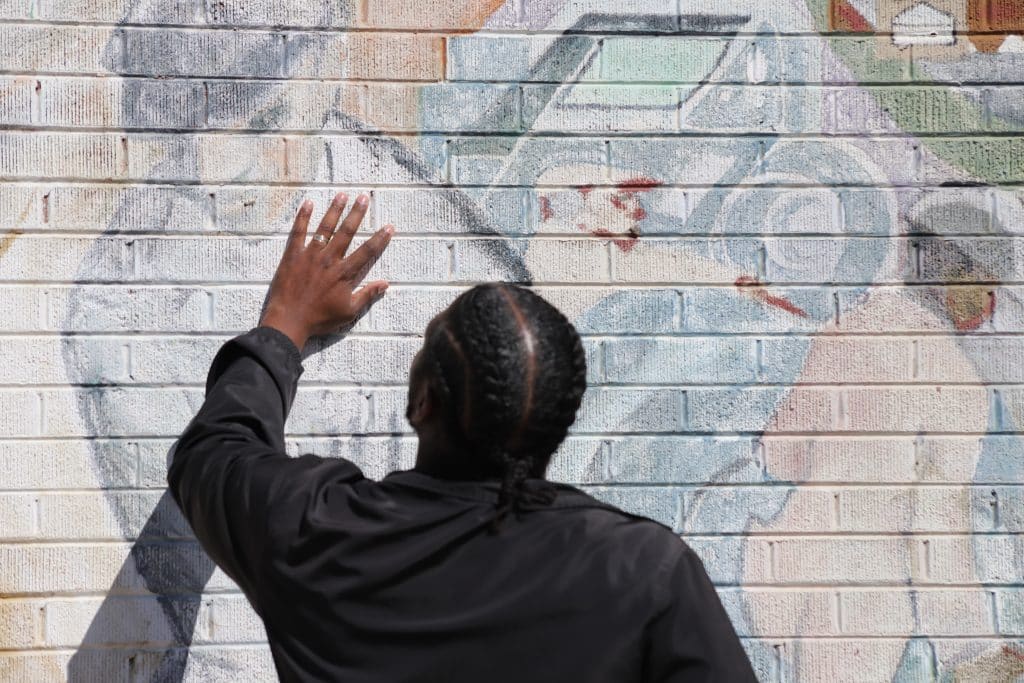
HWH: What do you envision doing to bring about change in Harvey, if anything? Do you see yourself taking more action to support the community?
Huee G: One of my goals is to bring more therapists to Harvey. Accessibility to mental health services is crucial, and not everyone has the same opportunities I’ve had. At my job at Northwestern University, I’m a compliance analyst, and it’s opened my eyes to the resources available. […] Harvey has immense potential with its infrastructure, including the railway, hospital, and transportation links like the metro. Yet, there’s a lack of funding to fully leverage these resources.
HWH: Do you have any thoughts on how we can destigmatize mental health in the Black community?
Huee G: […] By making mental health a constant conversation, we can normalize it. When I told my family and friends I was in therapy, I faced questions like, “Are you going to harm yourself?” or “Why don’t you just pray about it?” But I believe in taking action just like you would for any physical ailment. That’s why I’m open about my experiences. I even have a song coming out called “Drowning” inspired by my struggles with anxiety. It was so intense at times that I felt like I was going to die.
HWH: Fatherhood, parenthood, you know, being a husband, marriage, parenthood. Talk to me about this.
Huee G: […] I met my wife in Ms. Mangino’s class. […] We went to Algebra II together and then we ended up going to trigonometry together in Ms. Lee’s class. That became my best friend. And marriage is being in a relationship that long, too. And then being married taught me how to express myself. Also, I was so protective of my feelings that I didn’t let people in. […] She taught me how to be myself and be okay with being myself. And marriage is embracing. When it’s your best friend, you just get to have fun. Me and my wife, we have fun. We laugh about the dumbest stuff. We would say anything to each other, and we just laugh for no reason. And then when the situation is serious […] It taught me how to be gentler as well.
HWH: Do you feel like you’re entering a new chapter personally? And do you think this marks the beginning of a new musical chapter for you?
Huee G: […] It allows me to create better music, music that I can leave behind. If my daughter’s going through something, or her kids, or her kids’ kids go through something, they can say, ‘Let me see what my grandfather, my great-grandfather, my dad was talking about.’ ‘Oh, I’m going through this right now. What is he saying?’ It’s like asking them to use this as a North Star. […] as a parent, you don’t want your child to go through anything, but if she does go through that […] if I’m not there to give you any advice, I want to leave this here for you. Aside from just me leaving you money or leaving you this here, I want you to listen to this.
[…] One of my dreams is wanting to go see the Salt Flats, right in Bolivia, Salar de Uyuni. They call it the mirror, like the earth’s mirror. It looks like you’re walking on water but it looks like there’s no separation between the sky and the ground—and that’s the music I want to make. And if I give you this opportunity to dream like that, whatever your dream may be, I want to create that for my daughter. I want to create the soundtrack […] to life’s precious moments. […]
We’re filling the void after the collapse of local newspapers decades ago. But we can’t do it without reader support.
Help us continue to publish stories like these
Authors


Related Articles
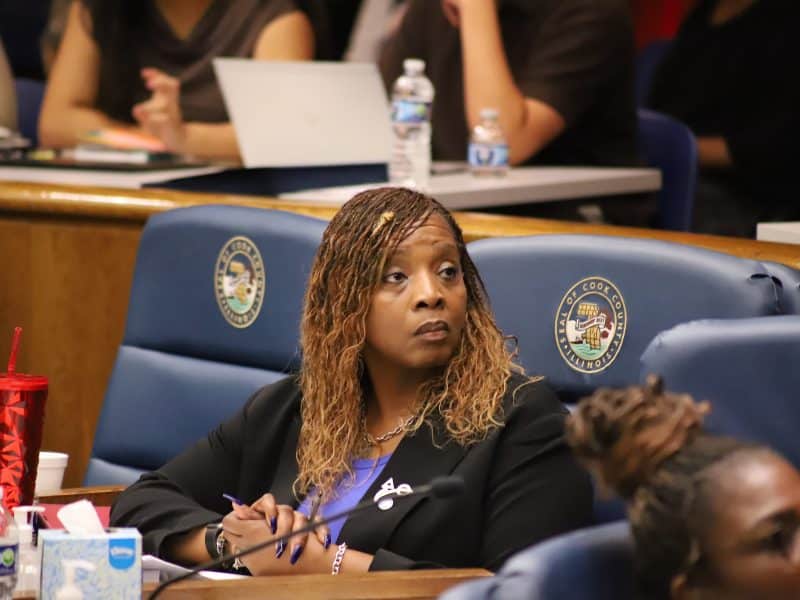
County commissioner committed ghost payroll at Harvey library, trustee alleges
Harvey library trustee Chapelle Hooks reported paid library consultant and Cook County Commissioner Kisha McCaskill (5th) to county and state lawyers alleging McCaskill paid a library administrator who had already been terminated.
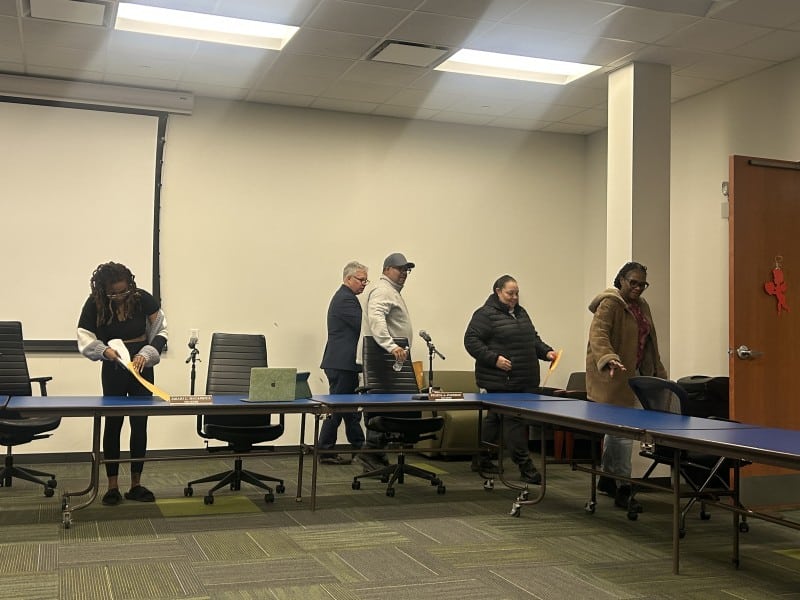
Harvey library trustee blasts board for six-minute meeting
Harvey Public Library District trustee Chapelle Hooks criticized the board for holding two meetings this year that totaled 10 minutes of official business.
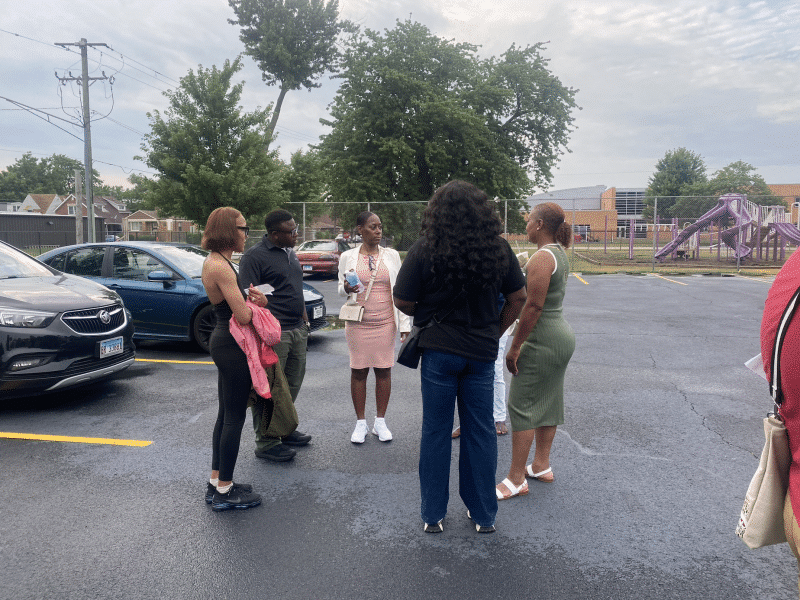
Harvey Park District blocking commissioners from performing duties, lawsuit alleges
Longstanding commissioners and the executive director have blocked La’Keisha Brown-O’Neal, elected in 2025, from accessing facilities, her email, and documents, according to the complaint.

