
“Circuit breaker” program aims to provide tax relief for property owners
Cook County Assessor Fritz Kaegi is urging state lawmakers to fund a $200 million program to help taxpayers who’ve experienced spikes of 25 percent or more in their bills.
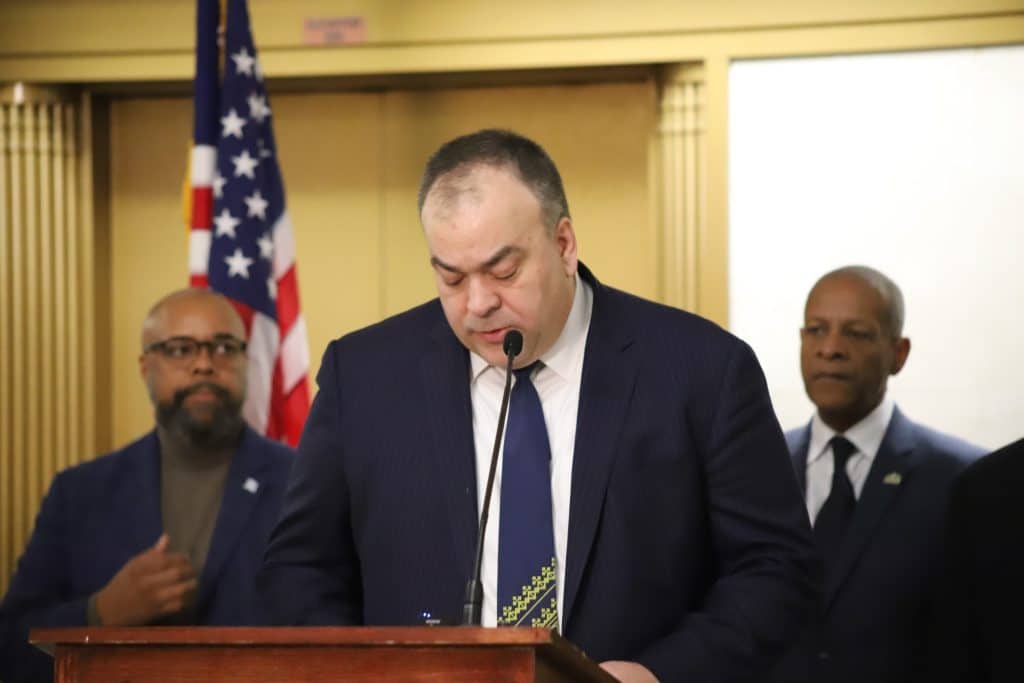
Cook County Assessor Fritz Kaegi is calling for a $200 million “circuit breaker” program to help property owners with tax bills.
South suburban communities muscled through the housing crisis, underwater mortgages, and depressed home values, Kaegi said, and now that homeowners “ start to realize value on their investment,” he said, “it’s just not fair for the residents to be exposed to spikes like this.”
For a three or four-year period and nearly $200 million price tag, the state could assist property owners who experienced spikes in tax bills of 25 percent or more.
Funds would flow directly to taxing districts, helping collection rates, Kaegi said during a press conference last month announcing the effort. The Cook County Treasurer’s Office issues bills in two installments. Taxpayers would see a credit on the second installment.
The state already allows for a circuit breaker system but there’s no funding commitment, Kaegi said. Illinois State Rep. Justin Slaughter (D-27) and Sen. Patrick Joyce (D-40) will co-sponsor a bill to fund the endeavor. According to Kaegi, there are 29 other states with circuit breaker programs.
Kaegi was joined by several south suburban mayors, including Dixmoor Mayor Fitzgerald Roberts.

In Dixmoor, 2023 median tax bills more than doubled, according to county data. The town’s senior population, on a fixed income, are especially struggling, Roberts said.
“How do you suspect a town to rise if you’re going up on taxes, which mean[s] now the people are losing their houses, and the banks don’t care,” Roberts said. “They’ll let the houses sit there and fall down.” The tax problem is causing some to “walk away” from houses, Roberts stressed, creating abandoned properties.
“We don’t have a large base of businesses out in the south suburbs that can absorb these taxes that are put upon us,” said Hazel Crest Mayor Vernard Alsberry. When large corporations receive tax breaks, Alsberry said, “it falls on us,” meaning homeowners.

The Southland is home to 15 communities where median bills skyrocketed 30 percent or more, according to county data. Of those municipalities, 13 have predominantly Black populations.
Kaegi’s office produces assessments of commercial and residential properties, and processes appeals. The Cook County Board of Review also processes appeals.
Properties are reassessed every three years. Following the county assessor’s reassessment during the 2023 cycle, residential values made up 67 percent of total assessed value, according to county assessor data, while non-residential properties made up 33 percent. After the Board of Review processed appeals, residential value accounted for 71 percent of total value.
The assessor’s office and review board don’t often share data with each other and use inconsistent valuation methods from one another, according to a study from the Cook County Property Tax Reform Group, or PTAX, that specifically analyzed commercial property valuation.
The result: discrepancies in property values and assessments, according to the study. The study also found that commercial properties in the south and northern suburbs, specifically, were under assessed.
The PTAX Reform Group includes leadership from across the county, including the assessor’s office, review board, president’s office, clerk’s office, and the treasurer’s office.
A recent study commissioned by Kaegi’s office revealed commercial property owners use appraisals that undervalue their market value by 38 percent when applying for appeals with the assessor.
In more than half of the properties sampled for the study, the appraisals suggested values for less than 60 percent of the property’s sale price. The assessor may not necessarily take the appraisals as the last word on appeals but could consider them in the process.
Other relief efforts are being considered. The Cook County Board of Commissioners approved a $15 million relief fund. Eligibility requirements and application details are still to come.
The county treasurer has mailed the first installment of 2024 tax bills. Payments are due by March 4.
We’re filling the void after the collapse of local newspapers decades ago. But we can’t do it without reader support.
Help us continue to publish stories like these
Author

Related Articles

PHOTOS: In Dixmoor, a Cook County commissioner’s home languishes
While the 5th district’s Kisha McCaskill claims tax exemptions that reduce her bill on a Dixmoor home, it’s become an eyesore without proper upkeep.

Cook County Commissioner Kisha McCaskill claims tax exemptions on abandoned Dixmoor property
Although she claims homeowner and senior exemptions, McCaskill does not reside in the home, which is a vagrant. The Cook County Assessor’s Office has referred the matter to its erroneous exemption department for investigation.

Cook County Assessor Candidate Questionnaire: Fritz Kaegi
Elected in 2018, incumbent Cook County Assessor Fritz Kaegi is seeking a third term in the March 17 primary.

