
WHD SD147 board approves near $3 million bond for pool upgrades
Restoration of the defunct swimming pool is expected to cost around $2.7 million, according to the district’s chief school business official.

The West Harvey-Dixmoor School District board approved a $3 million bond to pay for the restoration of the district’s swimming pool at its board meeting on Jan. 20.
The project is estimated to cost around $2.7 million, according to Janiesa Owens, the district’s chief school business official. Instead of tapping into the district’s fund balance, Owens suggested using tax payments to fund the project to maintain current tax rates and district revenues.
The Cook County Treasurer’s Office has delayed nearly $8 billion of property tax revenue disbursements due to issues upgrading the county’s computer systems. As a result, school districts have been taking out bonds to keep up with infrastructure costs and day-to-day operations.
Owens advised the board to be wary of how they spend district funds.
“We don’t know what to expect for state funding,” Owens said. “We want to be very cautious on how we spend what we currently have, and using our fund balance to take care of a huge project is not in the best interest of the school district and our students.”
Board secretary Mable Chapman defended the project, saying the inoperable pool wastes space and its restoration would benefit the students and community. Board member Bonnie Rateree — who served when the pool was first constructed — also spoke in favor of the project.
“Yes, we’re spending money on a lot of things, but our children need to learn to swim,” Rateree said. “You see it on the news all the time: children of color drowning because they don’t know how to swim.”
The timeline for the pool’s restoration is to be announced.
Academic progress presentation
The curriculum department presented a mid-year data report on students’ academic progress and plans for the remainder of the school year. The data was based on Renaissance Star Assessments results, an interim assessment program educators use to gain comprehensive insights on students’ reading, math, and early literacy skills. The program offers assessments for both English and Spanish speaking students.
The department boasted growing trends in academic performance. Across every Star subject, more students performed at or above benchmark, and fewer students performed at intervention levels.
In the English assessments, 61 out of 469 students scored at or above benchmark in reading. Seventy-eight of 587 students reached benchmark levels in math.
In the Spanish assessments — taken by English language learner students — half of students scored at or above benchmark in reading. Twenty of 92 students reached benchmark levels in math.
Misty Kucharek, district math coach, identified the English math assessment results as a huge improvement. “Math has been our weakness [subject] for many years, so we are making progress there.”
Students nearing the end of first grade — and some underperforming second and third graders — take the early literacy assessment before transitioning into the reading assessment. Kucharek shared that there are five third grade students at the urgent tier who may be referred to special education if they fall short in the next early literacy assessment.
Louisa Shannon, director of curriculum, instruction, and assessment, reported teacher improvements in writing lesson objectives, selecting learning tasks, and monitoring student progress. She also presented plans for meeting district instructional goals, including developing a data-informed culture in the district.
“We’ve been using surveys, observations, [and] student data to continuously improve the offerings we are giving for professional learning,” Shannon said. “We’re trying to customize it to the instructional leaders and then teachers and the staff we have in this district.”
We’re filling the void after the collapse of local newspapers decades ago. But we can’t do it without reader support.
Help us continue to publish stories like these
Author

Related Articles

Thornton assistant principal Charissa Berrini passes away, TTHS D205 announces
Charissa Berrini worked at Thornton Township High School in Harvey, but passed the district said on social media.
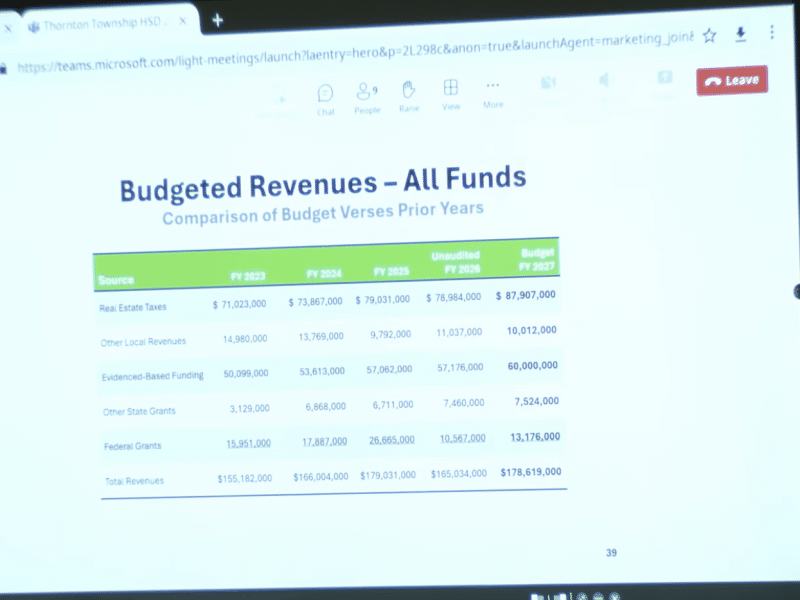
Decline in federal funding swallows projected $13 million revenue boost at TTHS D205
Thornton Township High Schools District 205’s board reviewed the preliminary budget for fiscal year 2027, which foresees a spike in total revenues. The jump is eclipsed, however, by a steep decline in federal funding.
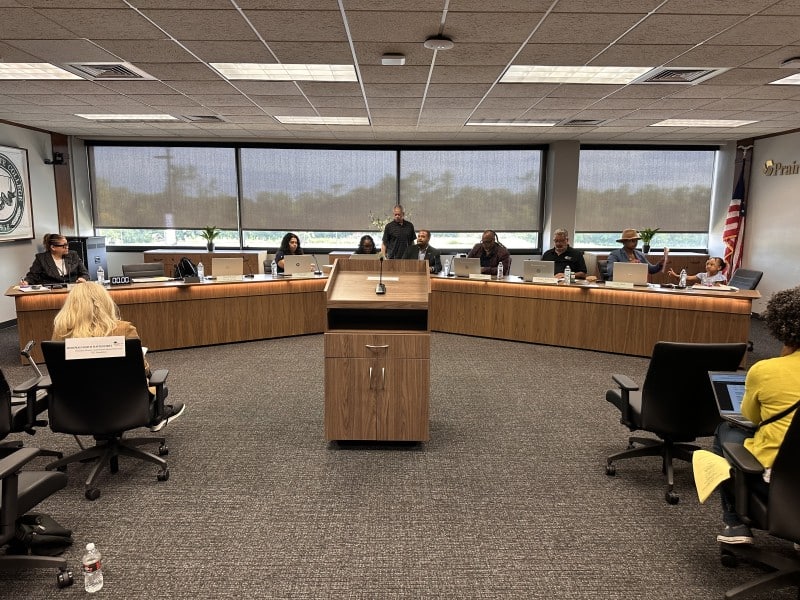
PSC reports near $8 million deficit as enrollment plummets
A 50 percent decline in enrollment since 2012 undergirds a projected $8 million shortfall in the 2026-27 budget. The college has developed an exigency plan and cut spending in response.


