
Out of ‘shared concern for the community,’ Southland influencers expand political awareness
A storm of political conflicts, news desert crisis, and distrust of Chicago mainstream news media is fueling the growth of a new information ecosystem in the south suburbs.
This report was produced as part of “Healing Illinois: Democracy Lives Here,” a statewide initiative from the Illinois Department of Human Services, developed in part with the Field Foundation of Illinois, highlighting challenges to democracy and responses that make a difference.
On one of the coldest nights of the year, Lea, former hairstylist at Harvey’s Princezz Palace, stood in line for a caucus in December 2024 to nominate Thornton Township candidates for the 2025 election.
The caucus would begin soon. Indoors, however, the gymnasium was already packed with a private event earlier. Four people at a time, security let the crowd, filled with seniors in wheelchairs and mayors waiting in 20-degree temperatures. Lea’s daughter, 6, was swept inside with another group.
“He told me that he could push her back outside, and then he slammed the door. But he did not put her outside,” security told her. There her daughter stood crying. Days later, Lea crowded into the Dolton’s ILU Club to condemn Democratic leadership — and the media for their coverage of the night. Images of residents chanting “let every vote count” in the freezing cold were not elevated enough in coverage.
“Ya’ll can paint whatever picture that ya’ll choose to because of course ya’ll are the media: ya’ll can make things look how ya’ll want it to,” Lea told camera crews from FOX32 and NBC5.
Today, nearly 50 million people have little to no access to news, according to a recent report on local news produced by Northwestern University’s Medill School of Journalism. In the more than 45 municipalities in the south suburbs, the majority do not have a traditional local news source, with newspapers collapsing with the shift to the internet and challenges to finance models.
Roughly three in five Americans aged 13 and older avoid news content on their phones, in their discussions with families, and national politics, according to a study from the Media Insight Project. But content creators are rising to meet an audience disaffected with mainstream media.
Southland content creators utilize a variety of media tools to capture local political matters, but livestreaming through Facebook and YouTube has become the backbone of their reporting. Livestreams offer a raw, unfiltered look into civic proceedings in real time, expanding meeting access to residents at home and even nonlocals.
‘Shutting people out’
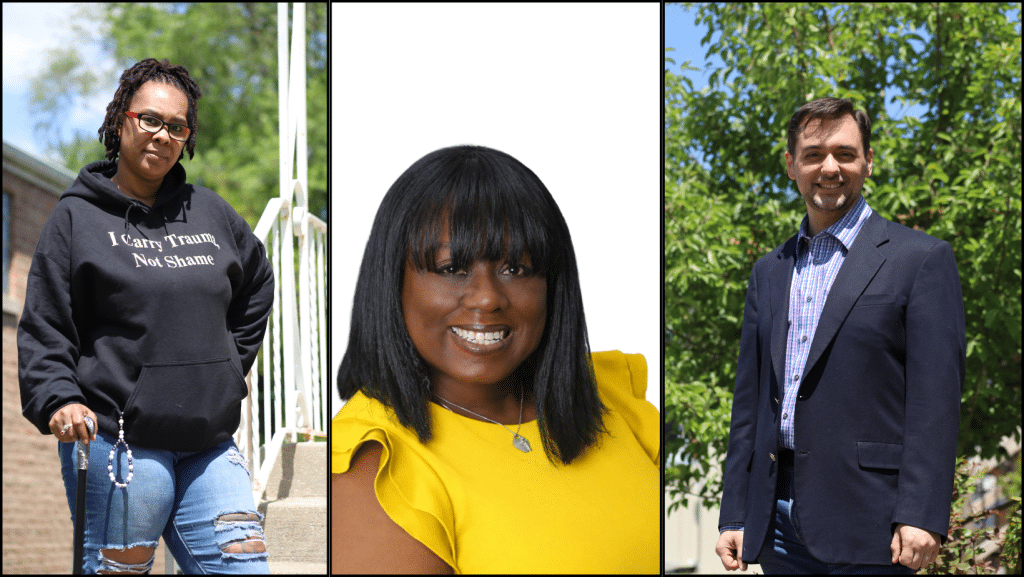
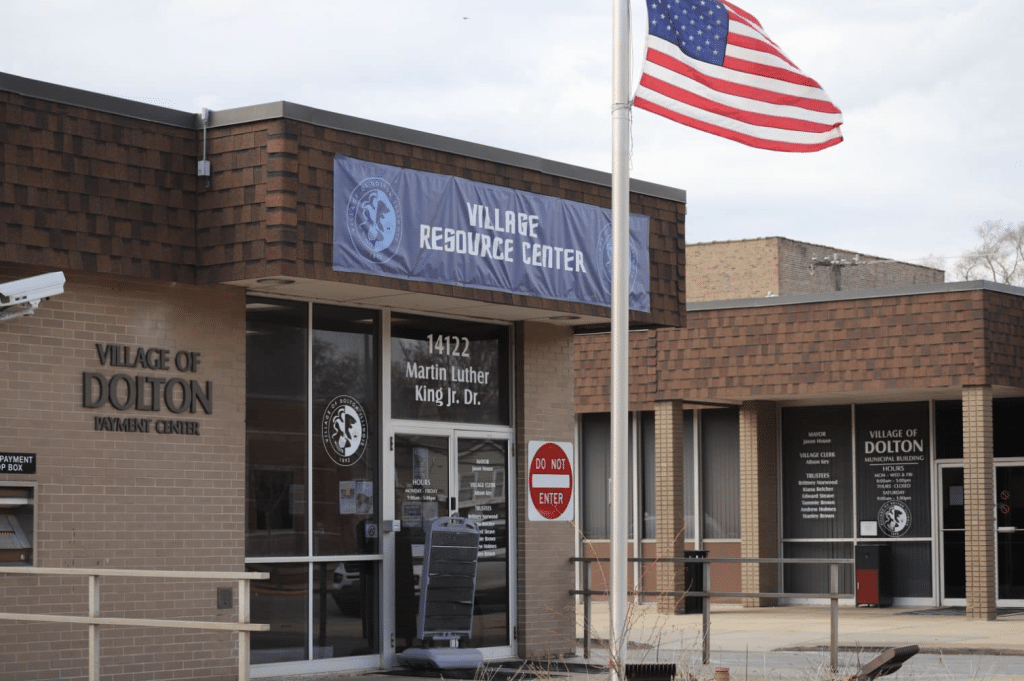
Dolton influencer Vivian Allen, who dubs herself “Your Favorite Survivor” online,” was initially optimistic about Tiffany Henyard’s ascent in Dolton, even assisting with her mayoral campaign in 2021. The mayoral ticket appeared “strong” at the time, Allen said, and signaled a positive direction for the Dolton community. “That experience gave me firsthand insight into both the campaign process and what happens once leadership transitions into power.”
In 2022, Henyard was appointed Thornton Township Supervisor, following the death of longtime head Frank Zuccarelli; Henyard held dual roles as Dolton’s mayor and the township’s supervisor. By then, Allen’s optimism had dwindled. Allen’s content was originally personal, “but when Tiffany Henyard came into power, I felt a responsibility to document what was happening in real time,” she said.
Tense meetings, lack of transparency and accountability, and questionable charity initiatives raised alarms with the Dolton community. Residents, including Allen, continuously challenged Thornton Township’s board and demanded answers about the township’s finances.
Ryan Sinwelski, a Harvey influencer who brands his online platform as “Ryan’s Gay Chicago,” was once a supporter of the city’s late mayor, Chris Clark. In 2023, as Clark’s office dodged questions on city finances, such as federal dollars and permits used to demolish abandoned properties, Sinwelski soon became an outspoken critic of the Clark administration. “If you look at the root of the problem, it goes back to corruption, lack of transparency, and shutting people out of the political process in Harvey,” Sinwelski said.
Ethical responsibilities and incentives
Influencers are given more power to blur the reality of situations to their liking. This could include tactics such as omitting important context and reframing narratives to provoke a certain response. However, a 2024 survey from Trusting News, a research organization dedicated to news credibility and public trust, showed 94-percent of respondents said they would be interested in learning more about training to support more ethical content creation.
As users gain the power to shape narratives and sway public perception — often for increased clicks and views — the burden of judging credibility falls on their audience.
Michael Spikes, a Northwestern Medill School of Journalism professor and media literacy specialist, said that the growth in short-form videos, specifically, is a result of people’s reliance on social media and algorithms to deliver information promptly. That reliance, in turn, can pose a risk for misinformation and disinformation to circulate and reach those who tend to overlook a creator’s credibility and the validity of their content.
“A lot of those characteristics that we would look for in information that we call credible have sort of broken down,” Spikes said. “Audiences now, with the new technologies, have developed habits around their own consumption of information that does not take into account those concepts.”
But Southland influencers have, even when trending topics could balloon their audience and monetization potential.
“I don’t believe in recording stuff just for clicks and views,” said Harvey influencer Dianna Alexander. It has to be educational.” Last year, Alexander made $1,700 through Cash App contributions from her YouTube audience, but that was only when she was making content daily. “A lot of [YouTubers] drop off after a while because it could be time consuming, stressful, and give you anxiety,” Alexander said.
Allen monetizes her YouTube page, which has over 3,000 subscribers, and engages her audience through comments and email. “[…] I value that relationship because it’s rooted in trust and shared concern for the community,” Allen said. She utilizes direct footage from government meetings and community events, public records, and firsthand experiences “to allow people to form their own opinions based on what they see rather than relying on summaries or secondhand information.”
Allen added: “since I’m both a content creator and member of the community, I understand the responsibility that comes with sharing information that impacts real people.”
Sinwelski invites those with opposing views from him to one-on-one YouTube discussions, allowing viewers to examine multiple perspectives. “I can speak with them or let them have their say without having to agree with them,” he said. “People that I disagree with don’t always want to talk, but I think that’s important, too.”
Activating the public
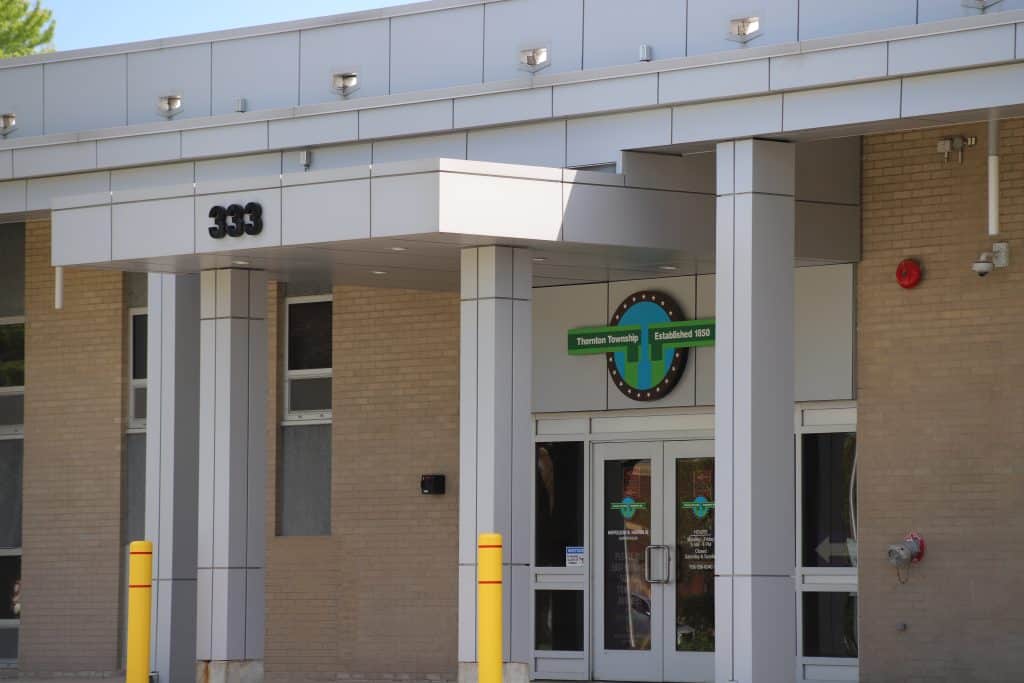
The Lansing Journal, based in Lansing, has covered the township since 2017 — before influencers and the national media surge. Founder and executive Melanie Jongsma believes that the freedom YouTubers had to editorialize their coverage attracted more viewers.
However, “the [Napoleon Harris] administration is not nearly as entertaining as the Henyard administration, so most of the YouTubers and Chicago media have moved on,” Jongsma said.
In 2021, there were 2,036 ballots cast in Dolton’s general mayoral race, county data show. In 2025, more than 3,500 ballots were cast in Dolton’s general mayoral race — roughly 22 percent of registered voters, county data show. In Harvey, council meetings are now notoriously packed to the brim, with one earlier this year moved from City Hall to the nearby high school to accommodate overflow. Thornton Township records show a total of 96 registered public commenters sign-ups in 2025 from 36 individual residents, with several returning to the podium meeting after meeting.
That matters as questionable decisions in the township persist. One week after their swearing-in, newly minted Thornton Township Supervisor Napoleon Harris — also a state senator — and trustees repealed ethics reform legislation meant to restrict use of township merchandise for personal promotion.
Carole Sharwarko, a reporter at the Journal, shared that she was glad livestreamers were there to bring attention to township affairs. “99.9 percent of YouTubers that we dealt with were kind, welcoming…just nice, good people who were trying to do good work,” said Sharwarko.
In the digital age, users can fall into a practice known as “slacktivism,” where their support for a cause starts and stops at low-effort gestures such as likes, comments, and shares. Allen, of Dolton, is leveling-up her online work: she’s drafting “anti-bullying” legislation with a state senator to combat local electeds who wield power to abuse civilians, she said.
“Real change has to come from the people themselves,” Jongsma said. “Media of all types can bring awareness and sometimes connection, but it’s up to ordinary citizens to find ways to turn that information into action.”
We’re filling the void after the collapse of local newspapers decades ago. But we can’t do it without reader support.
Help us continue to publish stories like these
Author

Related Articles
Cook County issues disaster proclamation following Monday storms
The National Weather Service confirmed that tornadoes touched down in Country Club Hills, Hazel Crest, Orland Park, and Lansing on Monday, July 27.

Thornton Township trustee Christopher Gonzalez dies
Two-term Thornton Township Trustee Christopher Gonzalez has died, Township Clerk Casey Nesbit confirmed on April 7.
Southland voters seek economic development ahead of 2nd Congressional district race
After a forum featuring candidates in the race for Illinois’ 2nd Congressional district, Southland voters reflected on the objectives they seek from their ideal candidate.


