
‘Not a mock election’ : Cook County launches early voting sites at suburban high schools
Suburban youth cast more ballots at early voting sites at high schools in a single day than in the first week of ballots cast at six traditional early voting sites.
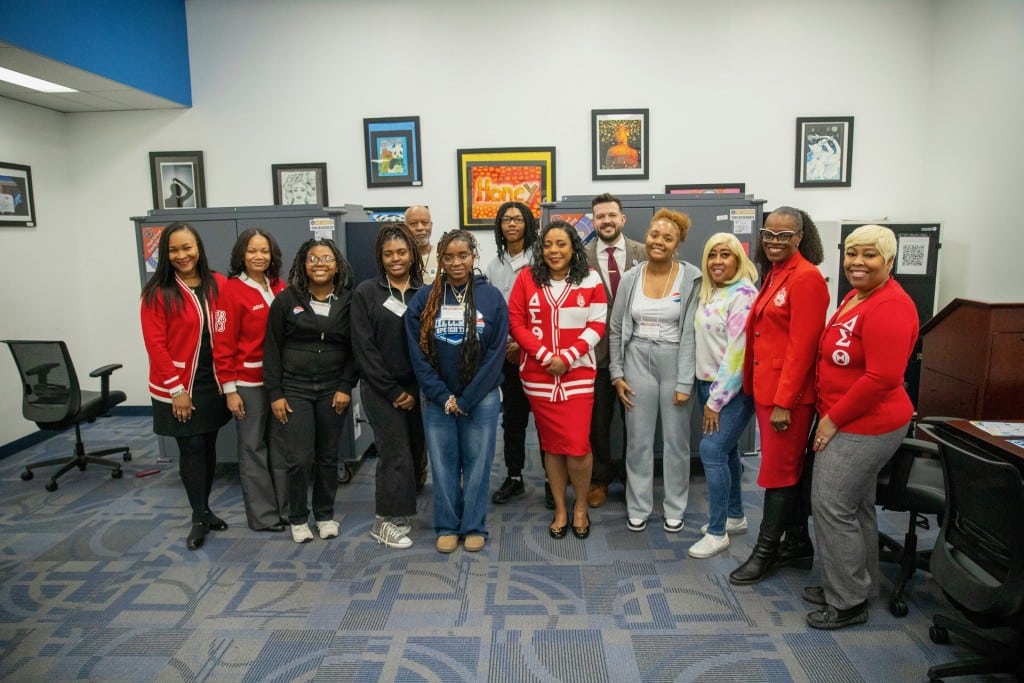
Teenagers across suburban Cook County can now cast a ballot at their high school.
Twenty-four suburban high schools are now fully functioning voting sites in an effort to engage and activate young people as part of the Defenders of DA’mocracy High School Early Voting program, developed in partnership with the Chicago Bears. There’s two weeks until game day, and student-run election sites are meeting youth where they’re at.
“This is not a mock election. This is not a classroom simulation. This is real voting happening in real time happening inside the halls of our schools,” said Cook County Clerk Monica Gordon.
Beginning in 2013, Illinois allows 17-year-olds to vote in a primary election if they will be 18 years of age on or before the day of the general election. There are 1,500 students in Bremen Township School District 228 who are eligible voters, said district Social Studies Supervisor Ryan Nagle during a press conference at Hillcrest High School in Country Club Hills announcing the effort.
There were 2,500 students across grades 11 and 12 in the district who received information on becoming an election judge, Nagle said.
The county clerk’s office trained and certified 125 total students across suburban Cook County as election judges, officials said. With the launch of the DA’mocracy pilot, students cast 1,136 ballots on Thursday alone, officials said. That figure outpaced a week of ballots cast at six other sites. View the full list of participating suburban high schools here.
Training included conducting voter check-in, processing ballots, and managing equipment. The program is also a means of building an election judge pool, “creating the next generation of democracy,” Gordon said.
A 2025 poll conducted by Harvard’s Institute of Politics found that young Americans’ trust in various institutions, from political parties to mainstream news media, is low.
But participation in election administration and security — be it observing chain of custody procedures or voting equipment inspections — “helps combat that misinformation and disinformation that erodes the trust and confidence in our elections,” Gordon stressed.
Delta Sigma Theta sorority sisters from the Joliet Area South Suburban Alumnae Chapter joined Gordon for the announcement. Political engagement is one of its key programs; they conduct voter registration drives and awareness campaigns.
“Everyday decisions are being made about schools, about college, about education, funding for community, job opportunities, and the future of young adults,” said Deadra Woods Stokes, second vice president of JASSAC. If young people are directly impacted by policy decisions, “they deserve a seat at the table,” she said.
That could be as election judges, assisting with registration, attending communities meetings, or learning about impactful policies are ways for young people to get involved in democracy, Woods Stokes said. “Leaders participate. They don’t wait on the sidelines,” Woods Stokes said.
The early voting period ends March 16. The primary election is March 17.
We’re filling the void after the collapse of local newspapers decades ago. But we can’t do it without reader support.
Help us continue to publish stories like these
Author

Related Articles
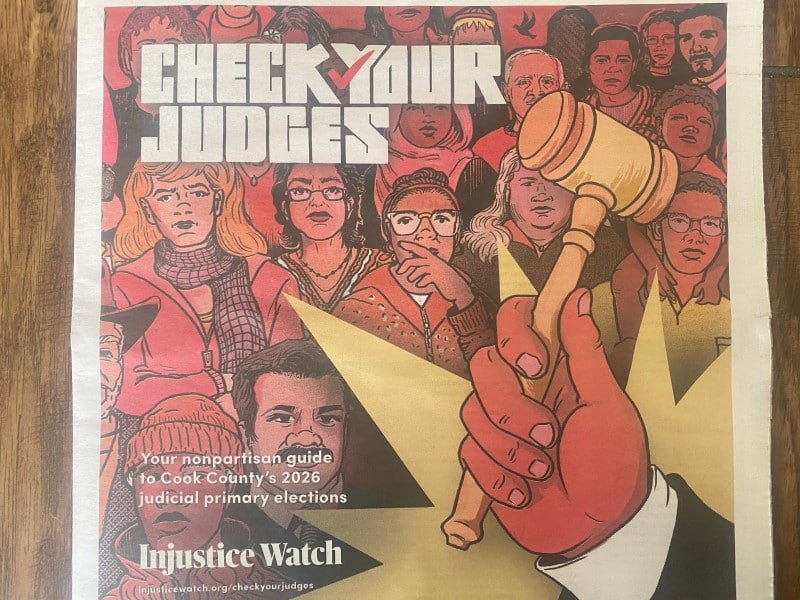
Free judicial voter guides available across Southland ahead of 2026 primary
The HWH is distributing 3,000 print guides across civic centers, libraries, and businesses in the south suburbs. Here’s where to find a copy.

