
Environmental hubs. A comprehensive plan: Climate resilience projects in the south suburbs take root
In 2023, the south suburbs will see improvements in the climate preparedness arena from a variety of projects — including a stormwater management pilot project, Harvey’s first-ever comprehensive city plan, and more.

Harvey is partnering with the Chicago Metropolitan Agency for Planning to develop the city’s first comprehensive plan. A Chicago-based urban planning firm, Houseal Lavigne, is joining the duo to guide the development of the plan.
The Harvey Comprehensive Plan aims to “ establish a vision and land use strategy” for the region that will “help residents, business owners, and elected and appointed officials guide future actions, decisions, and development in the community,” according to the plan’s webpage.
Typically, a key component to the development of a comprehensive plan is a focus on community input.
The first opportunity for community members to share their thoughts, concerns and goals for the Harvey Comprehensive Plan with the project leaders is tonight at 7pm, at City Hall.
The Community Workshop event is an opportunity for the project leaders to “introduce the planning process” for the comprehensive plan to the community. Residents can voice concerns to planners. The mayor quietly made selections for a volunteer committee associated with the endeavor.
Comprehensive plans often outline a guide for future growth within a community, often looking ten to 15 years out, according to CMAP. Comprehensive plans can also assist the community in locating and securing grant funding by providing a detailed look at the issues most central to a community and potential steps to improve them.
Here’s the latest on a few other urban planning and environmental projects coming to the area.
Climate resilience hubs
Cook C ounty plans to establish three “resilience hubs” across the Southland area.
The hubs will function through existing physical facilities that are already “community focal points,” said Sarah Edwards, Sustainability Program Manager for Cook County. Designation as a “resilience hub” will expand the program or facility’s capacity “to provide additional services to address chronic community stressors.”
Edwards defined resilience, within the scope of the project, as “the ability of people and their communities to anticipate, accommodate and adapt amid changing climate conditions and hazard events.”
The hubs are a project of the Cook County Equity Fund, a larger plan that was established by Cook County President Toni Preckwinkle during the budget process for the fiscal year 2021 as a means to address historical and continued disinvestment particularly in Black and Latino communities—and the resulting pervasive disparities across the County.
Funding for the Equity Fund comes from the over $1 billion in federal funding Cook County received through the American Rescue Plan Act. The Equity Fund plan is broken down into six pillars, each a strategic approach to addressing inequities and disparities across the County.
According to the County’s Racial Equity Fund Progress Report, published in December 2022, the “Sustainable Communities” pillar aims to “improve both public and environmental health not only through investments in technical assistance and financial resources in partnership with trusted community-based organizations but also by developing an environmental justice policy that incorporates environmental and equity impacts into our decision-making.”
The Cook County Department of Environment and Sustainability and the Cook County Department of Emergency Management and Regional Security are teaming up for the project.
By bringing different Cook County departments into the planning effort, Edwards said her team is “not just thinking about the environmental goals, or the emergency goals, or the economic goals, but really thinking about them all together.”
A “community-driven effort” will guide the process of determining which locations work for the hubs, Edwards said. Before that process can kick off, Edwards and her team have to finish working through a list of “eligible communities” they compiled based on the Social Vulnerability Index that was established by the Centers for Disease Control and Prevention.
SVI refers to “the potential negative effects on communities caused by external stresses on human health,” according to the Agency for Toxic Substances and Disease Registry.
To best determine where the resilience hubs would be “an appropriate resilience measure” and where there’s the greatest need, Edwards said the list of eligible communities is evaluated alongside the CCDEMR’s’s Hazard Mitigation Plan.
From there, Edwards said her team will reach out to municipal and community leaders to discuss their interest in the development of a resilience hub in their community. Once interest is established, then the community input process for choosing the specific facility will begin.

By using an existing facility or community focal point, Edwards said they hope to build on pre-established trust and networks of support that residents already rely on.
The goal is to “provide support before, during and after emergency events,” Edwards said.
Possible “resiliency solutions” for the selected facilities could be energy efficiency improvements, green infrastructure improvements, flooding preparedness, and stocking emergency-preparedness materials. “It’ll really depend on which facility is chosen and what the community feels like they need,” Edwards said.
Edwards said they’re “looking to install solar and battery backup” to all of the resilience hub locations “so they can function off-grid to provide support during emergencies.”
Though the overall timeline won’t be clear until the specific hub locations and resilience models are planned out, Edwards anticipates they will be working for “the next few years” to complete the project.
StormStore
The Nature Conservancy is partnering with the City of Harvey for a pilot project to build a “demonstration credit supply” rain retention project on 154th Street. It’s an example of one kind of green infrastructure project landowners could take on as a part of the new market-based approach to stormwater and flood management called StormStore,
The Metropolitan Water Reclamation District (MWRD) allows developers to buy credits from off-site stormwater management projects to satisfy municipal requirements for water retention at a new development property.
“So, if you want to build something big but you’re having a hard time doing that in terms of the economics, buying stormwater credits from another property owner nearby can allows you to do more,” said Drew Williams-Clark, senior director at Metropolitan Planning Council, who is working on the StormStore project with TNC. “And, it also helps to fund that green infrastructure, which reduces flooding.”
The 154th Street project will be a series of “bioretention cells”—also called rain gardens—distributed along the parkway between the sidewalk and the roadway, according to Jennifer Jenkins, a natural infrastructure project manager with TNC who is one of the leaders on the StormStore pilot in Harvey.
The design plan for the bioretention cells is to create “storage layers of gravel and different types of soil that have better infiltration than what’s currently there,” Jenkins said.
They’re aiming to break ground on construction in the summer and wrap by late fall, to have enough time “get all those baby plants in” before the weather gets too cold, Jenkins said.
“The idea is that, instead of flowing into the sewers, rainwater from the road would flow into these rain gardens and be infiltrated and absorbed into the ground,” Jenkins said. “That keeps water out of the sewer and can help alleviate some of the flooding issues.”

Harvey’s approximately 200-year-old sewer system is prone to basement flooding after heavy rainfalls, and the damages are devastating for many residents.
“We’re hoping this can be one of the ways we can contribute some relief to people that live in this area,” Jenkins said. Plus, the pilot project serves as an example of “how municipalities can leverage StormStore to benefit them” and gives landowners a tangible example of what these infrastructure projects look like in practice, she said.
TNC secured grant funding for the plan and is supplying the City of Harvey with $400,000 to build the gardens. “That includes the design work, the cost to construct, and hopefully some of the maintenance for a few years after,” Jenkins said.
When a developer is secured to use the credits from the 154th Street pilot project, the revenue will be “rolled into a new green infrastructure project, either with the City of Harvey” or “another community in the southland area that is prone to flooding,” Jenkins said.
One step in the StormStore process that is critical to the program’s success is connecting developers to landowners with available credits from completed projects.
To ensure those connections are made, MPC is focused currently on outreach and engagement to build a network of developers who they could reach out to in the future to match with landowners who have green infrastructure projects with available credits.
StormStore can already be found in Riverdale at Pekny Park. The park’s rain garden, which opened in October 2022, both alleviates flooding in the park and surrounding streets and provides a new natural habitat for wildlife.
“Green infrastructure is necessary in our toolkit because it brings so many other benefits,” Jenkins said. “It helps with urban heat, with air quality, it brings habitat for your pollinator species, and can enhance property value.”
Water and sewer assessments
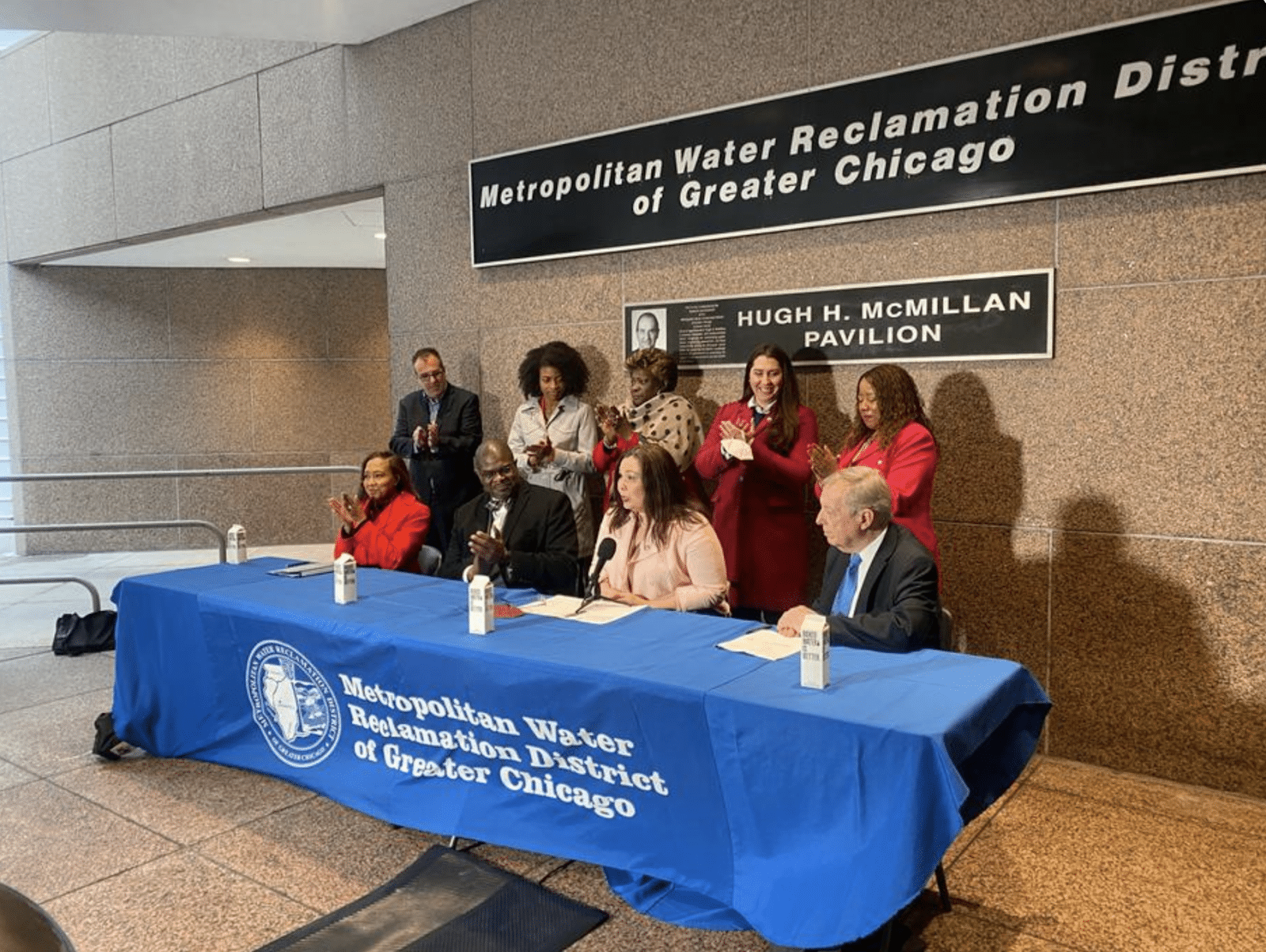
Another stormwater mitigation project currently pending in the south suburbs is the assessments by the Midwest Water Reclamation District of the south suburban sewage and water systems in Harvey, Dolton, Riverdale and Stone Park.
The assessments are funded with federal dollars through the United States Environmental Protection Agency’s (USEPA) Community Grants Program. The goal of the assessments is to identify vulnerabilities in each city’s sewer system, paving the way to a plan to improve infiltration and mitigate stormwater runoff.
MWRD is currently “submitting required grant application documents” and “developing contract documents for condition assessment of a portion of the sanitary sewer systems of the participating municipalities,” according to MWRD representative Allison Fore.
Though the project funds were appropriated during the FY2022 budget process, the grantees must now complete a grant application process and series of reviews to gain approval for the specific projects they are planning to use the Community Grants funding for.
“To the extent that grant funding is available, repairs of significant defects in the sanitary sewer system will be made,” Fore said. “Condition assessment is a necessary first step because it allows for identification of the location, nature, and severity of defects in the sanitary sewer system, which dictates the types of rehabilitation that are necessary to ensure the sanitary sewer system can continue providing service.”
For projects that include construction or infrastructure design, the grantee is required to undergo a National Environmental Policy Act review to outline a project’s potential environmental effects.
Once all statutory and regulatory requirements are fulfilled via the grant application and review process, the EPA will provide the appropriated funding. There is a potential for delays at this step of the process as additional funding for the work required to administer these grants was not allocated to the EPA, according to the EPA’s Community Grants Program Planning Instructions.
We’re filling the void after the collapse of local newspapers decades ago. But we can’t do it without reader support.
Help us continue to publish stories like these
Author

Related Articles
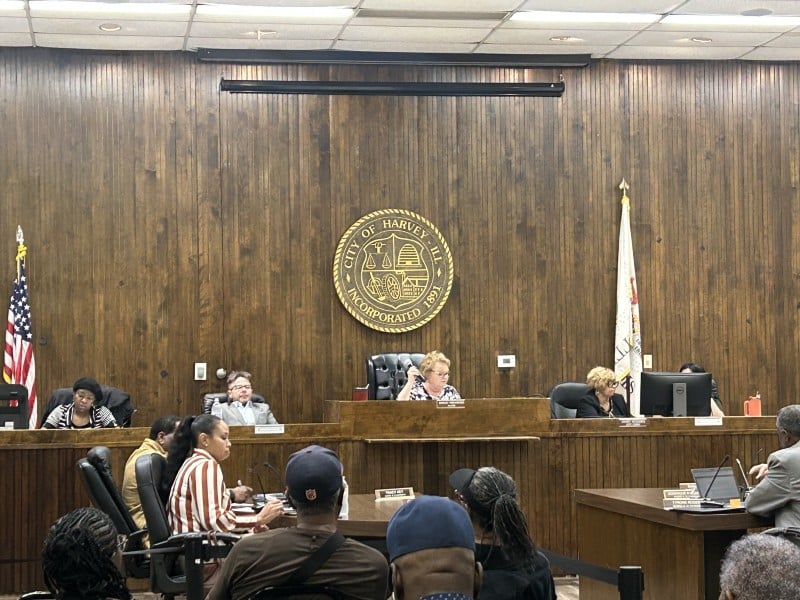
Harvey seeks $500,000 for aging water infrastructure
The city will apply for the federal funding to ease water main breaks after the City Council approved the measure during the March 9 meeting.
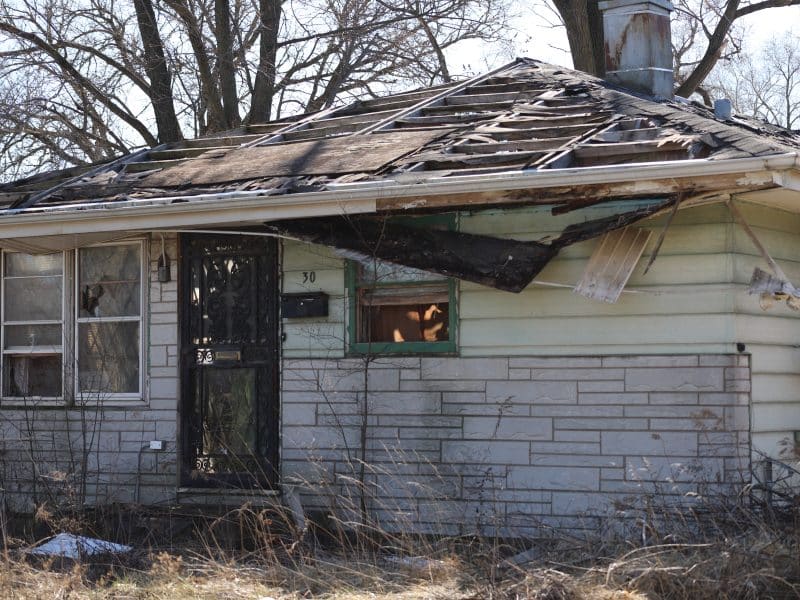
PHOTOS: In Dixmoor, a Cook County commissioner’s home languishes
While the 5th district’s Kisha McCaskill claims tax exemptions that reduce her bill on a Dixmoor home, it’s become an eyesore without proper upkeep.
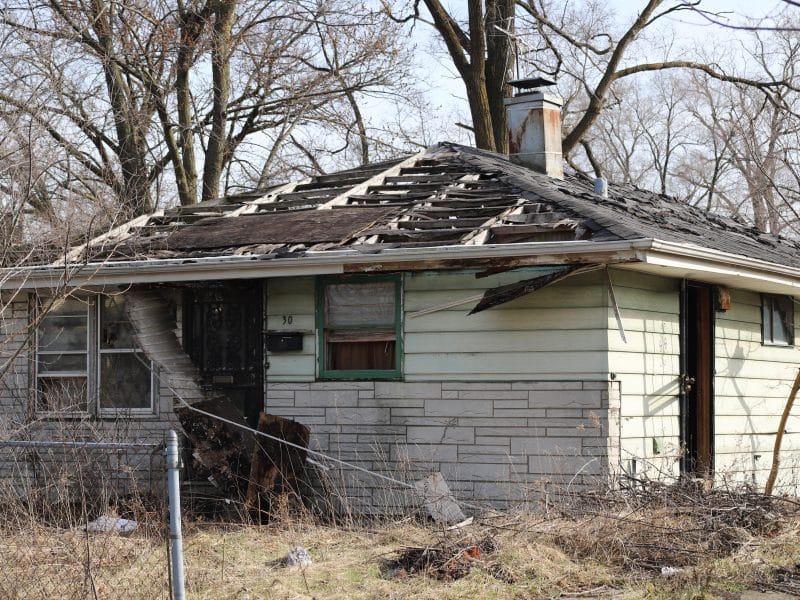
Cook County Commissioner Kisha McCaskill claims tax exemptions on abandoned Dixmoor property
Although she claims homeowner and senior exemptions, McCaskill does not reside in the home, which is a vagrant. The Cook County Assessor’s Office has referred the matter to its erroneous exemption department for investigation.

