
‘Lessons from the Harvey experience:’ MWRD to improve community outreach for future stormwater projects
The Metropolitan Water Reclamation District plans to increase small-group public engagement surrounding future projects involving eminent domain and the acquisition of private property.
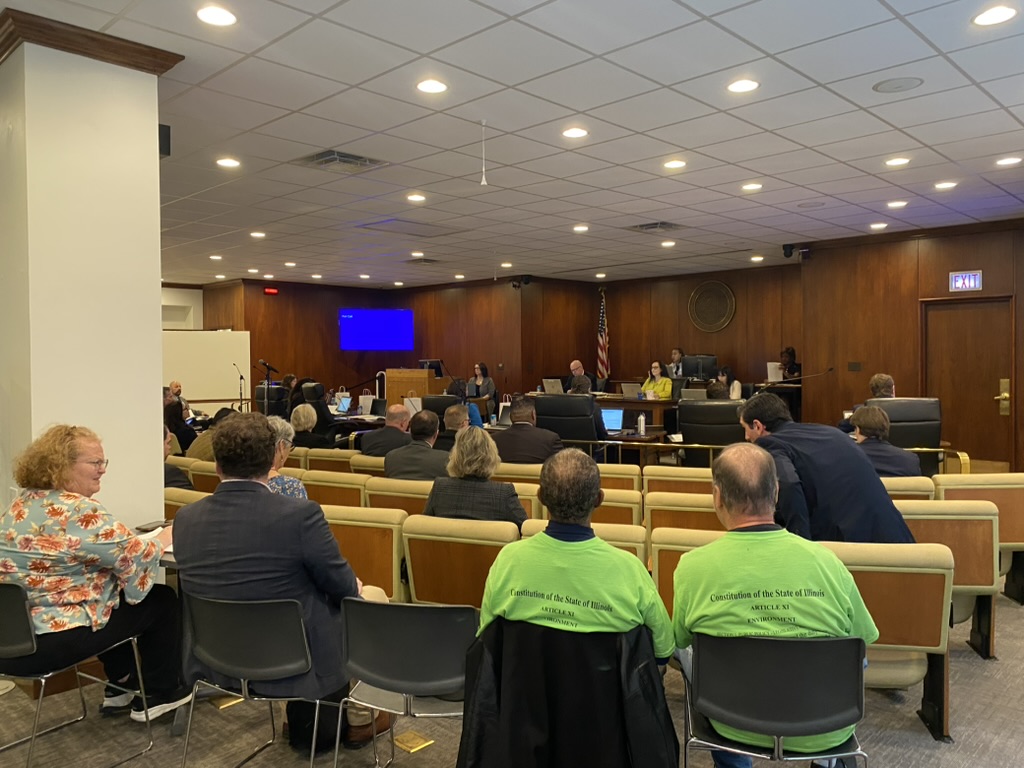
Harvey residents did not comment during the Metropolitan Water Reclamation District board of commissioners’ meeting on May 15. But commissioners assessed the backlash against Harvey and the District’s flood relief project on 153rd St. and Myrtle Ave. as they considered more projects involving eminent domain.
Harvey residents and elected officials alike have been protesting the Myrtle Ave. water retention pond. The dual-use pond project includes a park to be built on the old Ascension-St. Susanna Catholic Church site, owned by Harvey.
The project aims to reduce local flooding and provide recreational green space for citizens, but it relies on demolishing a block of homes and displacing longtime residents. Residents have also decried the District’s and Harvey’s communication regarding the project, alleging city officials kept them in the dark about the collateral of the water retention basin.
For future projects involving property acquisition, the District will take steps to inform the public through a series of town hall meetings in impacted communities. Staff and commissioners will be present to deliver presentations and answer questions about projects for community members, according to interim executive director John Murray.
The board of commissioners approved agreements with two law firms to assist in the acquisition of property rights for two flood relief projects: one in Maine Township and Park Ridge in northwest Cook County, and the other to maintain the Crestwood Drainage Ditch and other completed flood control measures in the Crestwood-Midlothian area of the southwest suburbs.
Both plans make use of eminent domain to acquire private property, like the process that took place on Myrtle Ave. to make way for the water retention pond. But unlike Harvey’s flood relief project, these instances of eminent domain concern right-of-way access to construction sites and will not displace people from their homes, according to comments from commissioner Sharon Waller.
“I wanted to thank staff for exercising compassion for the individual homeowners affected by eminent domain and condemnation cases required for stormwater projects that benefit surrounding communities as we face increases in extreme weather,” Waller said.
Waller encouraged the District to consider conducting pre-project surveys through an outside communications firm to inform residents and incentivize community members to stay involved during the project. “I applaud the District’s in-person initial contact of property owners in the Harvey stormwater project area,” Waller said.
Commissioner Eira Corral Sepúlveda stressed the importance of ensuring partner municipalities have good communication in place with residents about ongoing projects. From sharing news along with water bills or sending letters, Corral Sepúlveda suggested municipalities provide the District with a communications plan to ensure the outreach is happening.
“One of my learning lessons from the Harvey experience was that the town hall format was challenging for people,” Coral Sepúlveda said.
In September 2023, the District held a contentious town hall at City Hall. Mayor Chris Clark engaged in a shouting match with impacted residents Carlita Poole-Tingle and Dorothy Taylor. Visibly agitated at the public’s criticism, the mayor walked out of the meeting while President Kari Steele was speaking.
Future community engagement should be smaller groups to better present technical information and answer the public’s questions, Corral Sepúlveda suggested.
President Kari Steele noted her attendance at the Harvey town hall and small meetings with displaced homeowners. Steele met privately with the Poole-Tingle family last fall where the family requested the pond be built around their homes, the HWH confirmed. Days later, the District notified the family that was not an option and to seek legal counsel as the District eyed condemnation.
The family eventually signed their homes over to the District for over $500,000. They are the only families remaining on the block. They have until June 30 to vacate their properties.
The endeavor has been met with a slew of concerns, including that Harvey initially reported flooding woes around 147th St. and Wood St. in 2018. The Clark administration, which began in 2019, desired to build a park, ultimately shaping the District’s final site location, according to preliminary engineering reports the HWH previously obtained via public records request.
And after a man died of a drug overdose on Ascension-St. Susana property two years ago and stray dogs freely roam the city, public safety became a flashpoint in the endeavor. Both city and District officials, however, have kicked the can on those concerns, not publicly addressing them, at all.
Official business
Commissioners passed a measure to allow contractors working on the Bally’s Casino temporary access to inspect sewer lines. This move comes in the wake of concerns on waste management after significant debris fell into the Chicago river in December 2024.
Commissioner Precious Brady-Davis pushed her concerns about the construction aside and commended the cleanup and accountability developers performed in the wake of the accident.
“I appreciate how fairly and swiftly teams responded,” Brady-Davis said, “from inspecting the manhole and ensuring the debris was removed to conducting sewer televising and verifying that demolition activities were completed in compliance with District standards.”
We’re filling the void after the collapse of local newspapers decades ago. But we can’t do it without reader support.
Help us continue to publish stories like these
Author

Related Articles

PHOTOS: In Dixmoor, a Cook County commissioner’s home languishes
While the 5th district’s Kisha McCaskill claims tax exemptions that reduce her bill on a Dixmoor home, it’s become an eyesore without proper upkeep.
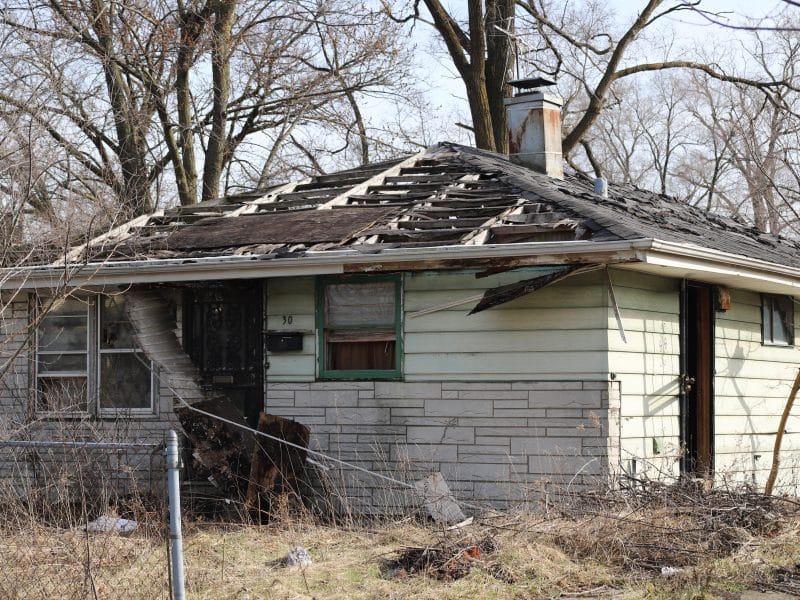
Cook County Commissioner Kisha McCaskill claims tax exemptions on abandoned Dixmoor property
Although she claims homeowner and senior exemptions, McCaskill does not reside in the home, which is a vagrant. The Cook County Assessor’s Office has referred the matter to its erroneous exemption department for investigation.

Why is electricity so expensive in the Midwest?
The culprit depends on where you live — but it’s probably not data centers (yet).

