
The pushback to Harvey Lofts was about more than NIMBYism
NIMBYism, or “not in my backyard,” refers to local efforts to stop development projects in one’s community. It’s often observed in affluent white suburban communities trying to block affordable housing complexes accessed by people of color. The charge against Harvey Lofts, a forthcoming $22 million apartment complex downtown, was a lot more nuanced than that.

Firoz Vohra has lived along 152nd Street and Broadway Avenue for nearly thirty years. A local mosque and community center sit nearby. Thornton’s two blocks down the street. He’s no stranger to early morning car traffic.
He’s staunchly opposed to Harvey Lofts. “You can sit down on the corner of 150th and Broadway Avenue and see the chaos that happens in the morning and afternoon when the students are coming to the school and going [home],” Vohra said.
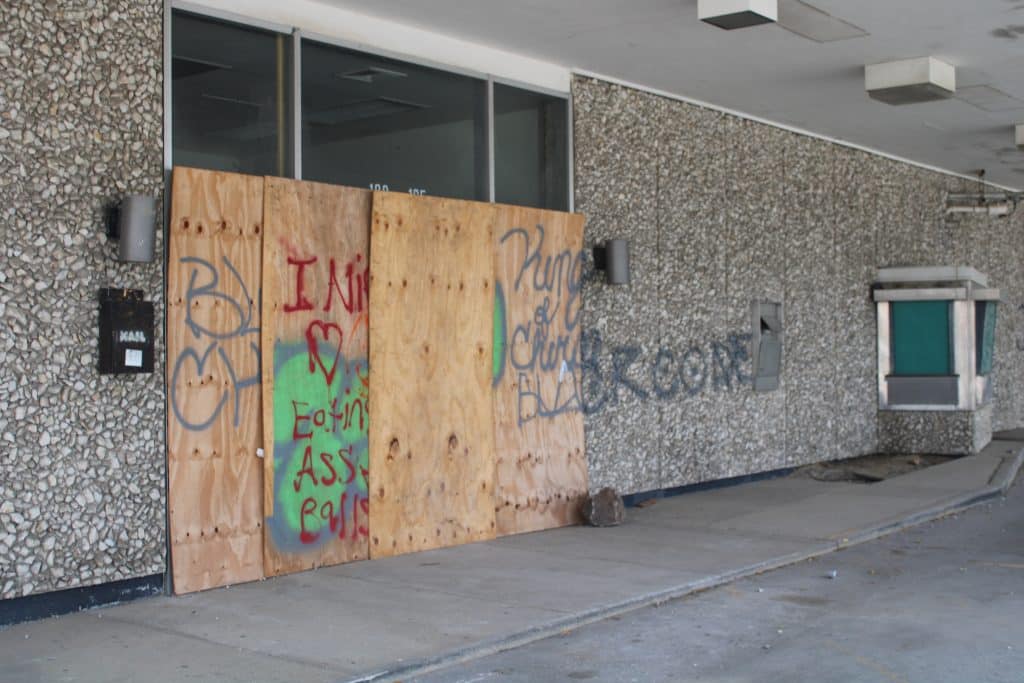
The nearby longtime vacant South Suburban Federal Savings and Land Association property will soon be demolished and turned into 43 new apartment units.
Vohra circulated a petition to oppose the City Council’s zoning change of the area in the fall of 2021. According to documents from the City Clerk, he submitted 163 petitions in person on November 2, 2021, and an additional 78 the following day to the planning commission.
Public space. Community gatherings. Food trucks and pop-up businesses. Vohra wants to see empty houses renovated and made into family homes; a safe place for community members of all ages, “where we have a place where our children can ride a bike, our seniors can sit […], women can walk freely on the sidewalk,” Vohra said.
Using a combination of federal, state and local tax increment funding, developer MVAH Partners, now Pivotal Housing Partners, plans to offer subsidized rental rates. Vohra’s petitions weren’t included in documents provided to the state housing department, according to documents obtained by the HWH via public records request.
But Mayor Chris Clark’s lone support letter was. The mayor’s office did not respond to multiple requests for comment.
The frustration surrounding ‘Lofts’ was about the ways economically diverse Black and Brown residents—middle-class homeowners and wage working renters—reimagine the downtown area, and in some ways, continue to feel that a mayoral administration that promised reform doesn’t value public input.

Reviving the economic core
In a few years, downtown Harvey will be dramatically transformed. The transit-oriented development plan reshaping it will bring a renovated Metra station and protected bike lanes along Broadway.
Introduced to the planning commission in 2019, the complex, situated in the heart of the 2nd Ward, is a $22 million “transit oriented workforce multifamily residential building.” It will include 17 two-bedroom apartments and 26 three-bedroom apartments for families, according to a presentation from former Economic Development Director Nicholas Greifer. There are income requirements to apply.
“I didn’t think it was the best move to make in Harvey’s current state,” said former 2nd Ward Alderman Marshun Tolbert. He voted down the project. “We still don’t have nothing for those residents to do. Our school system was not prepared for this,” Tolbert added. “And there are no grocery stores near … There’s no parks there.”
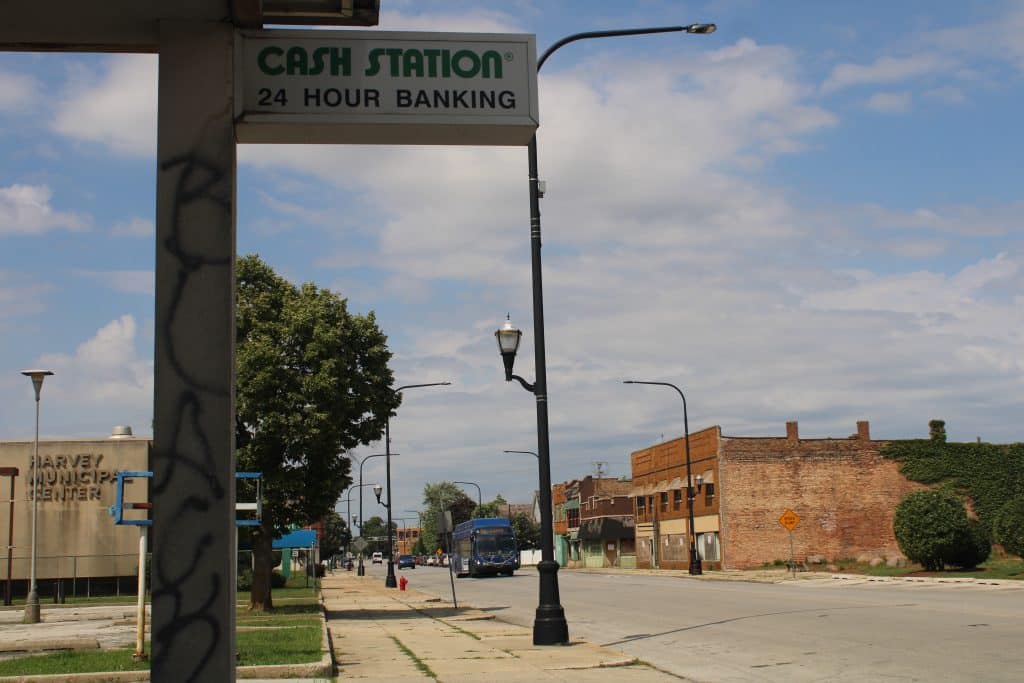

Alderman Dominique Randle-El (5th) supported the development from the get-go. “[Harvey Lofts] is the start of a new downtown. This is the first proof that this city council is ready to do business in the city,” Randle-El said. “[Business owners] go out and see how many people pass an intersection,” he said, “or come down the street per hour, to decide this is a good place to open a store.”
Ryan Roman Sinwelski, a member of the city’s planning commission, fancies commuter traffic from the Metra and bus lines is especially needed to catalyze growth. “Ideally for a walkable downtown, like Harvey has historically had, you’ve got to have [foot] traffic like 24/7,” Sinwelski said.
But Vohra’s not buying it. A small business owner, he doesn’t believe more people living downtown will automatically attract more businesses. He’s concerned crime detracts investors.
Harvey records the second highest number of homicides in all of Cook County, according to county data. The city should “take care of security, safety issues and stabilize the community,” Vohra elaborated.
A missed opportunity
Richard Monocchio, Chief Executive Officer of the Housing Authority of Cook County, which manages Harvey’s Turlington West senior apartments, said the biggest struggle for new affordable housing developments is “discrimination by race and income and socioeconomic [status]. People try to use euphemisms or other things to hide that,” Monocchio said, “but that’s a big problem that [we] fight up and down all over this county.”
Housing is a bridge. It can be the difference between a high salary or stagnated wage work. HACC’s portfolio now boasts behavioral health specialists at all public housing locations and will provide wraparound services for 300 formerly incarcerated people for the next three years.
“This housing is meant to fill in the gap between someone who may not be creditworthy, but maybe financially worthy to buy a house, and those who can’t buy a house at all for whatever reason,” Randle-El said.
The United States Department of Housing and Urban Development defines a household as “rent burdened” when their household costs exceed more than 30% of their yearly income.
According to the Center for Neighborhood Technology’s Housing & Transportation Index, the typical Harvey household spends nearly 35% of income on household costs.
There were public hearings and a City Hall display, but internet silos drove much of the public’s access to information, according to Randle-El. “I think social media is a gift and a curse,” a place where people discuss their biases, he said. Others then listen to online commentary as opposed to information from public meetings, he added.
‘Lofts’ was an opportunity to spark discourse about the future of Harvey housing. However, a city-led breach in public input all but guaranteed additional scrutiny.
Greifer’s presentation came nearly two years after the project’s introduction. Social media carping had already ensued. The council had returned to in-person meetings. Residents, however, were kept at bay, restricted to virtual access until the upcoming election season.
Ohio-based Pivotal has over 70 sites in its portfolio, spanning states from the Midwest and the South, including a senior housing complex near Chicago’s Midway Airport, Cicero Senior Lofts.
The group requested its application be expedited to apply for state funding via the Illinois Housing Development Authority, which city officials approved. In March 2021, the council approved its zoning change application to facilitate construction.
It’s a contested developer. An ongoing federal lawsuit alleges Pivotal didn’t provide accommodations for people with disabilities at properties it purchased in Kansas, in violation of the Fair Housing Act.
Then, came the disinformation campaign.
One evening, Sinwelski received a phone call urging him to pressure his alderperson to ‘vote no.’ It was former President Barack Obama. Or at least, the audio was spliced to sound like him. Sinwelski doesn’t know who made the call.
Sinwelski runs several Facebook groups that aim to spread positivity and build connections amongst residents. He used those spaces “to remind people the developer, as part of the project, is supposed to place new lighting around the building,” Sinwelski reflected on his efforts to quiet vitriol, “as well as 24/7 surveillance cameras and such.”
Plan commission members were treated to a tour of Cicero Senior Lofts. Sinwelski invited skeptics to come along. Most didn’t show. Tolbert, then a frequent mayoral critic, said he heard about the tour, but was not formally invited, and did not attend.



In the initial fall 2021 vote, City Council bowed to community criticism, voting the project down.
Tolbert supported increased affordable housing. With ‘Lofts,’ however, it “was not well presented to the community and that was my biggest issue,” he told the HWH.
Beginning with the January 10, 2022, City Council meeting—the final vote regarding ‘Lofts’—the mayor’s office abruptly stopped streaming sessions on Facebook Live. One alderperson abstained. Three yays. Two nays. Clark with the deciding vote.
Residents complained, alleging the shift violated the Open Meetings Act, a state transparency law. But COVID-19 era modifications to the OMA didn’t specify which platform public bodies needed to use or that footage had to be uploaded online—just that meetings could be held by audio or video.
The only footage posted on the city’s official Facebook page was that of public comment.

Groundbreaking unknown
Clark boasted about the project in a WTTW interview, which was played on rotation on City Hall’s vestibule television screens for the remainder of the year.
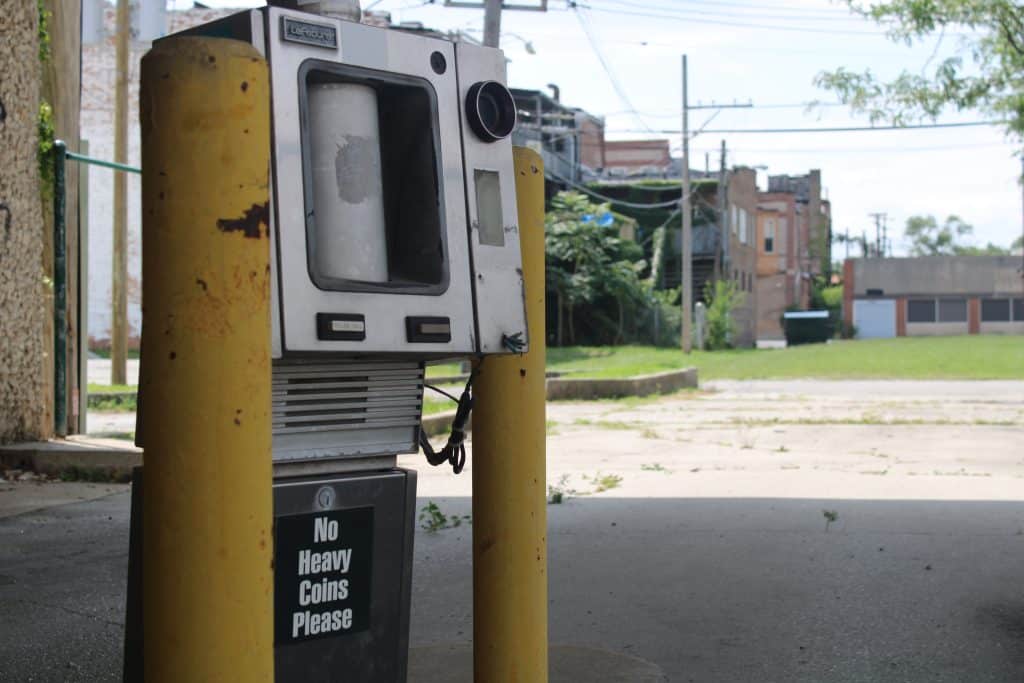
The vacant bank was to be demolished in the fall of 2022.
During the election season, the mayor’s campaign purchased billboards that said ‘Lofts’ would break ground in 2023.
The bank still stands to date.
It’s important to work with locals if you’re not from the area or doing rehabilitation or development work, said Bill Eager, Senior Vice President of Real Estate and Development of Preservation of Affordable Housing’s Midwest Region.
Community perspective is important, he said, because “they deserve a seat at the table—this is where they live.” While there may not always be agreement, “you try to reach a consensus as best you can on what needs to be done or how it’s designed,” he added.
POAH, which owns three senior buildings in Harvey, recently overhauled the YMCA senior complex around the corner from where ‘Lofts’ will be.
“I hope it becomes like the downtown Harvey I grew up in,” Randle-El said. “I hope that we can have another bakery down there; a small coffee shop down there like it used to be. That’s my dream,” he said.
We’re filling the void after the collapse of local newspapers decades ago. But we can’t do it without reader support.
Help us continue to publish stories like these
Author

Related Articles
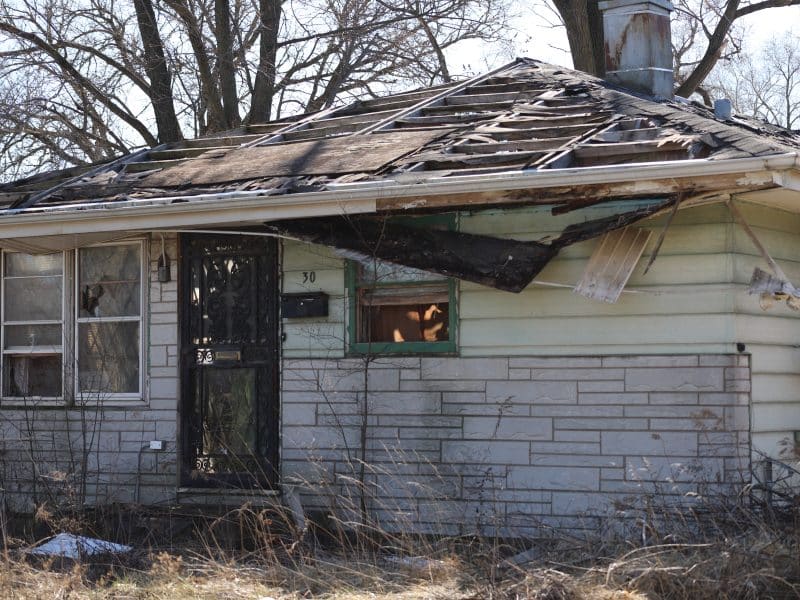
PHOTOS: In Dixmoor, a Cook County commissioner’s home languishes
While the 5th district’s Kisha McCaskill claims tax exemptions that reduce her bill on a Dixmoor home, it’s become an eyesore without proper upkeep.
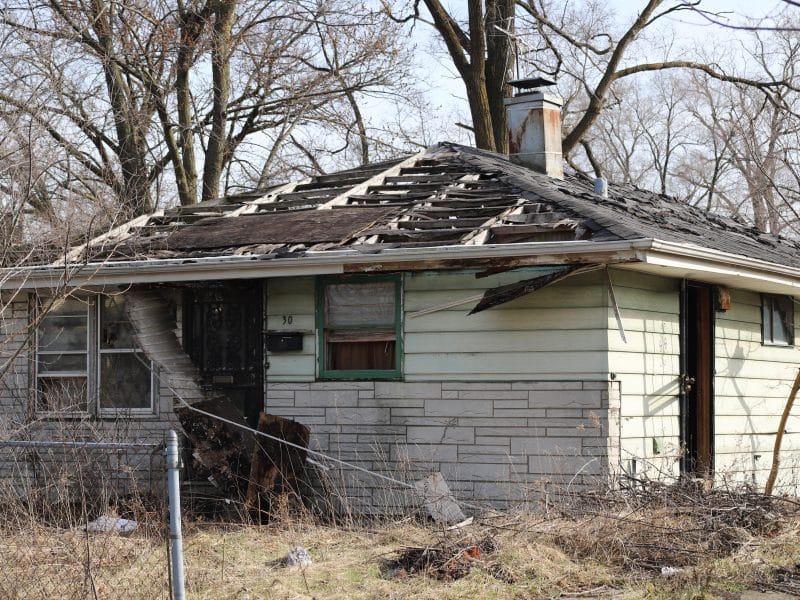
Cook County Commissioner Kisha McCaskill claims tax exemptions on abandoned Dixmoor property
Although she claims homeowner and senior exemptions, McCaskill does not reside in the home, which is a vagrant. The Cook County Assessor’s Office has referred the matter to its erroneous exemption department for investigation.

Why is electricity so expensive in the Midwest?
The culprit depends on where you live — but it’s probably not data centers (yet).

