
Clipping the wings: How state officials eviscerated basic ethics reforms in the south suburbs
Between 2016 and 2019, Southland voters approved term limits to curb corruption and career politicians. Years after Springfield influences led an effort to curtail them, some of those communities are dealing with calls for federal interventions into governmental wrongdoing and abuse.

Thaddeus Jones is anomalous yet conventional.
Jones made history as Calumet City’s first Black alderperson, elected in 1997. He’d openly expressed interest in becoming mayor — the town’s first Black mayor, at that. But a ballot referendum would thwart that.
In 2016, 65 percent of Calumet City voters expressed support for a four, four-year term limit for mayoral and clerk roles — a 16-year ceiling. Seventy-four percent approved a similar measure for aldermen a year later. Terms were retroactive, meaning one’s ability to pursue local office was limited by how much time previously served.
It was an early sign of a sweep across the region. Between 2016 and 2019, voters in Crestwood, Hazel Crest, Calumet City, Dolton, and Harvey established term limits to achieve more transparent governance and weed out corrupt politicians. The initiatives were overwhelmingly popular, county data show: the ballot referendums passed with 64 percent or more of vote share in each town.
Already a 19-year incumbent, Jones’ path for the city’s highest seat was cut off for the April 2017 elections. But years later, Jones would find — or create — another way to ascend.
Jones is an Illinois State Representative. In 2019, he and other state officials with ties to the south suburbs helped pass legislation that upended those basic ethics reforms efforts: House Bill 5698.
HB 5698 specifically targeted term limits passed on or after Nov. 8, 2016, mandating term limits be prospective, not retroactive. The move guaranteed officials who found themselves politically stunted by local ballot referendums would be allowed to run for office again.
Then, the storm came.
Jones successfully ran for mayor in 2021. A federal investigation into campaign spending. Locking City Hall doors, forcing alders outside in freezing temps. Blocking the Clerk from performing job duties. An alderwoman locked out of her official email account.
Jones’ mayoral tenure is macabre for Calumet City yet still quotidian for Cook County, known for its dirty politics. Calumet City spokesperson Sean Howard did not respond to requests for comment.
For some communities, the years since Jones and other state leaders gutted term limits have been plagued with trustees sparring with mayors amid an unabashed culture of political corruption — with little to no recourse for help.
State influence usurps public support
“The voters of Calumet City have passed a number of different referendums related to both term limits and eligibility to hold office,” said Calumet City Ald. James Patton (6th), who launched his own mayoral campaign for 2025.
One of those was a referendum barring officials from collecting pensions as both a municipal and state lawmaker. That was likely targeted toward Jones.
In spite of public buy-in to reforms, elected officials like Jones, Patton suggested, have leveraged their Springfield influence to “clip the wings” of the municipality. “Somewhere along the way almost all of those [efforts] have been overturned at the state level.”
State Sen. Napoleon Harris (D-15th) and Rep. Emanuel “Chris” Welch (D-7th) were key co-sponsors. The bill cleared the House, but failed in the Senate. However, it was reconsidered once more, clearing both chambers with bipartisan support.
Harris, who is now the Democratic candidate for Thornton Township Supervisor, the most powerful seat in the Southland, defended HB 5698.
“You can’t change the rules mid-game,” Harris said in reference to grassroots ballot referendums.
He then clarified HB5698’s aims: “It was a measure to get the rules on the books to say that, ‘hey, if you’re going to do this, let’s do it the correct way. We’re giving everyone an opportunity to hit the reset button.”
But state officials themselves changed the rules and undercut home rule, which allows a municipality with a population of at least 20,000 to self-govern and shape policy. In Calumet City, Harvey, Dolton, and Crestwood, hard-fought term limits are null and void; residents would have to collect signatures for a new ballot referendum.

“… Vote them out at the next election, if that’s what the majority opinion of voters want,” said Visiting Professor of the Southern Illinois University Carbondale Paul Simon Public Policy Institute John S. Jackson. “You don’t need to depend on term limits to do it,” a sentiment Harris echoed.
Doug Brandow, a scholar at nonpartisan Washington-D.C. think tank Cato Institute, said term limits, widely popular, are “grassroots politics, at its finest.” They’re a way to guarantee “more elections based on substance as opposed to incumbent advantage.” Pushback, he added, tends to be more on the side of its impact on candidate preference.
At first impulse, term limits appear to curb corruption but may inadvertently encourage more of it, suggested Anthony Fowler, University of Chicago politics professor and Center of Effective Government faculty affiliate.
“There are electoral incentives, meaning, elected officials will do their job well and get re-elected because voters are aware of their impact,” Fowler said.
Term limits remove these incentives, Fowler said, and instead “officials] might go ahead and do whatever else they want to do in the absence of electoral incentives, which could include things like corruption, enriching themselves or, government contracts to friends and so forth.”
Fowler’s analysis of empirical evidence posits that “term limits appear to reduce economic growth and increase ideological polarization and remove from office high-quality elected officials who the voters prefer.”
That’s not Max Solomon’s perspective.
An attorney and South Suburban College political science adjunct professor, he led Hazel Crest’s efforts to implement term limits. There, its longest serving official was on the village’s board of trustees for a total of 27 years. Eight of those were as mayor.
Solomon believes that the longer an elected official is in office, the longer they can be exposed to corruption. Eventually, “you begin to compromise,” Solomon said. “Integrity and accountability are out the window.”
Hazel Crest survived HB 5698 thanks to one word: “prospective.”
In 2017, 64 percent of voters approved a two four-year term limit for mayor, trustees, and clerk — a total of eight years of service. Their measure included both retroactive and prospective language, meaning none of the previous years served would be included in the term limits once the binding measure was established.
Mayor Venard Alsberry can no longer run for Hazel Crest office because of efforts like Solomon’s. With his tenure coming to an end, Alsberry urged voters to support two ballot measures that would’ve extended term limits to 16 and 20 years, respectively speaking.
Locals shot down both referenda.
Tethered destruction
Harvey and Dolton are twin cities: Questionable spending. Delinquent audits. Taxpayer-funded trips to Las Vegas. Police harassment. A mayor who locals and council members want out.
Dolton’s garnered national scrutiny for crises it shares with Harvey, a town likely on its way to American stupor now that the mayor is running for Thornton Township Supervisor.

It’s hard to believe there weren’t ulterior motives to stunting ethics reforms across the south suburbs, local officials told the HWH.
“If we really were being equitable, and we were altruistic about term limits, and it wasn’t for a personal ploy, we wouldn’t have overturned them,” Harvey Ald. Colby Chapman (2nd) said. “…People weren’t keen with the administration,” Chapman said in reference to the Kellogg administration.
In a cyclical nature of events, she finds herself sparring with a mayor, once heralded as a reformer, now dubbed a “dictator,” who lay the groundwork for an effort to stunt corruption.
Harvey Mayor Chris Clark opposed HB 5698, at the time. As a freshman alderman, he helped secure a four four-year cap on service, with 85 percent of voter approval.
But now, his administration is unabashedly corrupt, mirroring much of the behavior of the one before it.
Clark, City Administrator Corean Davis, and Harvey Police Chief Cameron Biddings are attempting to frame Chapman for assault. Video footage confirms she didn’t do it.
Clark ordered police to intimidate critics. A federal lawsuit alleges the administration is extorting local business owners under the pretext of collecting unpaid commercial property taxes.
He did not respond to requests for comment.

Clark works in Calumet City as an ethics official, as well as public records clerk. Jones endorsed his 2023 campaign bid. In a clear conflict of interest, Clark even tapped a co-worker to investigate Chapman. Speaker Welch, who initially filed HB 5698 before Jones and Harris became co-sponsors, is Clark’s biggest campaign donor. Welch pumped nearly $57,000 into Clark’s 2023 mayoral reelection bid.
Welch works for Ancel Glink, a law firm that serves as corporation counsel in both Harvey and Calumet City. Up until 2022, its attorneys worked in Dolton. Some complain the firm makes top dollar on the backs of poor towns that reckon with political devastation.

Dolton trustee Kiana Belcher’s had enough. She and three others, known on the “Fab 4” to locals, have hired their own legal representation. They even have a website separate from the village’s.
Residents sought to recall Mayor Tiffany Henyard, who also serves as the Thornton Township Supervisor. But after a legal technicality, it was halted. Belcher believes external powers are at play that thwart local municipalities exercising their home rule power. However, Illinois law doesn’t actually allow a recall mechanism for mayors, anyhow; only the governor.
But Belcher’s hopeful. Intense media scrutiny has, at least, translated to greater civic engagement, she said.
“We used to have 10 or 15 people at a board meeting. Now you have 100 people at a board meeting. So, people are coming to see what’s going on and how their tax dollars are being spent.”
We’re filling the void after the collapse of local newspapers decades ago. But we can’t do it without reader support.
Help us continue to publish stories like these
Author

Related Articles
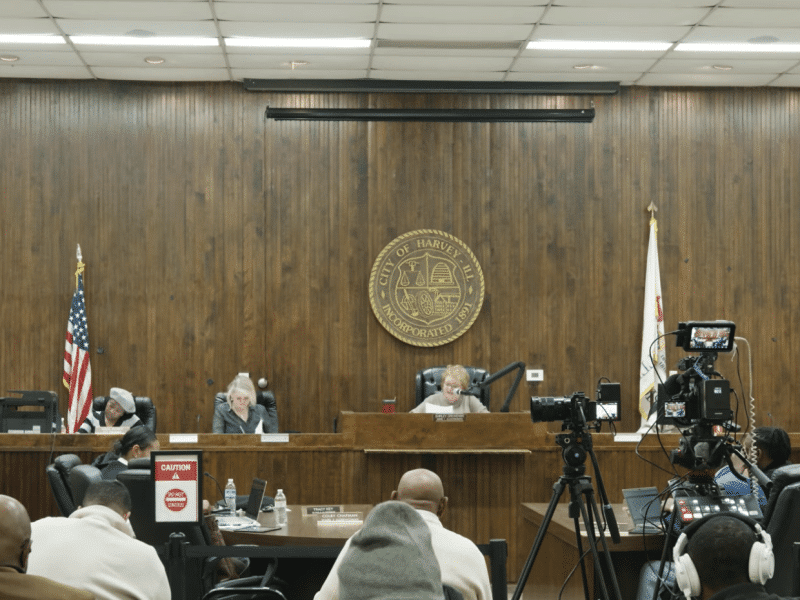
Applications open to become Harvey’s interim City Clerk
The Harvey City Council is expected to introduce a new City Clerk at its next meeting on Feb. 23. The acting clerk will complete Rosa Arambula’s term, who quietly resigned from the position months ago.
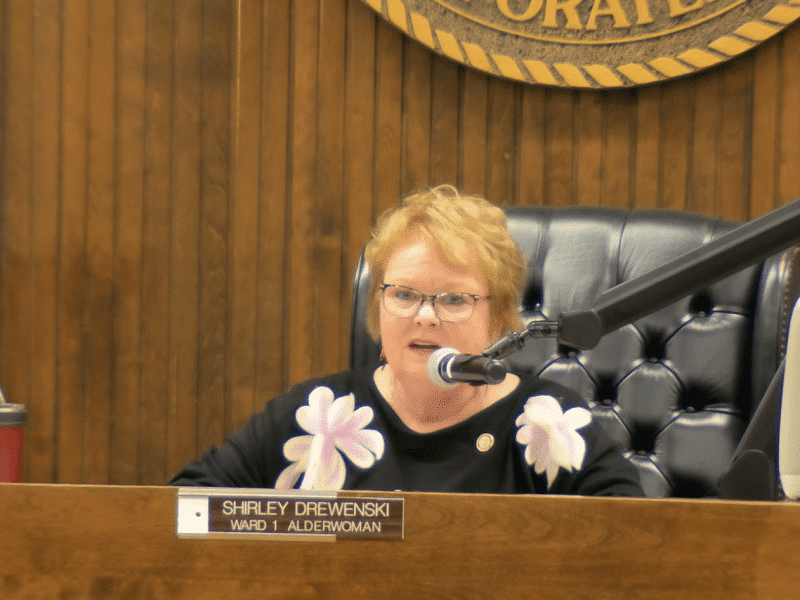
Following Mayor Clark’s death, Harvey City Council deadlocked on vote to select successor
Alds. Shirley Drewenski (1st) and Dominique Randle-El (5th) nominated themselves to become mayor. But each failed to receive the four majority votes necessary to become acting mayor.
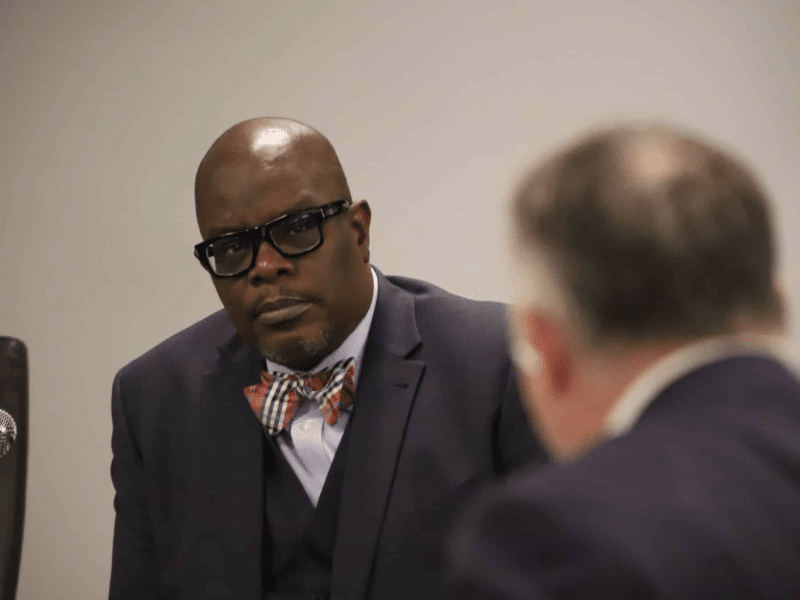
Mayor Chris Clark has died
He was elected in 2019 and re-elected in 2023.

