
Could Colby Chapman finally build Harvey’s rainbow coalition?
“I don’t think that there’s ever been an opportunity to create conversation.” Harvey’s a largely Black and Brown community getting younger by the day. In her quest to become the first Black 2nd Ward alderwoman and first Japanese alderperson ever, Chapman could usher in the greatest political shift in Harvey politics since the David Johnson era.
Colby Chapman remembers the David Johnson era. It was the late 80s. Harvey was changing: The first Black mayor. Reckoning from de-industrialization. Adapting to both the service and an emerging transportation, distribution, and logistics economies. And the drug economy.
Chapman grew up on 152nd Street and Lexington, or ‘the L.E.X’ for older Millennials. She remembers the aroma and bliss of local favorites like Jean’s Bakery. But her childhood was slightly different than that of her peers.
“Growing up, my grandmother chanted while my other grandmother prayed,” she said. “We eat candied yams and sushi. We[‘re] eating fried chicken and fried dumplings.”
Her father’s mother is from Okinawa, Japan, having married a Black man during the Vietnam War and having six kids. Her other grandmother grew up in Natchez, Mississippi. It was the site of the Devil’s Punchbowl, a walled encampment that housed nearly 20,000 newly freed slaves following the Civil War. There they were left to starve and die.
“When you think about those legacies and their histories based on placement, this is where it all loops,” Chapman said. She’s looking to build a movement. One that both unapologetically leverages a pro-Black politic while simultaneously unleashing the power of a multiracial, intergenerational democracy where many feel so locked out of it.
Anti-Blackness does exist in some Brown communities. There’s also an unspoken racial resentment that some Black Harvey residents have toward Latino and Indian residents. But that’s mapped unto genuine economic frustrations, namely subpar job growth, homeownership, and entrepreneurship.
Chapman alluded economic undertones drive discord—and crime. Economic empowerment, she suggested, can help stem the tide of interracial disconnectedness because “they see jobs are on the rise. They see the community being cleaned up,” she said, shifting political figures away from a piecemeal engagement strategy.
“That will lessen the idea that I need to have this particular approach around this group or act this particular way. That dead ends that because all together, we’re being empowered.” That type of understanding doesn’t currently exist, she stressed. “We [Black people] have a grudge against anybody that we see, and we even have a grudge against our own, as well.” But it’s not just about building across races. There’s a need, Chapman said, to build across age.
“I love the seniors. I really wish both my grandparents could be here to see this. We have to focus on everybody,” she said. “You got to get young people involved,” said Chapman, current Director of Student Services at Chicago’s Excel Academy.
For decades, bureaucratic hopefuls have shaped campaigns around the city’s aging population, the most active voting bloc. But that strategy may not hold much longer. The city’s getting younger. Harvey’s median age is 35 ½, according to federal census data.
This, coupled with Chapman’s explicit gendered analysis of the current political climate, could allow her to fashion the city’s first truly racially diverse, progressive political coalition—led by Gen Z and Millennials. If successful, Chapman could usher in the greatest political and cultural shift in Harvey not seen since the Johnson era.
What lies between ‘the L.E.X’
If elected, Chapman would become the first Black alderwoman of the 2nd Ward. The significance of this election—the ‘firsts’ —aren’t lost on Chapman, 35, who could also become the city’s first Asian—specifically Japanese—alderperson.
She has a progressive platform, one that reflects shifting politics of a younger generation. More police oversight. Holistic approaches to tackling crime. Tending to climate change. Reimagining economies. Chapman distinguishes herself from the city’s cadre in her articulation of policy. She lacks the polish of a career politician, instead christened with the energy of those politically radicalized by the 2008 global economic recession and Black Lives Matter movements.
Diversity and inclusion, Chapman said, are her foundational principles. “In a community so diverse,” she began, “I’m so diverse.” Her campaign’s about representation and policy change, but it’s also about compassionate dialogue. “We’re looking at a ward that houses a third of Indians, about a quarter of Hispanics and the rest African-American. We all really have like minded issues, but I don’t think that there’s ever been an opportunity to create conversation.”
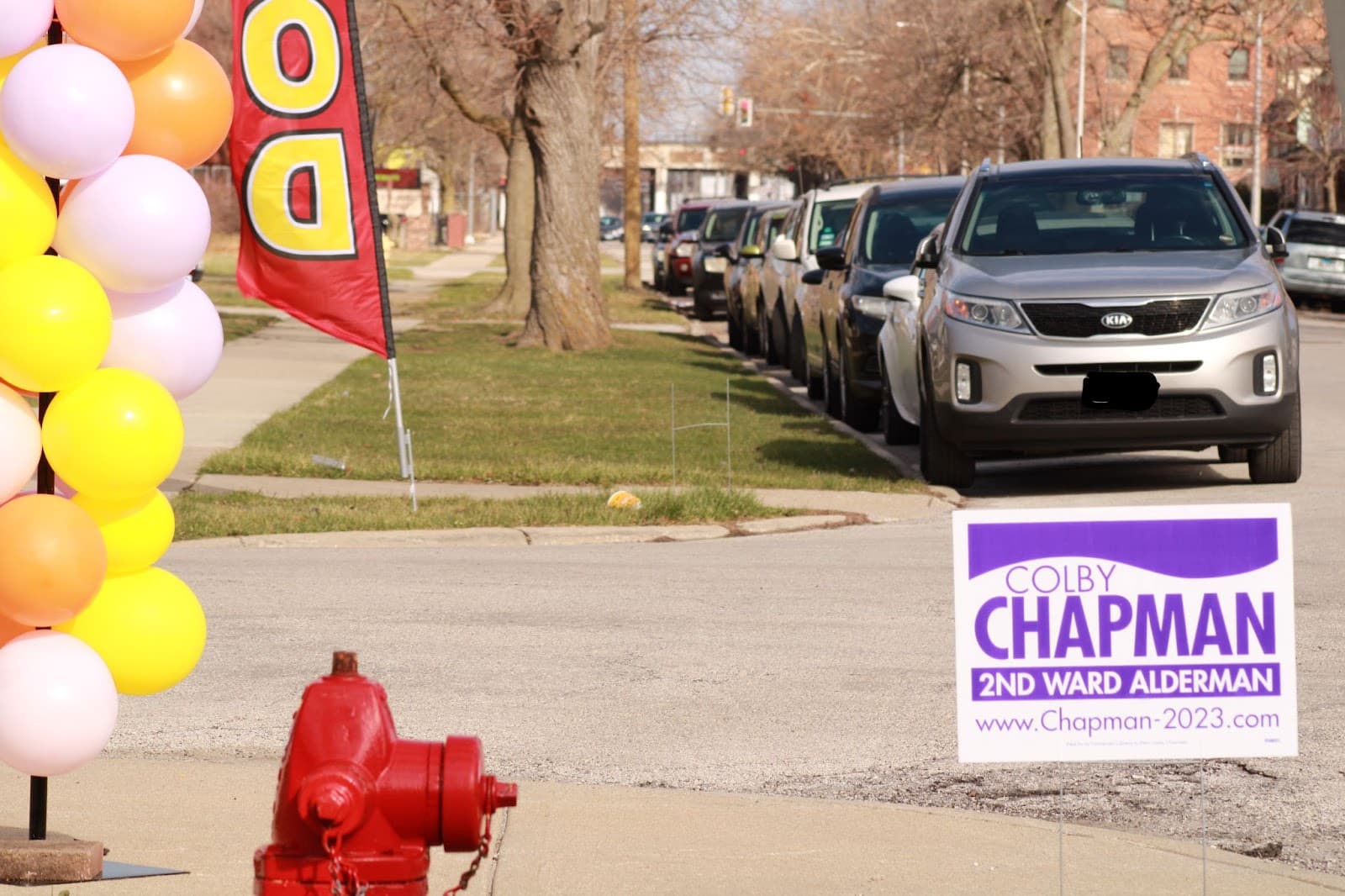
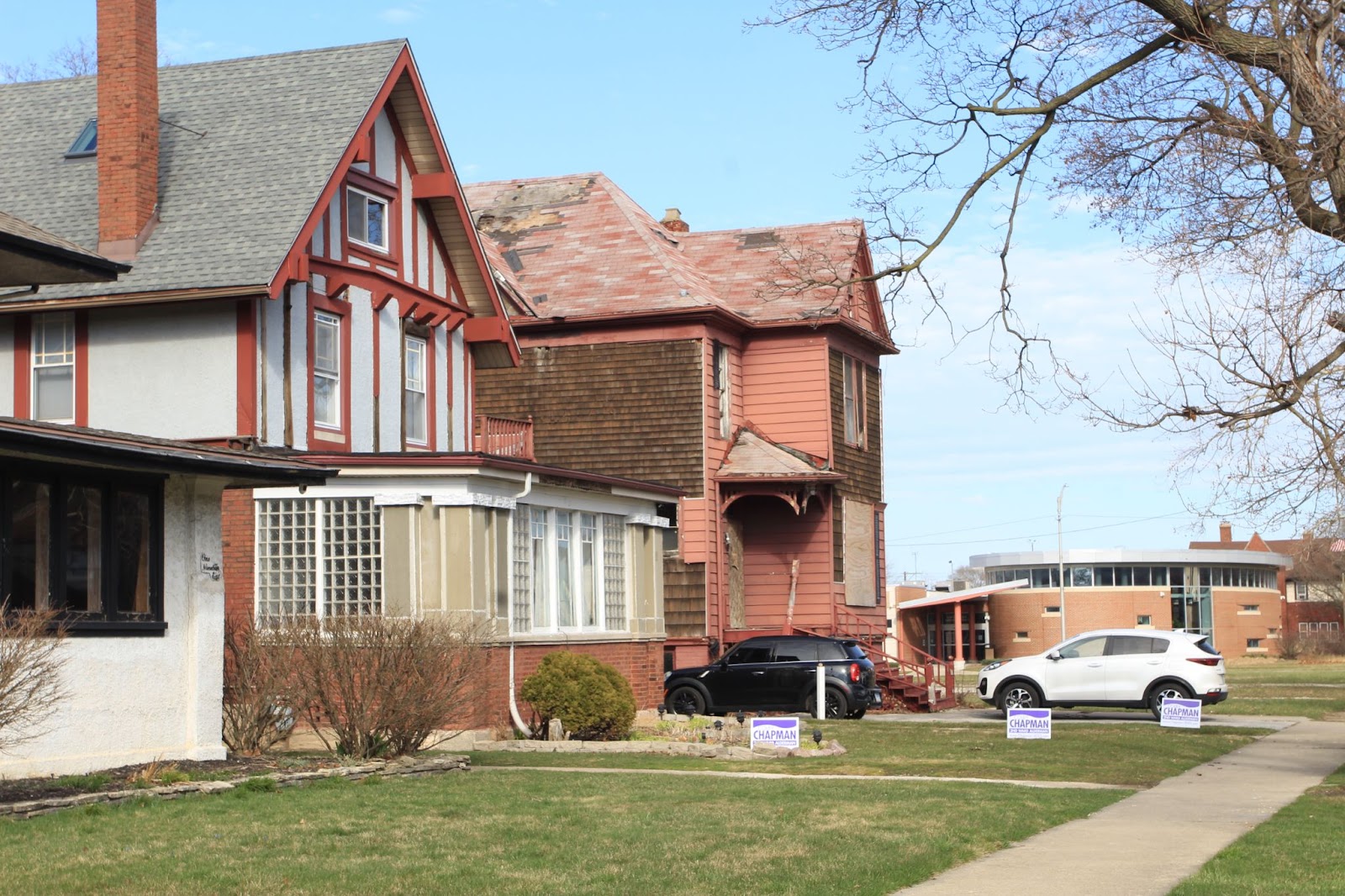
Chapman now calls 154th Street and Lexington Avenue home. You can’t miss it. It’s an architecture enthusiast’s love affair. There are terra cottas, workers cottages, and a Frank Lloyd Wright-designed prairie kit. Chapman’s church, Transformation United Community Methodist Church, sits around the corner.
The block is beauteous and stone’s throw away from civic centers like the Post Office, Harvey Public Library District, and City Hall. That means Chapman also lives at the center of major redevelopment projects coming downtown, most notably the $70 million Harvey Pace Bus Transportation overhaul.
But in 2016, an incident emblematic of Harvey’s growing opioid, heroin, and crack problems in the immediate downtown area challenged that iconoclasm. Two people overdosed in the abandoned home next door, their bodies found wrapped in garbage bags. The home’s been vacant for nearly 15 years, Chapman said. That incident sparked her first run for the aldermanic seat in 2019, where she lost to Alderman Marshun Tolbert, now a mayoral candidate.
Alas, she’s not deterred, contending Harvey is “on the precipice of everything great. And I think that’s the time we’re in.” A Millennial, Chapman grew up against the backdrop of two conflicting Harveys: the suburban idealism and simultaneous decline into economic despair.
Her childhood home, located at 15216 Lexington Avenue is gone. Burned to crisp after a fire. Most homes on the block are abandoned, the only sign of life a corner church. But it was “the community piece,” she said, that stole her heart growing up.
“I remember going to Miss Aedra and Mister George’s house on Lexington as a itty bitty baby. I have pictures. Those were the babysitters,” she reflected. “It was just this sense of block by block mentality, too.”
A paradigm shift toward progressivism
The year is 1977. The second wave of feminism arrests the nation.
In Harvey, Gloria Taylor becomes the first Black alderwoman for the 3rd Ward and first to serve on the City Council. Theresa Dixon, PhD is the Chief Executive Officer of the Gloria J. Taylor Foundation, the namesake dedicated to her mother, the city’s first Black alderwoman. Taylor was also the first woman elected to a citywide office, according to the GJTF.
“I think it’s very important to be open and be diverse and to make sure that every sector of the community is represented, young, old, regardless of race, gender—that everyone has a voice to be able to make an impact,” Dixon said.
But fifty years since Taylor’s historic election, Harvey hasn’t made strides in regard to gender equity on City Council. Women are more likely to hold City Clerk or Treasurer positions than they are an aldermanic seat. Alderwoman Shirley Drewenski (1st), running unopposed, will mark 12 years at the end of her upcoming term, one of the longest-serving women in history.
“When we look at the administration, we see just a very kind of male dominated approach,” Chapman said. “You have to come in building relationships. I think that’s what we’ve missed the mark on when I look at City Council and women not having that representation.”
Drewenski’s seat is basically guaranteed. If Alderwoman Telanee Smith (3rd) successfully defends her seat and Chapman is elected, City Council will be an even gender split; three men, three women. That representation could shift business operations in the city—both the type of establishments and face of ownership.
With a large confluence of strip clubs, Harvey is the Black adult entertainment capital of the Chicago-area. The city’s finances are volatile. Liquor-selling establishments like strip clubs are a reliable source of commerce and sales tax revenue. Harvey is also one of the few American temperance towns, a community designed as alcohol-free. Conceptualized as a faith-based city, or “Holy City,” as Chapman called it because of the high concentration of churches, liquor licenses are a dividing issue.
If more women were on the Council, “I don’t think that Arnie’s [Idle Hour] would be 0.2 [miles] from Rosa Parks [Middle School],” she said, while noting that her intent was not to reify gender norms or knock men. “Why is that right there on the corner and a school right there?” It’s a contrasting image. A strip club five blocks away from a school. Chapman believes that greater gender representation at the very least can yield more nuanced conversations about city businesses.
Mayor Chris Clark’s liquor ordinance, which put restrictions on hours alcohol can be sold in Harvey, didn’t address liquor license distribution. And that’s under the mayor’s office purview, not City Council. “Why does the mayor have governing power to pick who gets liquor licenses? Why is that not amongst the Council?” Chapman impugned.
Make no mistake, Chapman’s pro-(small) business. She’s the founder of PennyUp, a nonprofit that teaches financial literacy to young teens. Her presence on the Council would make her the Council’s only woman business owner. Her voice could unlock potential for more women-owned businesses to bloom in Harvey.
Chapman breaks down her platform in four steps: connection, community, camaraderie and change. She plans on using a block by block approach to ensure that 2nd Ward residents have a seat at the table to voice their concerns as well as fostering community between neighbors.
Utilizing digital methods of communication also intends to increase transparency between Chapman and her constituents. It’s customer-service centric model, likely from her time working in management at Wal-Marts across the area.
Chapman’s not old enough to remember Taylor’s ascent to City Council, but her presence looms over this election.
Founded in 1966, the education-focused GJTF has sent 5,000 students to college. The Harvey Park District has a banquet hall named in Taylor’s honor. The park district recently adorned the building with a sign in her name.
Although it took some years to put up, Dixon’s pleased to see her mom’s name in lights as she drives past, she said. “I look at anyone that can come in and have Harvey get back to where it was when I was a child,” Dixon said. “No one ever thought that my mother would be one of the firsts.”
The soul of a city
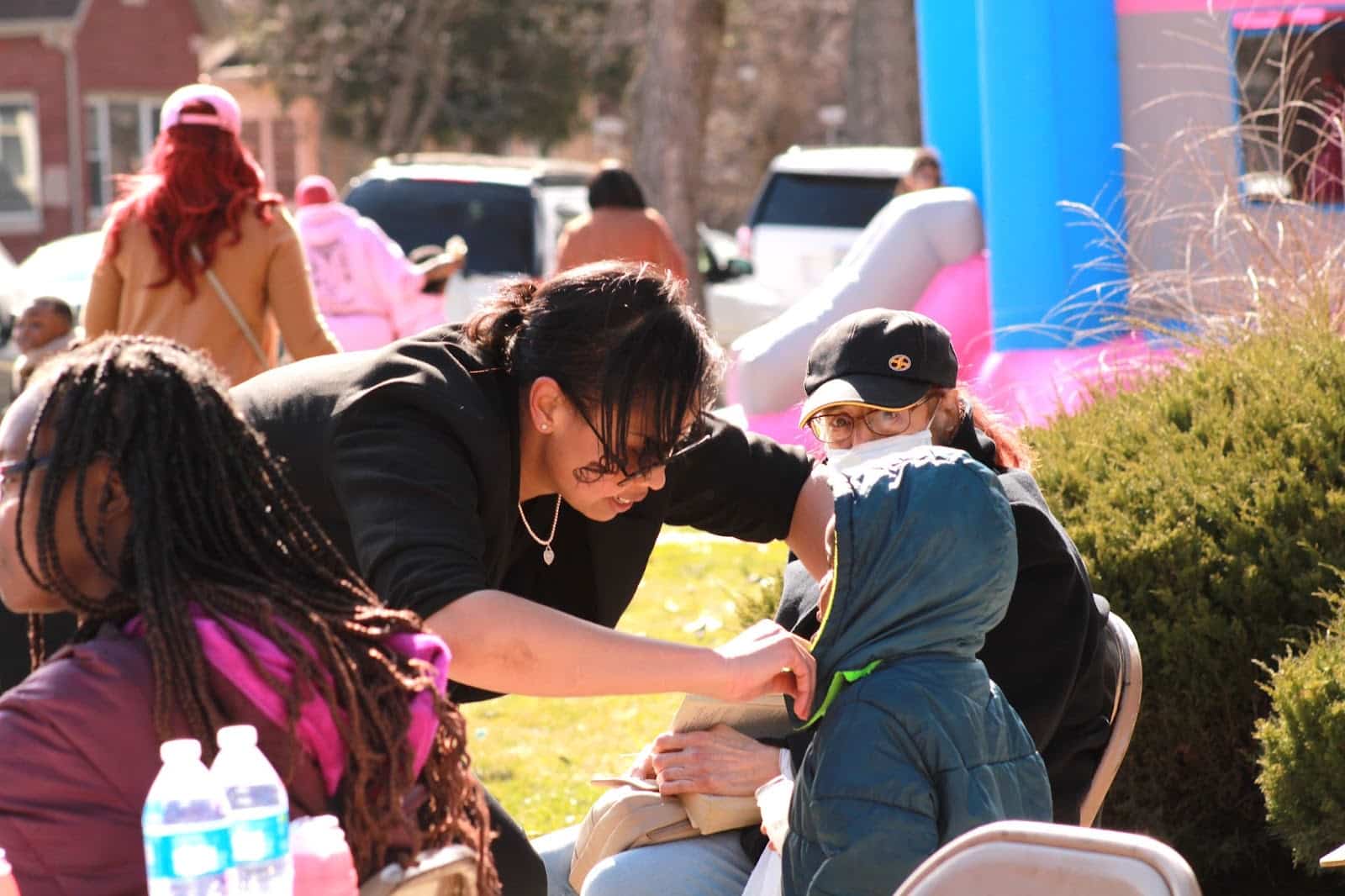
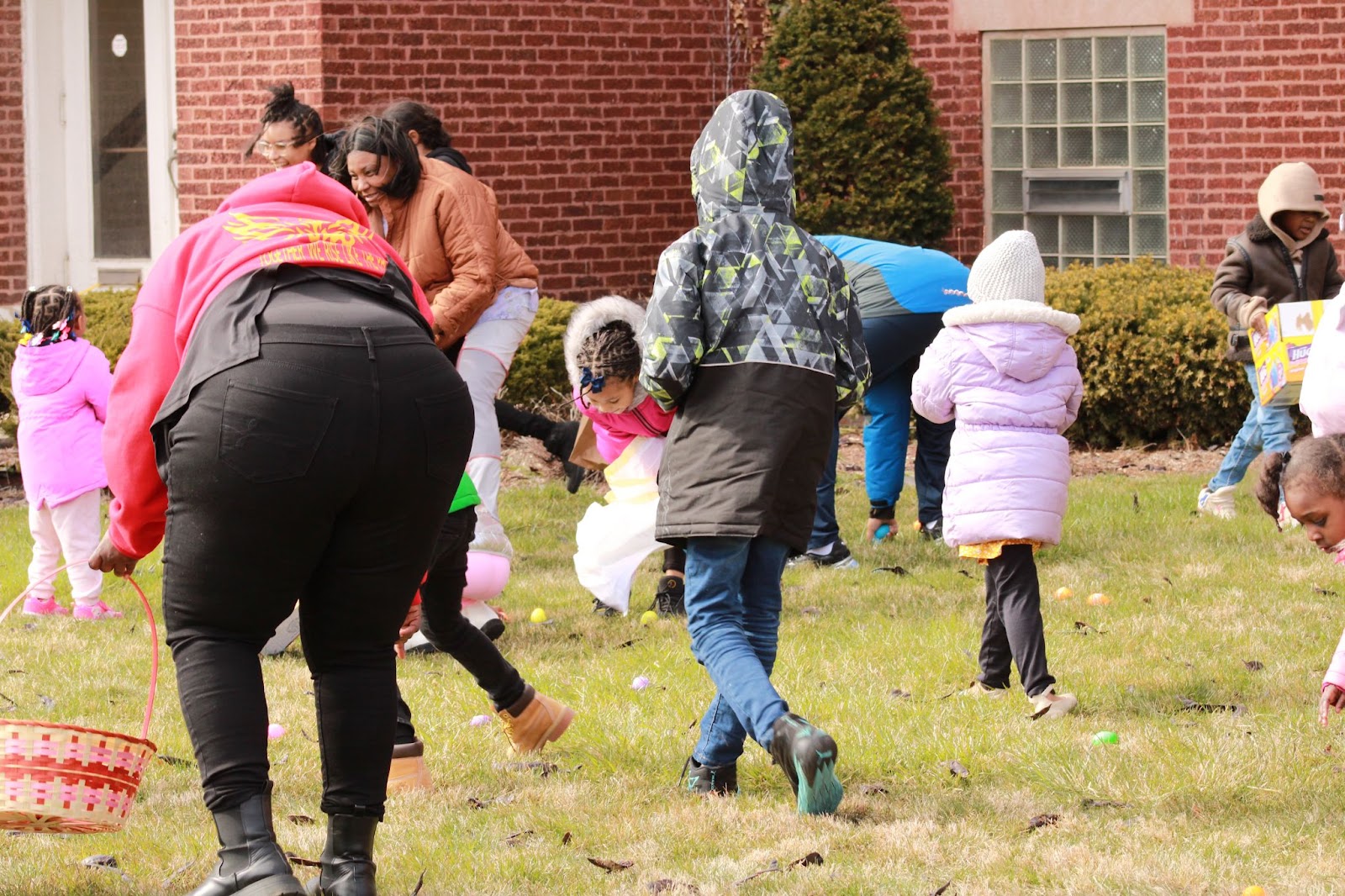
It’s Palm Sunday. There’s music, free food, and activities for kids to bring the 2nd Ward community together. Chapman’s campaign is grassroots. One supported by a confluence of everyday people—grandmothers, pastors, cousins, childcare workers, aspiring musicians. It’s a family—blood and chosen.
One spots Illinois State Representative Will Davis (30th) amidst kids running toward the bouncy gym while eating ice cream. Although Davis initially supported a different candidate, Chapman earned his support after the primary election. “It’s still about building relationships and trying to get to know people beyond whatever the personal relationships that you have with them,” Davis said. “She [Chapman] wants things to be better in the City of Harvey.”
Davis shares Chapman’s concerns facing the area including infrastructure, housing and safety issues. Among his top priorities is fostering economic development. “I can assure you that people that I deal with in Springfield are looking at Harvey,” Davis said. “They want to bring development to communities like this, but they’re just kind of waiting to see how the political landscape plays out.”
That political landscape is likely Harvey’s reputation, one of unabashed corruption, a constant cloud of federal lawsuits—residents forced to wear the scarlet ‘K.’
The grass gets cut, now. Garbage taken out. But even following the exit of former mayor Eric J. Kellogg, one thing remains: Harvey’s political institutions remain largely unchanged. The city is still flippantly corrupt. Or at least the structures that allow that behavior to exist and persist remain. And that presents the single greatest threat to any future investment—public or private.
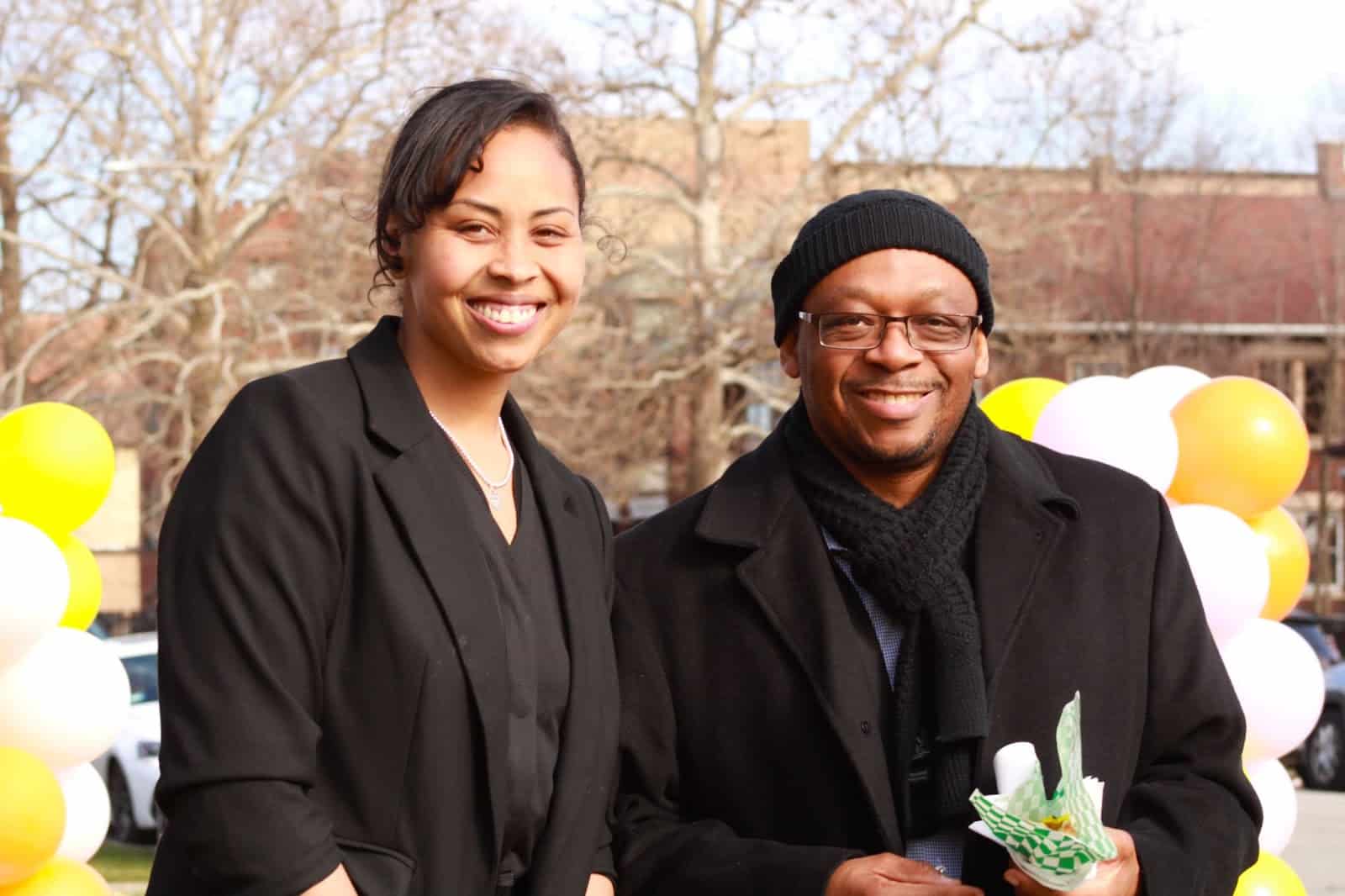
Alicia Dumetz made her way to Transformation to support Chapman’s efforts.
Dumetz said she’s only known Chapman for a short while. As children run around, playing in the nearby bouncy house, their families enjoy the weather and each other’s presence. ”Just look at how she laid this affair out,” Dumetz said. “This is fabulous.”
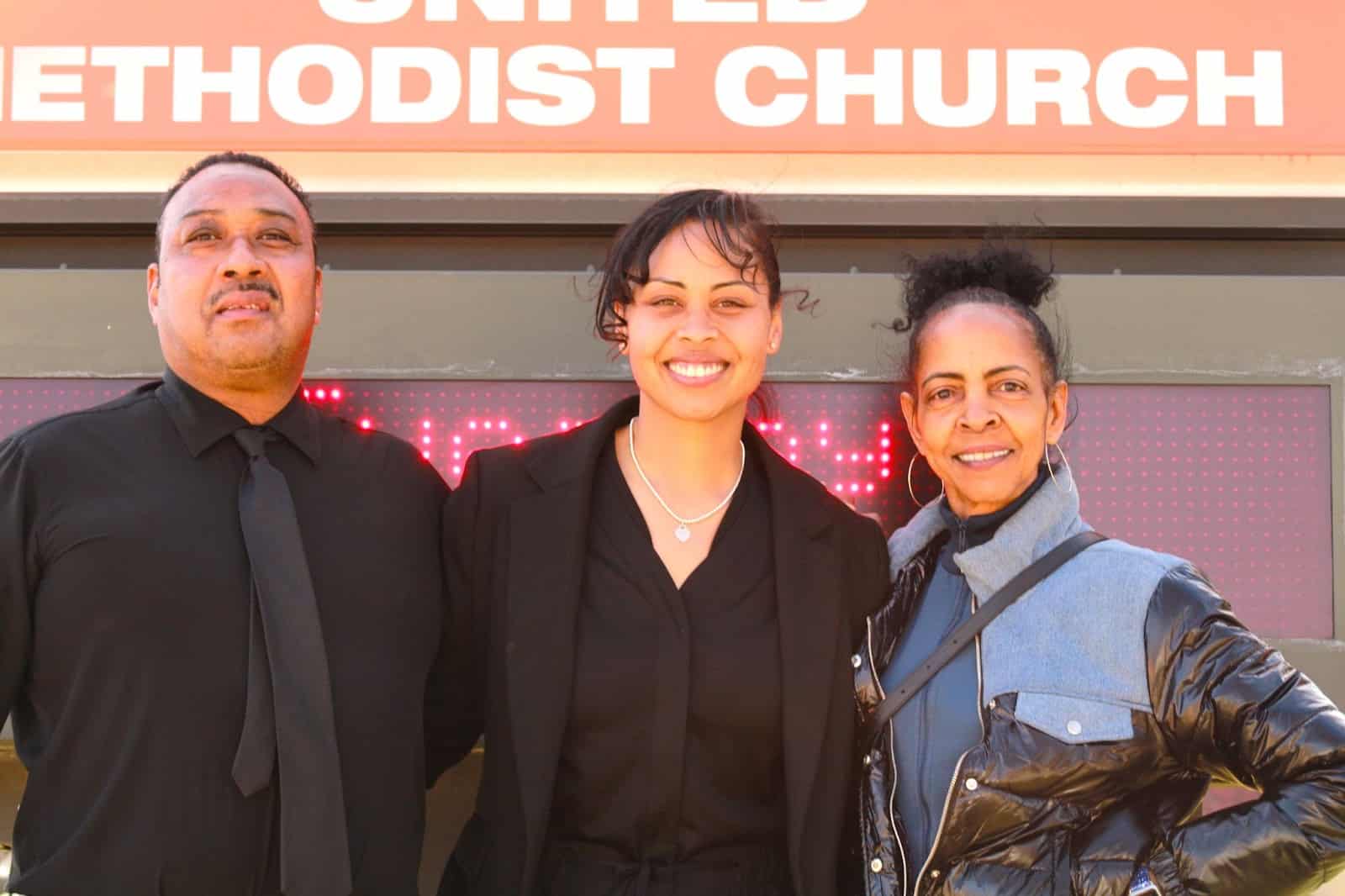
Chapman’s father, Charles Chapman, helped his daughter organize the event. Alongside Chapman’s mother, the three of them helped stuff over one hundred easter eggs full of candy and some with two dollar bills. Charles said that their family is happy to help provide a community gathering for others that may otherwise not be able to afford holiday activities.
According to Charles, that event is one that exemplifies his daughter’s commitment to her community. “I think she’s more than capable of getting the job done because she just loves God’s people, and she just wants to see a difference in the 2nd Ward,” Charles said. “I encourage everybody to get out and make their own personal vote, but at the same time, get a candidate that’s going to do something for you.”
Chapman echoed her father’s comments. Election day is fast approaching. Win or lose, she said she’s committed to giving back to her community as a resident or as alderwoman. “It’s about creating a movement for me to create a legacy,” Chapman said.
“Build a legacy. Teach people, Empower people. Make them feel good. Do things that they’ve never seen before. Give them hope. That’s what I’m here to do.”
We’re filling the void after the collapse of local newspapers decades ago. But we can’t do it without reader support.
Help us continue to publish stories like these
Authors

Related Articles
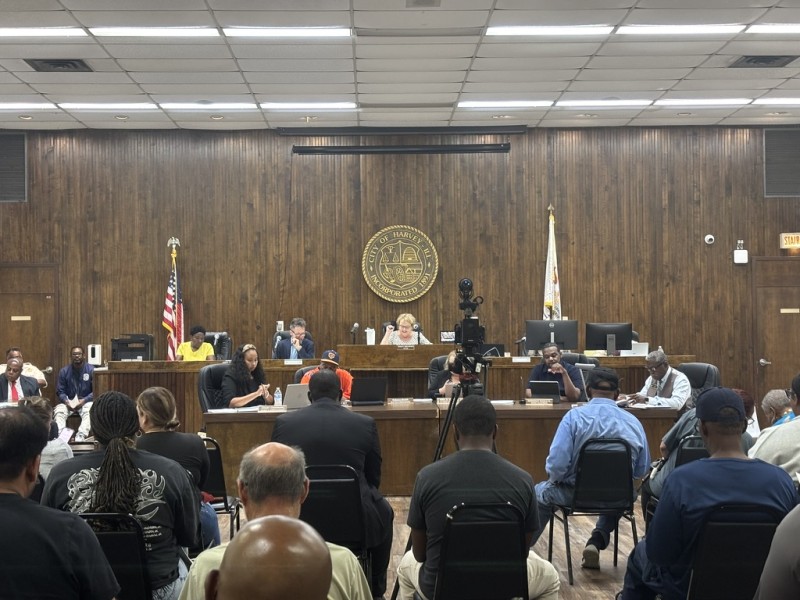
Harvey taps Anchor Heavy Civil to repair water main and replace flow meters
The city will employ Anchor Heavy Civil to install new flow meters at O’Connor Pumping Station and repair a water main near 151st and Morgan streets. City officials said these improvements will save thousands of dollars in water bills.
‘I’m basically begging’: Dixmoor Public Library District urges village to build library
Dixmoor Public Library District secretary Arletta Evans asked the village board again to approve the construction of its own library. It has been sharing a facility with the William Leonard Public Library District since 2011.
Harvey seeking $1.6 million loan from Cook County due to property tax bill delays
The city is seeking a $1.6 million loan from the Cook County Property Tax Bridge Fund due to delays in property tax bills. The program assists taxing districts that heavily rely on property taxes for their revenue.


