
Harvey alders approve ordinance regulating unscheduled bus stops
The move comes on the heels of numerous south suburban communities enacting policies to regulate unscheduled transportation of migrants.
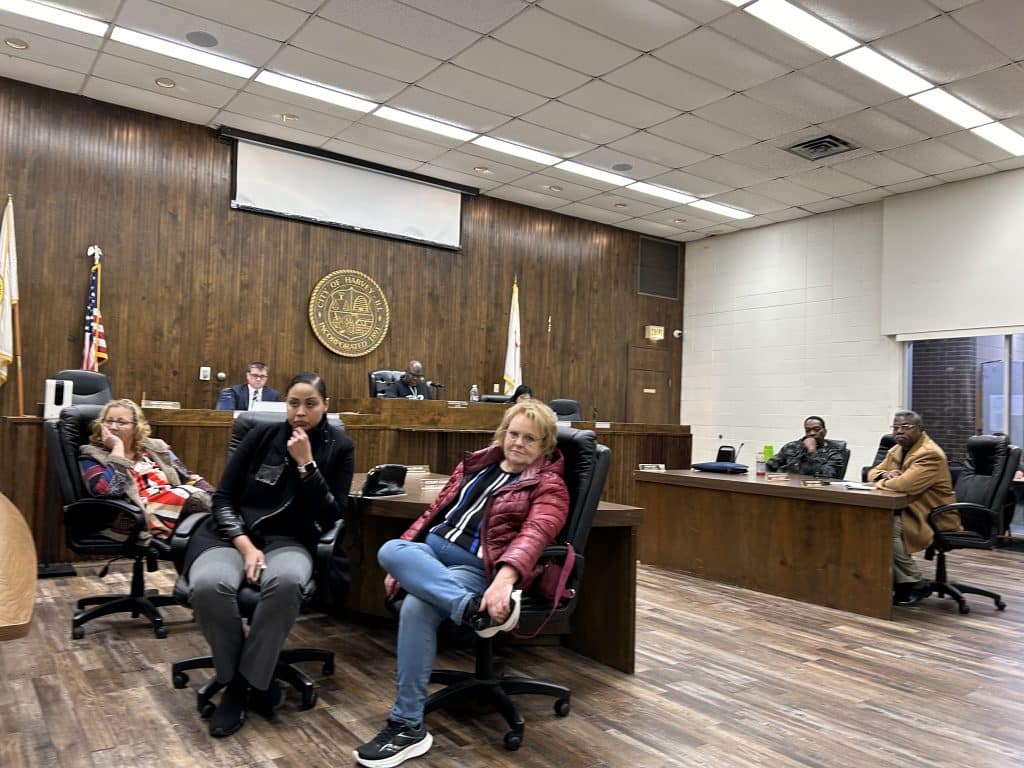
Even as alderpersons sought clarification, city leaders unanimously approved a new law to define and regulate unscheduled bus stops during a special City Council meeting last Wednesday.
Under the law, commercial vehicles weighing 36,000 pounds and over, carrying ten or more passengers, excluding round-trip transportation, will have to file an application with Harvey Police Chief Cameron Biddings should these passengers be disembarking in Harvey with no intent to re-board.
School buses, those providing door-to-door services for people with disabilities, and federal transportation are exempt.
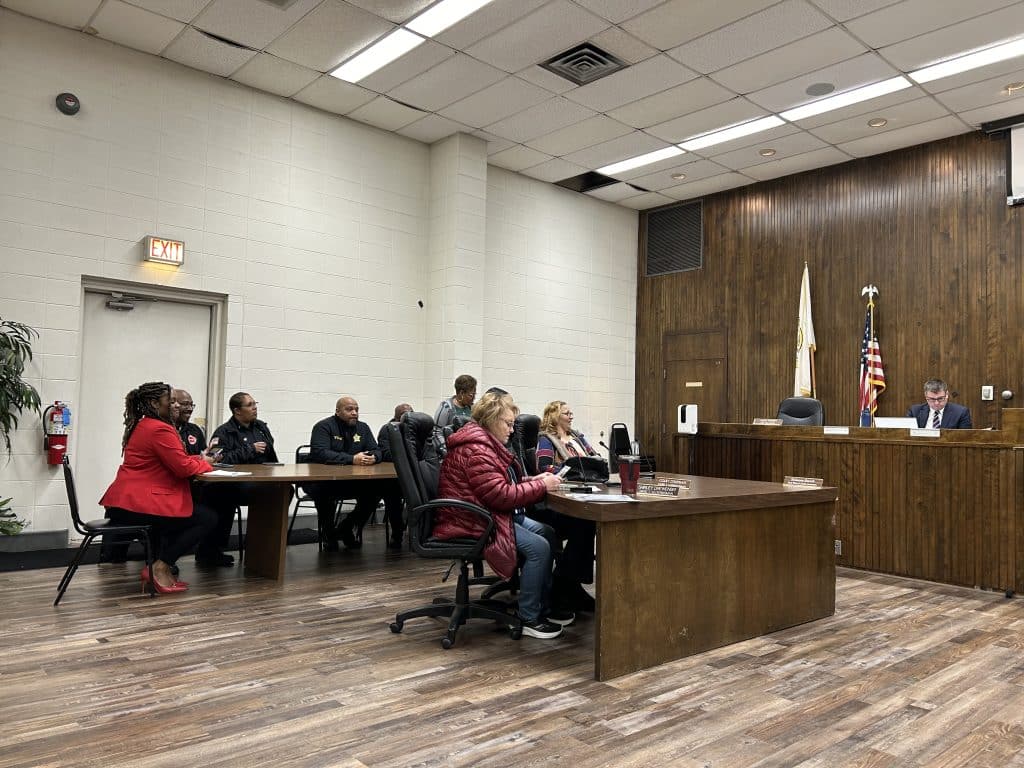
But the ordinance caused confusion for some, namely Alderwoman Colby Chapman (2nd) and Alderman Tracy Key (4th), who sought clarification about application details and fee structure. Only one agenda item was under consideration.
This comes as Texas Governor Greg Abbott continues to send migrants from the southern United States border to cities like Chicago. As Chicago leaders attempt to stem the flow of migrants, the governor’s office is sending them to suburbs nearby, such as Rockford, Wilmette, and Glen Ellyn, before they’re sent to Chicago.
No migrants have been sent to the south suburbs to date. However, municipal leaders in places like University Park and Tinley Park have moved to enact fines for operators that don’t issue advance notice to transport migrants with Matteson also trying to regulate the practice.
Harvey’s ordinance doesn’t explicitly mention migrants. And Clark denied that the ordinance was connected to the asylum seekers arriving on buses but rather “disembarking passengers” more generally, he said.
However, Clark did not deny that the ordinance was similar to other municipalities that passed such prohibitions.
What does the ordinance mean?
An owner or operator of a bus has to submit an application to Biddings five business days prior to the disembark date. Biddings will review within four business days. Drop-offs are allowed between Monday through Friday, 7am to 4pm, except for federal holidays.
The application—if one has even been established—wasn’t included in the Council’s meeting packets, records show.
Applicants will be expected to provide:
- Name of the bus operator;
- Identification of whoever “directed, paid for, or financed” the transport;
- Date and time to disembark;
- Passenger names and “along with copies of ID for said person to the extent such IDs exist or are in the possession of passengers;”
- Names and identifications of persons meeting and receiving disembarking passengers;
- Addresses of all transport locations to be used in Harvey; and
- A plan to care for, house, and feed passengers
If approved, the operator will receive a phone number to coordinate their arrival. If denied, they will receive that information in writing from Biddings within five calendar days. The applicant can submit a new application or appeal via the city’s adjudication court.
The ordinance states there’s a $1,000 fine per passenger for applicants that provide “materially false information.”
The measure also amends Harvey’s impound policies, giving Harvey police increased latitude to impound buses that violate the ordinance.
The fees are steep. Seemingly, bus operators found in violation will be fined $750 per bus per day the operator’s violating city code.
That’s on top of the administrative fines the city would issue for having to impound the vehicle—typically $500 but $1,000 in the case of a commercial vehicle—along with storage and towing fees.
Aldermanic confusion
“We’re trying to implement a program, but I don’t have specific details,” Key said. “We don’t have a process on how we’re going to do things. There’s no application attached to see who is coming or trying to come. I’m not in disagreement, but I think we need to explain more to the public about what’s going on.”
Key and Chapman had questions about items already outlined in the ordinance, to which Clark repeatedly retorted by asking if the two actually read the ordinance.
Alderwoman Colby Chapman (2nd) echoed Key’s concerns. “In other municipalities, they have to provide five-day notice. Are we following the same process? How would we be notified they are coming in? Do we have it on record that ‘you must submit this application prior to one week before your scheduled arrival’?”
Clark again asked if Chapman had read the ordinance. She said she had, but the application was not in the ordinance. Clark asked her to state what she knew about the ordinance.
“An ordinance that is seeking to go through for the weekend to stop or prohibit an overhaul of migrants,” Chapman retorted.
Cheryl Jones wanted to speak up during the public comment because another resident yielded their time to her but was denied and did not speak.
“They don’t know what he’s talking about, because the ordinance wasn’t clear,” Jones said. “They should not have voted and they should not have closed debate. They keep doing this over and over again. They let the mayor make them look stupid. Stop voting—just say no.”
Alderman Dominique Randle-El (5th) was absent from the meeting.
We’re filling the void after the collapse of local newspapers decades ago. But we can’t do it without reader support.
Help us continue to publish stories like these
Author

Related Articles

People over politics: How Kiana Belcher is fighting the Southland political machine
Dolton trustee Kiana Belcher’s most striking qualities are her bluntness and humility. She’s tapping into both to upend politics that prioritizes hubris over public service.

Cook County Assessor Candidate Questionnaire: Fritz Kaegi
Elected in 2018, incumbent Cook County Assessor Fritz Kaegi is seeking a third term in the March 17 primary.

Cook County Assessor Candidate Questionnaire: Pat Hynes
A volunteer firefighter and Lyons Township Assessor, Pat Hynes is a Democratic candidate in the March 17 primary for Cook County Assessor.

