
‘I double dare you to get involved’: Harvey launches advisory boards to boost community voice
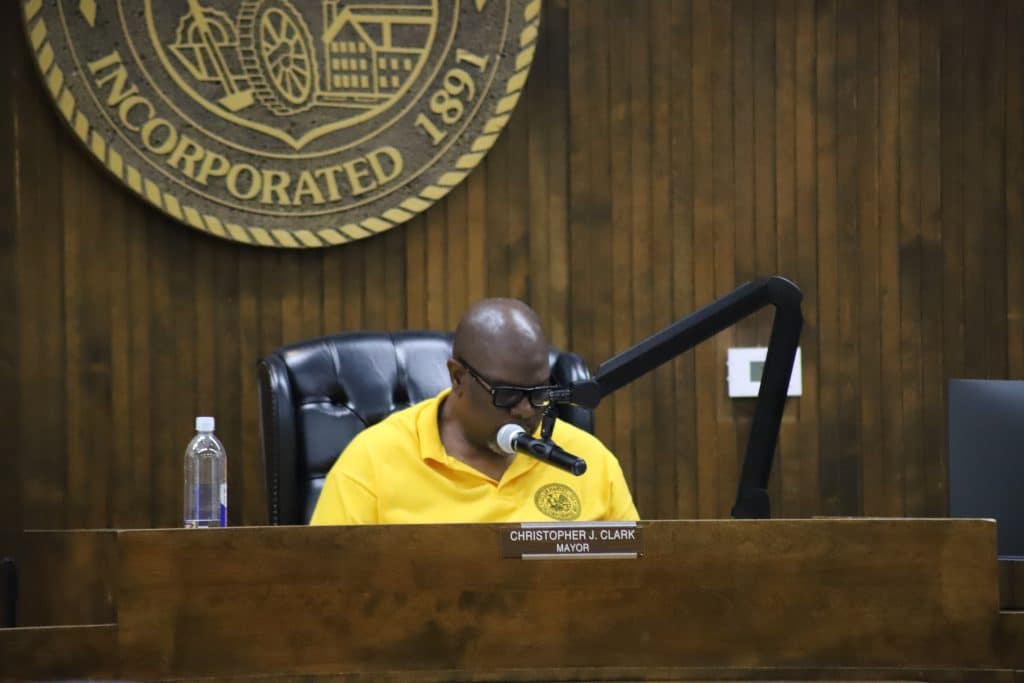
Mayor Chris Clark announced the launch of Citizen Advisory Boards to give residents a role in shaping city policy. Boards will focus on key community issues, including distressed properties and animal control. Applications are available in the mayor’s office now.
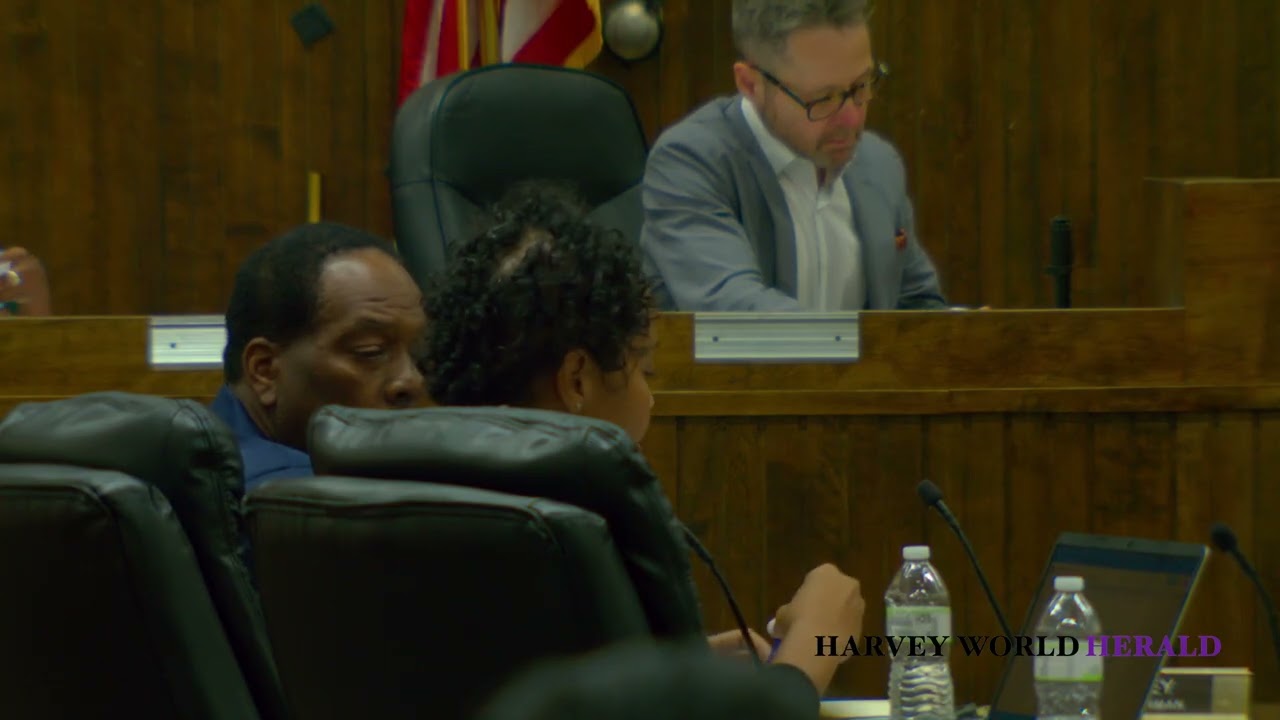
Harvey is launching a network of resident-led advisory committees, Mayor Chris Clark announced during the Aug. 25 council meeting.
The initiative, Citizen Advisory Boards, is meant to use residents’ expertise to build solutions and strengthen the city’s connection with the community. Clark said the boards will focus on property revitalization, city revenue, public safety, senior services, youth participation, and animal control. Each advisory board will include between five and 11 members, who will decide term length.
“In order for this city to move forward, we will have to do it together,” Clark said during extended remarks. “If you’re coming to try to help us find solutions, we want you.”
Clark stressed that residents who join will be expected to deliver more than ideas, presenting actual plans. “I double dare you to get involved,” Clark said. “Show us how much you love the city that you say that you love.”
In a follow-up email to the HWH, Clark said he was inspired to create the boards because residents have “a variety of knowledge and experience” that can help “create viable plans and move forward our great city.” He added that the boards will also give people a chance to learn about the “inner workings of government while building a stronger community.”
The mayor also stressed the importance of youth involvement during the meeting. In his email, Clark said youth committee meetings will be held in person with adult guidance. His administration will work with local high schools to encourage student participation.
Physical applications are available now in the mayor’s office. Clark told the HWH that the rollout moved “faster than execution,” which is why the application is not yet online. He said it may be added in the future.
Applications will be reviewed “as quickly as possible” with no fixed deadline. All advisory boards will follow the Illinois Open Meetings Act, ensuring the public has access to their discussions and recommendations. Completed plans will be presented to the council for review.
Official business
The council approved a five-year term renewal with Axon Enterprises to continue Harvey Police Department’s body-camera subscription.
As part of the SAFE-T Act, signed by Gov. JB Pritzker in 2022, Illinois required police officers in municipalities with populations under 50,000 to employ body cameras department-wide by Jan. 1, 2025. Harvey Police Department met the deadline years in advance. Some alderpeople questioned why the contract was not rebid while others expressed concern that delay could risk compliance.
The council also adopted a one percent municipal grocery tax to replace the state levy that will expire Dec. 31. Clark said the new tax will mirror the state’s rules and apply only to food items legally defined as groceries, not every product sold in stores. He added that many residents use subsidized food programs, and the tax would only cover purchases that qualify as grocery items.
Other resolutions approved by the council include a Cook County property tax incentive, an animal control vehicle donation, funding for street maintenance and reconstruction of 150th Street, planning for the Robey Trail, and authorizing an application for state dollars for the Central Park project.
Public comment
Residents continued the push for more transparency on finances, property upkeep, and public safety. Several said they felt city leaders were dismissive of concerns raised by the people who elected them.
Glynis James-Watson said she had repeatedly asked for budget documents and updates on the city’s financial status. She said she felt “taken for granted” and “condescended to,” adding that the public should not be blamed for asking basic financial questions about how tax dollars are spent.
Melville King Jr., a longtime resident of the 6th Ward, criticized the lack of ward meetings and pointed to problems with code enforcement. He also argued that taxpayers deserve clear answers about where city money goes and that officials should not hide behind staff or procedures. King Jr. also called out the administration for blaming unpaid property taxes on the city’s ongoing financial struggles, claiming — without referencing data — that most city funds are going towards police presence at council meetings.
“The reason you’re not getting any money is because you’re spending all of the money right here,” King said. “I appreciate these officers, but they shouldn’t be used as security guards attacking and arresting the citizens that voted for the administration who’s here.”
Ruby Donahue, of the 4th Ward, described calling Ald. Tracy Key (4th) after storm damage left a tree branch on a neighbor’s home in April. She said her call was cut short and her concerns were ignored. “As an alderman, you have to be responsible, accountable…and of course, be able to answer the inquiries,” Donahue said. “If you can’t do that, then don’t serve.”
We’re filling the void after the collapse of local newspapers decades ago. But we can’t do it without reader support.
Help us continue to publish stories like these
Author

Related Articles

People over politics: How Kiana Belcher is fighting the Southland political machine
Dolton trustee Kiana Belcher’s most striking qualities are her bluntness and humility. She’s tapping into both to upend politics that prioritize hubris over public service.
Cook County Assessor Candidate Questionnaire: Fritz Kaegi
Elected in 2018, incumbent Cook County Assessor Fritz Kaegi is seeking a third term in the March 17 primary.
Cook County Assessor Candidate Questionnaire: Pat Hynes
A volunteer firefighter and Lyons Township Assessor, Pat Hynes is a Democratic candidate in the March 17 primary for Cook County Assessor.

