
Chicago journalist Vee Harrison is certain ‘Hood Healing’ will deliver us from intergenerational trauma
The veteran journalist’s latest book is an anthology with some of Chicago’s leading voices in media. Harrison discussed the book and her family’s Harvey connections with the HWH.
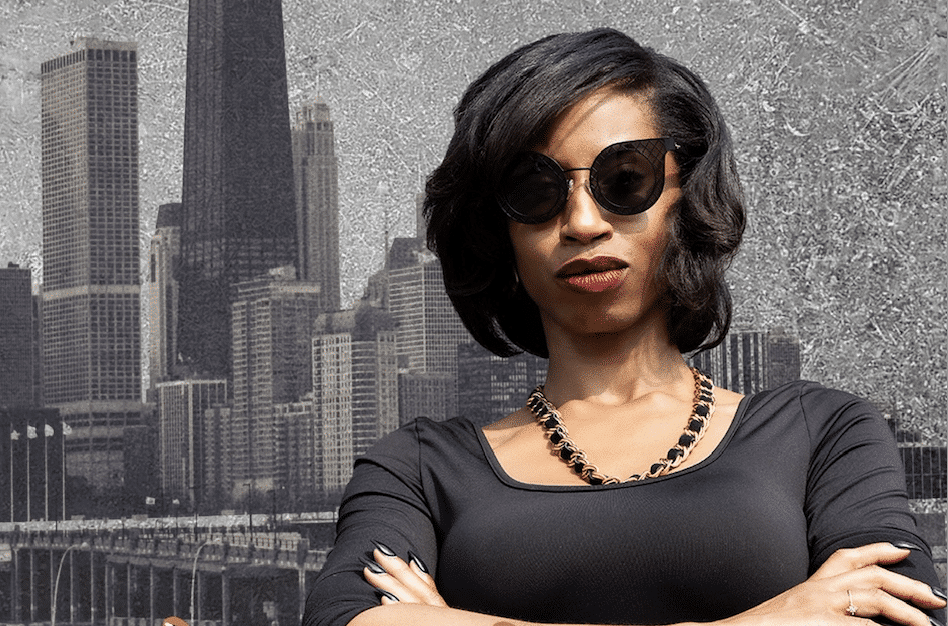
Journalism is often regarded as the first rough draft of history. It’s the role of the storyteller to capture moments in time as they occur. But in Chicago, some reporters are opening up, using new storytelling techniques to become more active players in the writing — and rewriting —of history.
In Vee Harrison’s new book Hood Healing, the veteran journalist interviews some of Chicago’s most prolific voices in media and culture like former Chicago Sun-Times reporter Evan F. Moore and Chicago State University professor Garrard McClendon as they reflect on their journeys of trauma and transformation.
It’s a particularly compelling storytelling device, where journalists — often tasked with hearing another’s story, shift gears to tell their own.
She even lays bare her own story of intergenerational trauma growing up on Chicago’s West Side in the Austin neighborhood, which has long struggled with gun violence, food insecurity, and housing segregation.
“It’s definitely time to have these conversations very comfortably because they are deeply rooted in the traumatic experiences that our ancestors dealt with, even in times of slavery,” the Columbia College Chicago alum said.
In the face of trauma, which Hood Healing makes the compelling argument stems from ancestral slavery, Harrison has been able to write about and develop a language of healing for herself, an experience she knows her mother Sandra, another ‘Healing’ interview subject, has not had.
“Harvey is a heck of a trigger,” for her mother Harrison said, who’s grandfather lived in Harvey. Harrison and her siblings would visit monthly during her childhood.
“Something I knew about my granddad, even growing up as a little girl, is he had a whole new family outside of my mom. The house that we would visit was her house.”
That experience was a source of deep pain for Sandra.
“I’m sure the abandonment that my mom survived to this day – she’s almost 60 years old – is a part of me, too,” she said.
Sandra did get her children into family therapy as they began fighting in the household, but it wasn’t something they kept up with as they grew older.
Growing up, Sandra didn’t vocalize her emotions much, not realizing how her own emotional struggles were impacting her children’s ability to express and deal with their own, she said.
“Our generation has the luxury of feeling things and going to counselors and writing about it.”
Now equipped with a language of healing, Harrison, now a mother of five, imparts her lessons learned on her children. “That’s something I’m very blatant about in my house: let’s talk about it, right now. What’s hurting?”
Structural inequities across Chicago and the Chicagoland area also create trauma by creating inhabitable circumstances that Black people must live with on a day-to-day basis — like gun violence, Harrison remarked. It’s a reality the country has not yet reckoned with, she said.
While Harrison agrees much progress has been made on race issues in America, a combination mismemory and rhetoric of a post-racial society still stunt the nation’s ability to stop “othering” or making a spectacle of trauma in Black Chicago neighborhoods, she said.
But it’s not enough to spotlight the present.
“Can we save some Black lives here and really talk about why we’re losing them?”
The media is not providing the level of analysis — and sensitivity — to report in a way that is humanizing and productive to understanding trauma across Chicago, she said. That issue hits home for Harrison.
In February 2021, Harrison lost her only brother to gun violence in Chicago. He was labeled a gang member, which Harrison said only created more hurt as opposed to showing her brother’s full humanity.
“That [narrative] can make somebody feel not hopeful,” Harrison said. “He was a father, too – of five children.”
In the early days of the COVID-19 pandemic, many around the nation blasted young people on Chicago’s West Side who threw a house party without masks or social-distancing.
Outlets like TMZ said 1,000 people were in attendance. Only 100 were there, the party-throwers told Harrison, who’s critically-acclaimed story on the party for The Triibe dove deeper than the conversation in mainstream media surrounding the event.
They also revealed to Harrison the house party was conceived in an effort to mourn the loss of two friends.
“Empathy is needed to understand why things are happening,” Harrison remarked on what is missing from mainstream news that creates a disconnect with Black audiences.
On how to produce change and real results for people struggling with gun violence and trauma, it is going to take an uncomfortable reckoning of the past, connecting that history with the present, and “elected officials, the community, the mothers of the hood.”
We’re filling the void after the collapse of local newspapers decades ago. But we can’t do it without reader support.
Help us continue to publish stories like these
Author

Related Articles
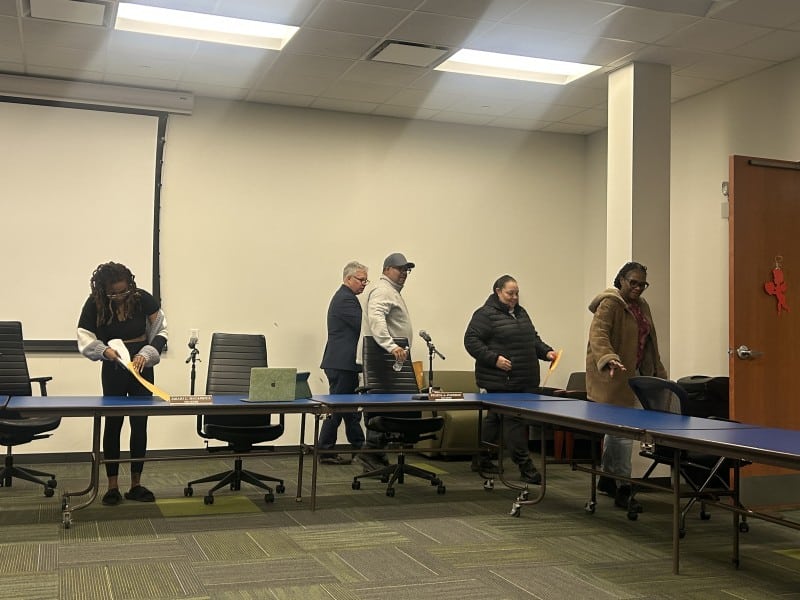
Harvey library trustee blasts board for six-minute meeting
Harvey Public Library District trustee Chapelle Hooks criticized the board for holding two meetings this year that totaled 10 minutes of official business.
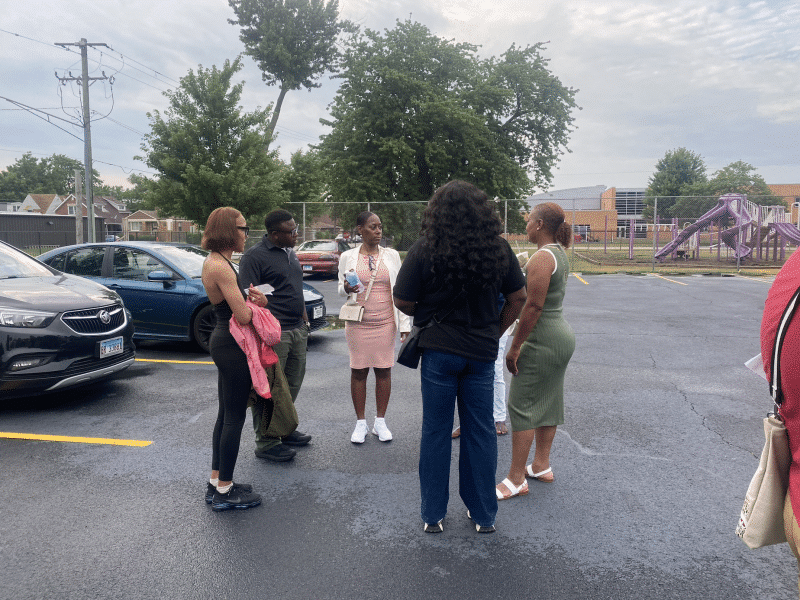
Harvey Park District blocking commissioners from performing duties, lawsuit alleges
Longstanding commissioners and the executive director have blocked La’Keisha Brown-O’Neal, elected in 2025, from accessing facilities, her email, and documents, according to the complaint.
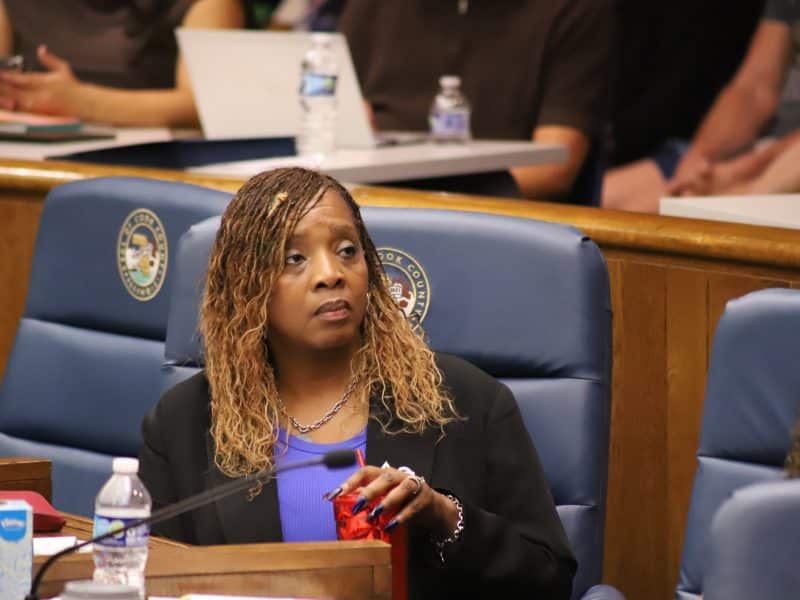
Kisha McCaskill filed for library board seat where husband is president
She has a paid library contract that translates to $2,000 a month. She eventually withdrew from the race for a two-year term, but not before daughter Amari McCaskill filed as a write-in candidate for that very seat. As a county commissioner, Kisha McCaskill represents the Southland and Chicago’s Far South Side.

