
Coolidge Middle School to debut $4.2 million art and science facility in 2026
A maker’s lab, black box theater, and rehearsal studios will be built on the school’s second floor.
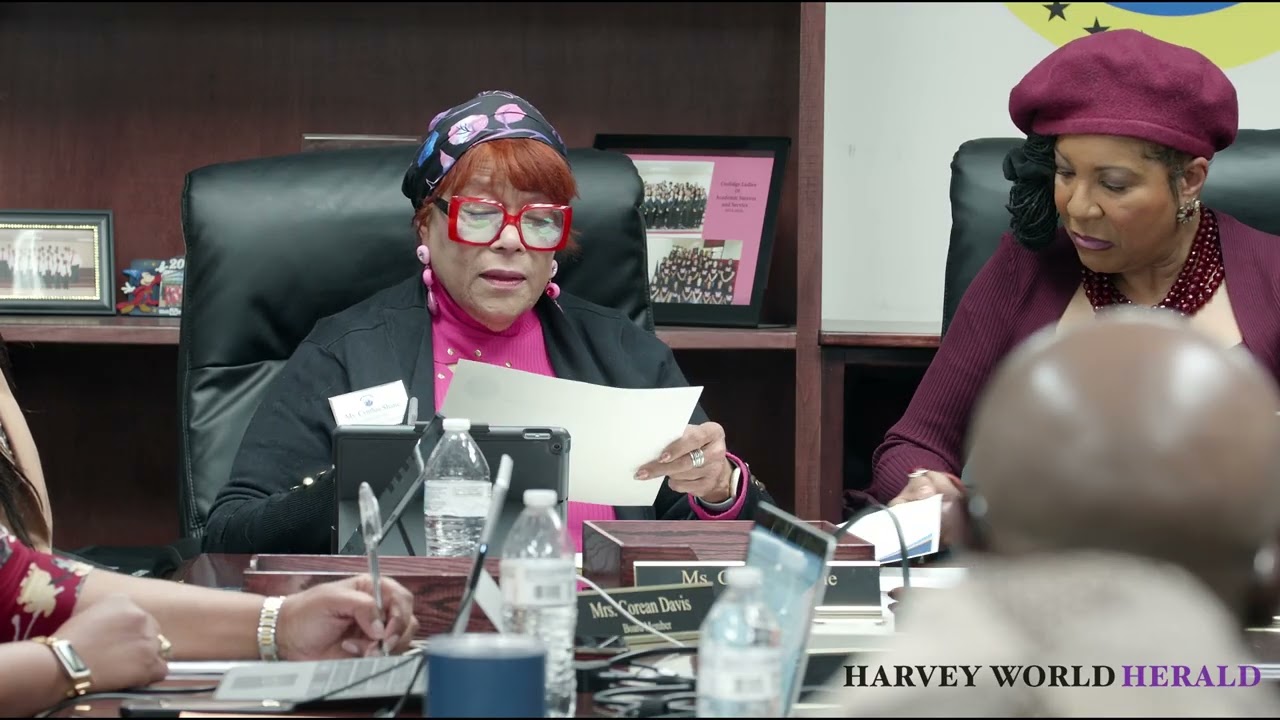
The worlds of theater, dance, music, audio production and hands-on science are opening up at Coolidge Middle School, set to launch a fine arts department. Construction will begin this summer.
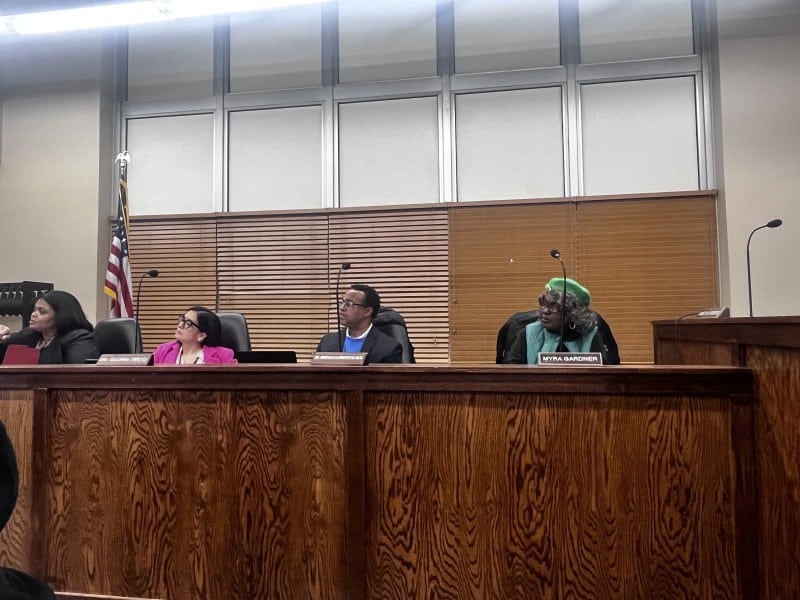
“This would put us ahead of almost any other elementary school district in this area,” South Holland School District 151 Superintendent Teresa Hill said during the board’s regular meeting Jan. 6. “[It] would allow us to provide for our students, something that community children only get if they’re going to a private school.”
Hill sees the new space as an opportunity to expand Coolidge’s extracurricular and weekend offerings for all students throughout the district. Mario Moody, music program director at Coolidge and Madison Elementary School, anticipates this project leveraging the momentum of the district’s current arts program while simultaneously investing in its future.
“We’re trying to go younger, give [students] more exposure, so by the time they come to middle school level, these kids are doing things that the high schools don’t even do,” Moody said. “So, it’s kind of building for the next five or 10 years.”
District architect Jim Maciejewski presented sketches of the proposed facility which will repurpose the “largely unused” second floor of the building. The facility will house fine arts spaces such as a black box theater and studios dedicated to dance and string orchestra.
Additional amenities include a digital editing and podcast studio and a STEM maker space. Board members intend to collaborate with the Griffin Museum of Science and Industry in Chicago and the South Suburban College in South Holland on the maker space.
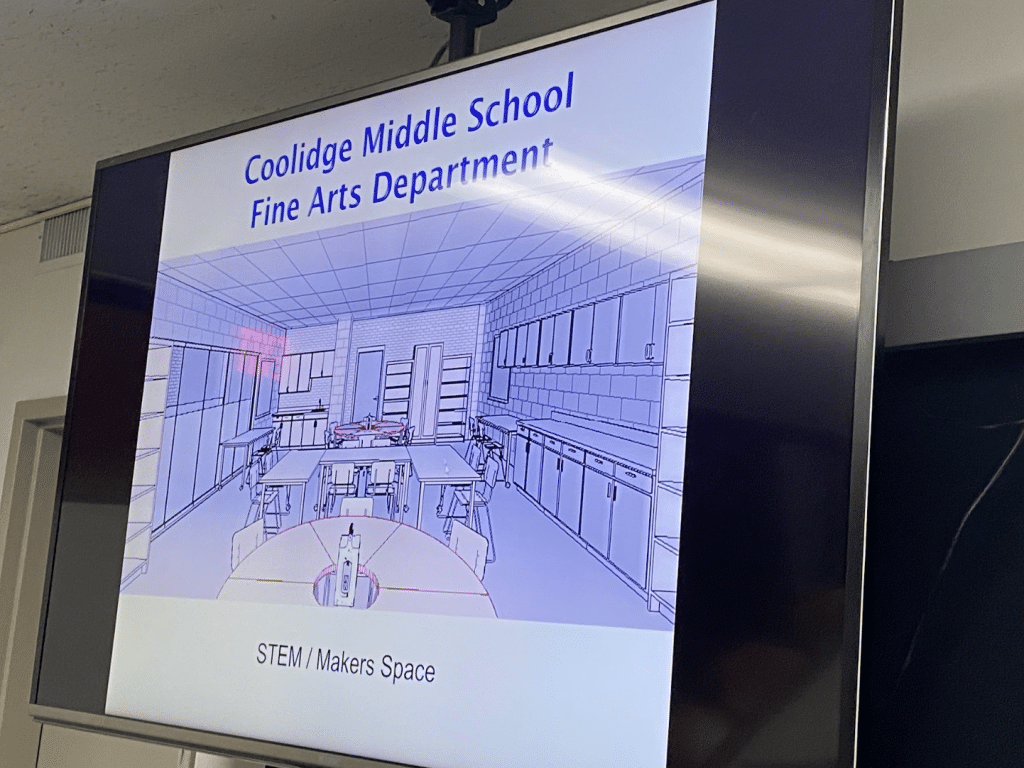


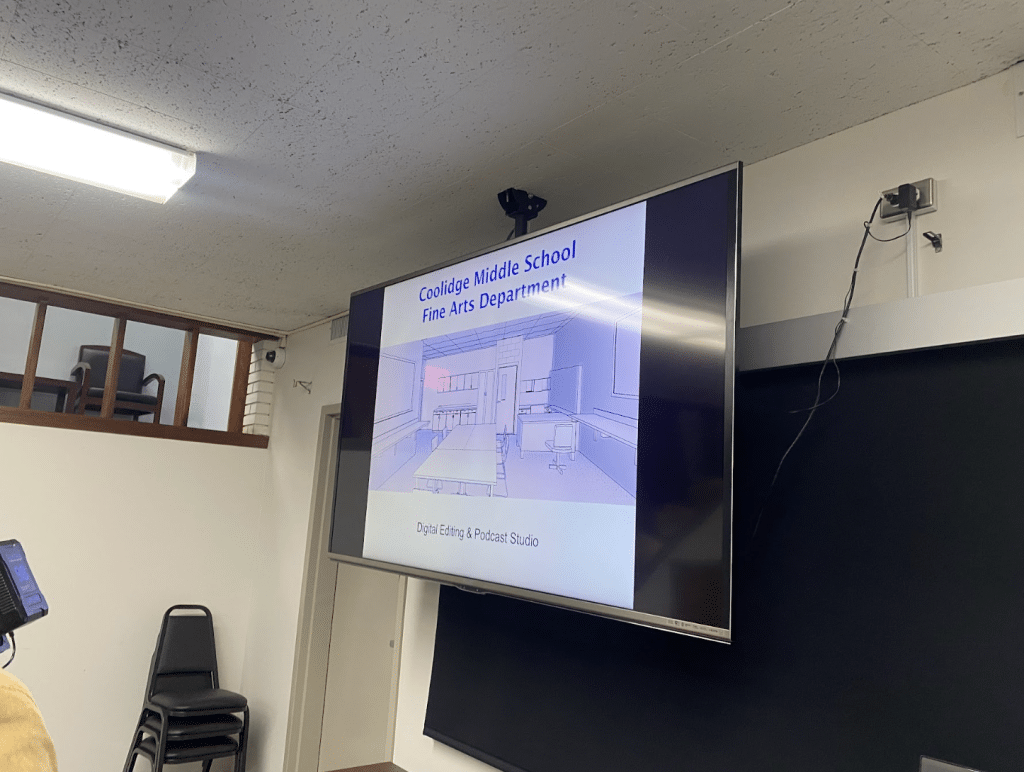
“I like this because this is a true [STEM] program: science, technology, engineering, arts,” president Patrice Burton said. The renovation, estimated to cost around $4.2 million, is expected to be completed by May 2026, according to Maciejewski. The bidding process for the construction contract is now open, and the board will award the contract by May. The groundbreaking will be in July.
Official reports and business
Tax bills are paid out in the calendar year following. Tax bills for 2022 are paid in 2023. And tax bills in 2023 were paid out throughout 2024. Bills are paid in two installments — one in March, the other in August.
In 2022, the district levied $14,925,000. The net collection rate was 87.8 percent, according to an internal property tax collections report.
In 2023, the district levied $14,100,000. According to the district’s administrative report from that evening, “overall tax collections amount to a net amount of $12,162,112 million, which amounts to 90.0% of the total extension.”
But that’s down from collection rate data typically observed by this time of the calendar year.
“We’ve had a significant amount of property tax collection since our last meeting, which is a little bit behind what we were last year,” said Assistant Superintendent Ernest Clark, who presented the district’s finance and operations report.
Collection of the second installment continues. The filing deadline for those seeking to appeal their bills with the Cook County Board of Review was Jan. 7.

For south suburban homeowners, 2023 bills saw a 20 percent median increase, according to county data. In some communities, that reflected a near 30-year high. That made the board’s decision to reduce the district’s property taxes on residents by adjusting its 2024 levy with the county serendipitous.
If a taxing district experiences a decrease in its assessment that results in a refund to that governing body, the state can require it to increase its levy by the adjustment of the prior year, according to state law.
However, the board decided to retroactively reduce its most recent property tax request by $237,118 instead of keeping that refund, taking that burden off of taxpayers.
“The board has made a habit of abating those supplemental levies that are created by this law,” Hill said. “This resolution would update that full supplemental levy to ensure that those costs are not passed on to our taxpayers.”
In an unanimous vote, the board agreed upon a measure that could bring electric school buses to the district. First Student, the district’s contracted bus company, received additional funding from the Environmental Protection Agency to transition a portion of their vehicles from diesel to electric through the Clean School Bus program. The board approved sending an application for SH SD151 to be a recipient of these electric buses.
Board member Corean Davis brought up concerns about the weight of the new vehicles wearing down the city’s side streets.
“The side streets are not sustained enough [for] heavy vehicles, and electric vehicles are heavier than the diesel vehicles that we’re currently using,” Davis said. “Municipalities may want to know that we’re moving in that way.”
We’re filling the void after the collapse of local newspapers decades ago. But we can’t do it without reader support.
Help us continue to publish stories like these
Author

Related Articles
SH SD151 renews financial agreement with Thornton Township Trustees of Schools amid reporting inconsistencies
Outgoing Superintendent Teresa Hill explained that local school districts had the option to depart from the Thornton Township Trustees of Schools and manage their finances elsewhere, but South Holland School District 151 decided to continue the partnership.
HSD 152 still awaiting the remainder of property tax revenue from Cook County
Harvey School District 152 has focused on reducing spending while Cook County government continues to disburse property tax revenue across the area.
WHD SD147 board approves near $3 million bond for pool upgrades
Restoration of the defunct swimming pool is expected to cost around $2.7 million, according to the district’s chief school business official.

