
Prairie State students call for changes to Pioneer Book Bundle
The college’s Student Government Association surveyed students and held a listening session to gather feedback on the Pioneer Book Bundle. Respondents raised concerns over high costs and difficulties opting out of the bundle, if preferred.
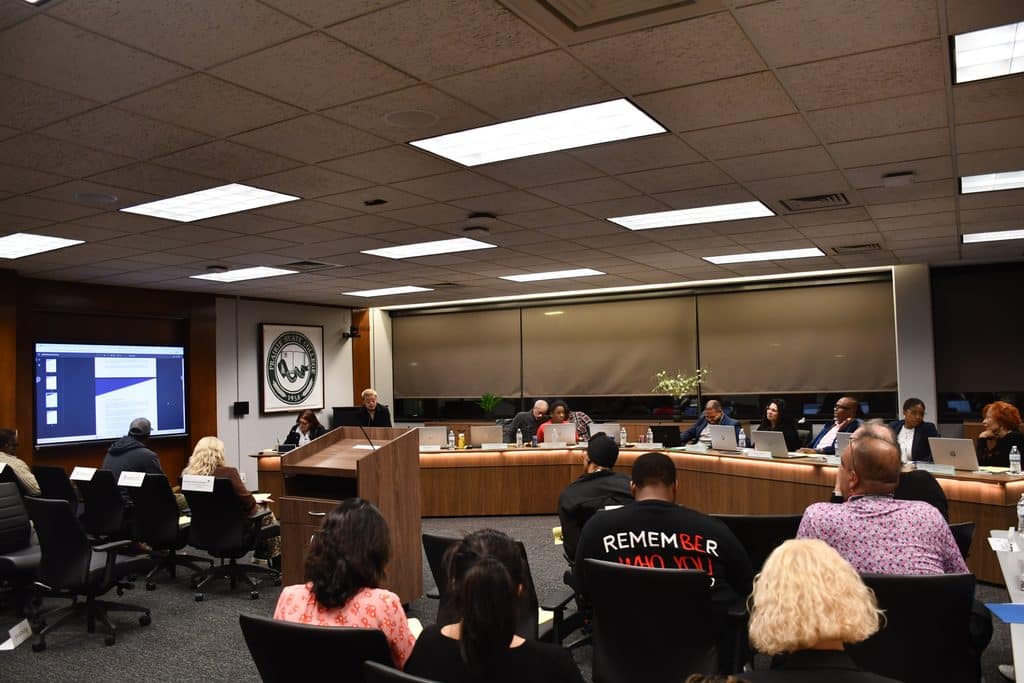
During Prairie State College’s Oct. 27 board meeting, student trustee Teddy Villasenor presented a survey conducted by the Student Government Association (SGA) showcasing criticisms of the Pioneer Book Bundle. The bundle provides course materials to students through the college’s current vendor, Follett Higher Education.
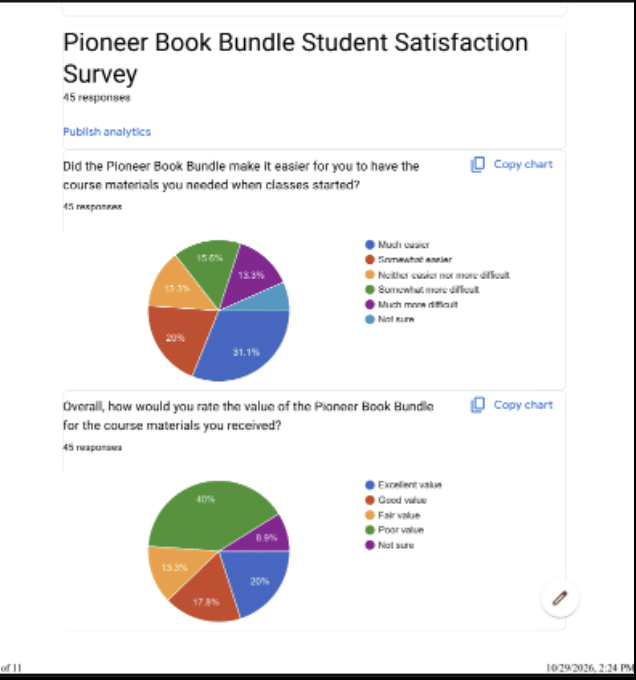
According to a survey of 45 respondents and a listening session, nearly half of respondents said the bundle made it easier for them to locate and receive their materials. However, they also described difficulty in opting out of the bundle if they didn’t need it. Respondents also reported being charged for materials professors either don’t use, use sparingly, or provide for free, and certain academic programs not being included.
“A little over half of the students don’t like the book bundle at all or don’t even know how to use it,” Villasenor said.
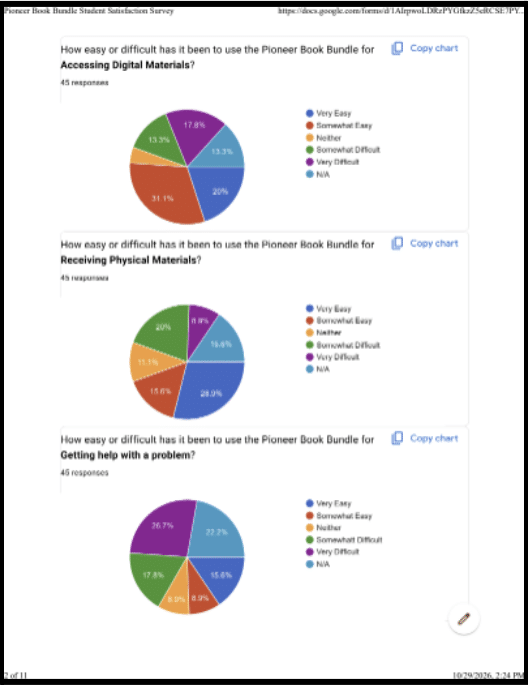
According to Villasenor and the student responses, students are automatically enrolled in the bundle when they sign up for courses, and money is automatically transferred from financial aid to pay for the books.
But with the rise of businesses like Amazon and the popularity of professors providing students with free materials, there is a desire for cheaper, easier-to-use alternatives. Villasenor discussed this idea using the SGA treasurer as an example.
“She calculated how much she would be spending on her books if she bought them herself from Amazon, […] and the total for that was about $300,” Villasenor said. “If she had gotten that from the bookstore, it would be closer to $500.”
Based on anonymous comments gathered in the survey, students recommended re-implementing freshman orientation to help them familiarize themselves with the bundle. Students also suggested that easily accessible opt-out features need a comeback since the college switched from Barnes & Noble to Follett.
“Students should have to opt in to the book bundle, not out,” Villasenor said.
College provost Derek Shouba expressed doubt about alternatives, fearing that continued use of Amazon and free options might discourage vendors from working with the college.
“The college will always remain open-minded about improving the Book Bundle for students,” Shouba wrote in an email to the HWH. “But yes, I believe that ending the Book Bundle would both raise the cost of campus store books and make vendors less interested in providing students with traditional (but costly) campus store student support services.”
“Prairie State is doing our best to keep costs down for students, even adopting free alternatives to published materials whenever possible,” Shouba wrote. “However, vendors respond to the higher [education] environment by setting their own conditions for remaining on campuses.”
Prairie State hires new comptroller and adopts 2026 property tax levy
The Prairie State board approved the hiring of new comptroller Matt Foor, effective Dec. 4, for a salary of $150,000 a year.
College president Michael Anthony hopes that bringing in Foor will increase forward momentum toward financial recovery. “One of the most important things a college can do in a period of financial recovery is to have strong financial leadership and accounting leadership,” Anthony said to the HWH.
Prairie State experienced a boom in enrollment after the Great Recession before steadily declining between 2012 and 2020 by 30 percent, the HWH previously reported. Following the COVID-19 pandemic, enrollment fell by another 20 percent. A lack of state funding under former Governor Bruce Rauner and a tuition freeze in 2018 further compounded the issue.
The college has a projected budget deficit of $502,900, an improvement over a projected deficit of $8 million in August. Staffing cuts and other financial restrictions, like forgoing raises, helped shrink the deficit.
“I have a contract here, but I turned my raise down, Anthony said. “I turned down the raises for the managers and administrators [on their behalf].”
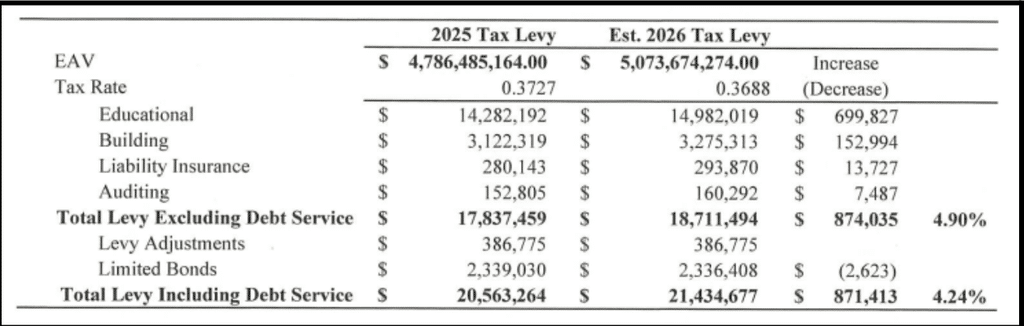
The board also approved the 2026 tentative property tax levy for both Cook County and Will County. According to documentation provided by Prairie State, the tax levy, excluding debt service, would total $18,711,494, a 4.9 percent increase from the 2025 property tax levy. That’s the highest a public body can increase the tax levy from the prior year without having to hold a public hearing and seeking state approval.
The levy is not yet finalized and the board can decrease the amount requested, reject it altogether, or make other changes, Anthony said. Decisions on the levy are set to occur in December.
We’re filling the void after the collapse of local newspapers decades ago. But we can’t do it without reader support.
Help us continue to publish stories like these
Author

Related Articles
Riddled with potholes, WHD SD147 eyes repairing 155th St. near Kich Elementary School
School board president Michael Smith wrote a letter to Harvey requesting the city repave the street. After receiving a rejection, the district is looking into funding the repairs itself.
TTHS D205 approves agreement with county sheriff for event security
Thornton Township High School District 205 will partner with the Cook County Sheriff’s Office to provide additional security services at school events. Meanwhile, the district will begin trademarking logos and likenesses for all three schools.
Prairie State facing $500,000 budget shortfall in 2027 following personnel cuts
Prairie State College’s previously faced an $8 million shortfall in its tentative budget. The college narrowed the amount with major reductions in personnel spending following a controversial sweep of staffing cuts, a move officials described as “a great sacrifice” to the institution.


