
EyeOnWater helping Phoenix residents avoid high water bills by spotting leaks
The free online tool allows users to track water usage and set up leak alerts.
Water leaks can lead to exorbitant bills for Phoenix residents. But a new tool is helping to identify leaks before they become costly for consumers.
EyeOnWater allows Phoenix residents to track their water usage in real time and set up leaks alerts for free.
Nonprofit organization Badger Meter helped develop the resource, and Elevate helped the village implement it. Phoenix is Elevate’s first direct partnership on water leaks, having connected through broader water-based programs it already operates throughout the region. Their relationship emerged after village officials expressed an interest in improving its water affordability practices.
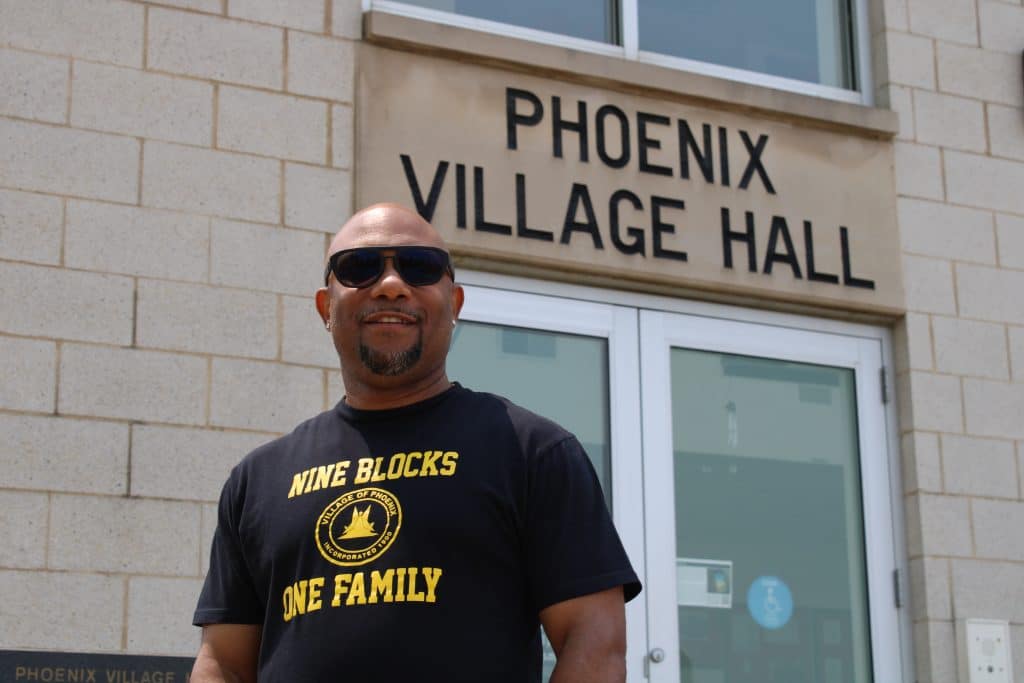
Residents may identify problems 20 to 30 days late, after water has possibly already leaked hundreds of gallons, said village trustee Erik McCullar, who oversees the village’s water operations.
A minimum bill is $69.28 a month, according to McCullar. An extra two or three thousand gallons of water use a month “can raise your bill exponentially,” he said. “We want you to pay your water bill, but my main concern is for the residents to stop the bleeding.”
Using the website version, Phoenix residents can create an account here. There is also a mobile application.
The severity of a leak can vary, but can contribute to higher water bills for residents and has long-term effects. “Let’s say your normal bill is $70, and it goes to $250. Now, you might take three, four, five months to pay that or you may never catch up,” McCullar said.
There’s a trickle-down effect for the village economics and fiscal health, McCullar added: delinquent water bills put pressure on the village’s ability to pay its water supplier, South Holland.
“It takes money for anything to run, and when you don’t pay your bill, and we still have to pay South Holland, then that’s money we don’t have,” McCullar continued. “If we’re in the red in the water now, that means money has to come from another department or the general fund to keep that afloat. But now you’re taking money from someone else.”
Aging infrastructure in a village as old as Phoenix, incorporated in the early 1900s, can contribute to leaks. Old toilets and faucets. Rusted pipes with holes in them. The village has done much to demolish abandoned buildings, construct new housing, and secure grant dollars to invest in infrastructure.
But that work is strained when residents fall behind on water bills — many of them accruing due to unidentified leaks. Raising water rates. Budget reductions to account for declines in revenue. Service disruptions. Those are all indirect outcomes as a result of leakages.
Phoenix, nicknamed “9 Block” for its size and quaint nature, is also marked by its elder population. The village is launching a communications campaign replete with door-knocking, print, and video efforts to ensure residents, especially seniors, know how to use EyeOnWater. Officials are also hoping younger, more technologically savvy folks help their elders access and use the application, McCullar said.
Elevate staffers meet with trustees once a month, providing communications and technical assistance. McCullar called their assistance “heaven sent.” The nonprofit is also behind LeadCare, a county program helping home-based childcare providers replace lead lines for free.
We’re filling the void after the collapse of local newspapers decades ago. But we can’t do it without reader support.
Help us continue to publish stories like these
Author

Related Articles

People over politics: How Kiana Belcher is fighting the Southland political machine
Dolton trustee Kiana Belcher’s most striking qualities are her bluntness and humility. She’s tapping into both to upend politics that prioritize hubris over public service.
County commissioner committed ghost payroll at Harvey library, trustee alleges
Harvey library trustee Chapelle Hooks reported paid library consultant and Cook County Commissioner Kisha McCaskill (5th) to county and state lawyers alleging McCaskill paid a library administrator who had already been terminated.

A month later than usual, first installment of property tax bills due by April 1
The first installment of property tax bills are usually due in March. However, county leadership pushed state lawmakers for an extension to give taxpayers more breathing room after the second installment of 2024 bills were late.

