
SH SD151 pre-K nearly full as South Holland Community Center ends program
Enrollment for South Holland School District 151’s preschool program surged after a local community center ended its pre-K program. Meanwhile, the district will implement a state-required wireless device policy by the 2027-28 school year.

South Holland School District 151’s full-day preschool classes are nearly full after the South Holland Community Center discontinued its pre-K program.
Vanessa Bradley, the district’s public relations coordinator, said Taft Elementary School should prepare for children who otherwise would have attended the community center. Taft expanded their preschool program to offer full-day classes in 2025.
“We did find out today that the South Holland Community Center has discontinued their pre-K program, so they are no longer holding any pre-K classes indefinitely,” Bradley said. “Taft will be ready to receive those students since we now have full-day pre-K.”
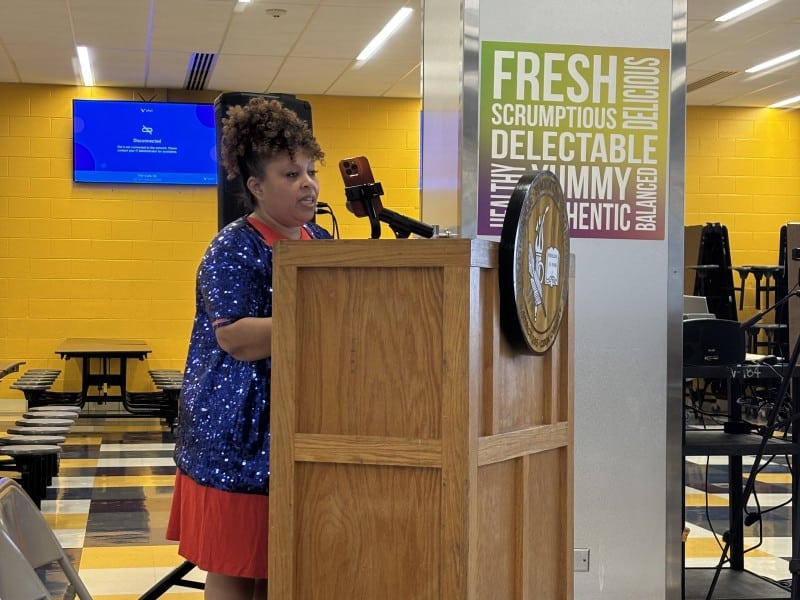
Taft principal Christine Wilson told the school board on Aug. 3 that only a few openings remained. “I just want to share that I’m so excited to start full-day preschool in all of our classes this year,” Wilson said. “The classrooms are pretty much all full. We have about two or three spots left.”
Officials did not say how many children were affected or what the district would do if the remaining seats were filled.
District begins planning state-required cellphone policy
Madison Elementary School principal Jerald McNair discussed Public Act 104-0657. Signed by Governor Pritzker on July 28, the law requires districts to adopt a wireless communication device policy by the 2027-28 school year.
“The state is really moving in the right direction as it relates to legislation,” McNair said.
The law holds exceptions for medical, special-education, and language translation purposes and bars enforcement through fines, suspensions, expulsions, or police. Districts with an existing policy may keep it in place until the 2030-31 school year at which the policy must be modified to meet law requirements.
McNair said parents must be involved as the district decides how to handle violations. “Consequences for parents are very difficult, and [state politicians] oftentimes leave that to us, so we have to be strategic.”
Superintendent Kathryn Varner said the district will hold a parent workshop after updating its current policy. McNair also referenced the Children’s Social Media Safety Act, which establishes age-assurance systems and default safeguards for minors using covered online platforms.
Board committee reports
Madison Elementary School’s generator cannot be used until October, said Phillip Neal, the district’s safety and facilities director. Nicor Gas scheduled a utility test with the school but then canceled the day of, and testing cannot occur while students are in the building.
“[Madison] has a generator, but they can’t use it,” Neal said. “So if the power goes out over at Madison, it won’t be operational because [Nicor] has to test it before we can actually use it.”
Neftali Sanchez, the district’s curriculum and assessment director, said 192 students qualified for the district’s gifted program, which was introduced last year. According to Sanchez, 53 of the students reached the 90th percentile or higher in multiple subjects, and 13 students reached the 90th percentile in every single assessment that they took in their grade level.
“This district has a lot of brainiacs out there,” Sanchez said.
Technology director Christopher Roth announced new classroom management programs for the schools’ iPads and laptops as well as a new account automation system. Roth said the automation system will reduce technical errors, misspelled names, and security issues.
“People can’t add users. They can’t get into my account and add users,” Roth said. “So when it’s automated, it just works no matter who’s here and who’s not here.”
Special services director Ayana Hartzol said the committee is working to finalize more positions, but the search for a bilingual speech-language pathologist has been “very difficult.”
We’re filling the void after the collapse of local newspapers decades ago. But we can’t do it without reader support.
Help us continue to publish stories like these
Author

Related Articles

SSC board passes tentative 2027 budget
South Suburban College delivers another balanced budget for the seventh consecutive year and tensions arose over the subject of an honorary, non-voting board member who would offer advice and insights.
Calumet City Ald. Monet Wilson to sue TTHS D205 alleging district violated her civil rights over football camp
She alleged Thornton Township Schools District 205 board president Nina Graham barred Wilson from attending the camp, which Wilson was not an organizer of, “for political purposes.”

WH SD147 appoints Daryll Lacey as principal of Lincoln Early Learning Center
Lacey previously served as principal of Creative Communications Academy in Calumet City for three years.


