
‘Bring all our forces’ : Harvey’s new interim police chief sworn in
Also, Harvey City Council passed a measure to declare a natural disaster state of emergency, eyeing a declaration that would unlock federal assistance. Comptroller Louis Williams addressed rising water and garbage fees.
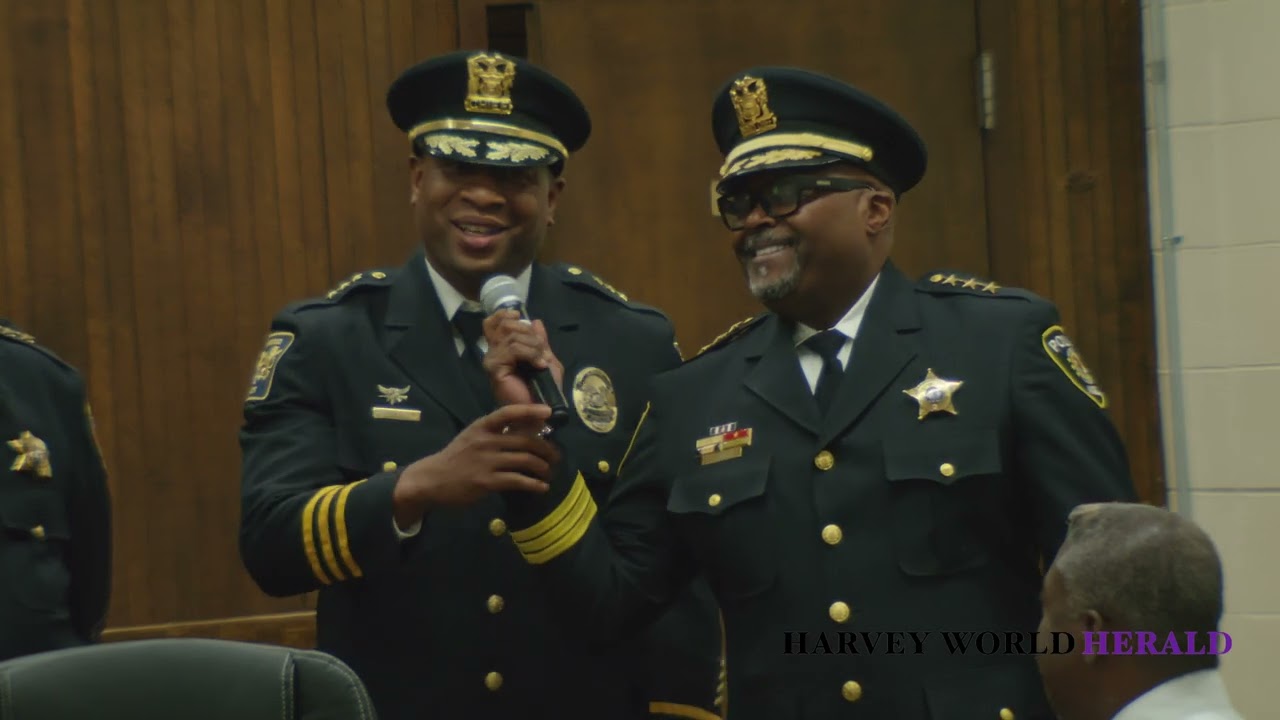
Harvey Police Department has new leadership after Dale Mitchell was sworn in as Harvey’s Interim Chief of Police at the July 13 Harvey City Council meeting.
In an impromptu speech, Mitchell said that is his 34th year in law enforcement and he comes from “a law enforcement family.” He said his wife, mother, brother-in-law, and nephew all work in or have retired from law enforcement. He most recently served as top cop in University Park for three years.
“I just want you to know that what comes with me… [is] the support of our neighboring towns and our law enforcement family,” said Mitchell. “And we’re going to bring all our forces and marshal all our resources to help the citizens of the City of Harvey,” he said.
Mitchell is the president of the South Suburban Association of Chiefs of Police, and many members of the association came to the meeting in his support and stood by Mitchell and his family as he was sworn in.
“The support that Chief Mitchell is getting isn’t just because he’s a great guy…He’s our current president of the South Suburban Chiefs Association,” said Malcolm White, former Harvey police officer and now Country Club Hills Police Chief.
“That means that… he was voted in office by his fellow chiefs to be over 65 south and southwest police departments. He coordinates [and] assists us in coordinating advanced police services. That’s our president, Mr. Dale Mitchell.”
“I think we hit the jackpot,” said acting mayor Shirley Drewenski.
Mitchell replaces Cameron Biddings, who is no longer a chief as of July 1, according to the Illinois Law Enforcement Training and Standards Board, and could not be reached by press time. Biddings was a part-time police officer in Dolton, before deceased former mayor Chris Clark tapped him to lead Harvey as a deputy chief. Clark promoted him to interim chief even after Biddings allegedly punched a teenager in the chest while handcuffed at Thornton Township High School in October 2021. Biddings then oversaw the department as it leveraged resources to intimate and antagonize Clark’s critics. But he is now director of the city’s real-time crime center.
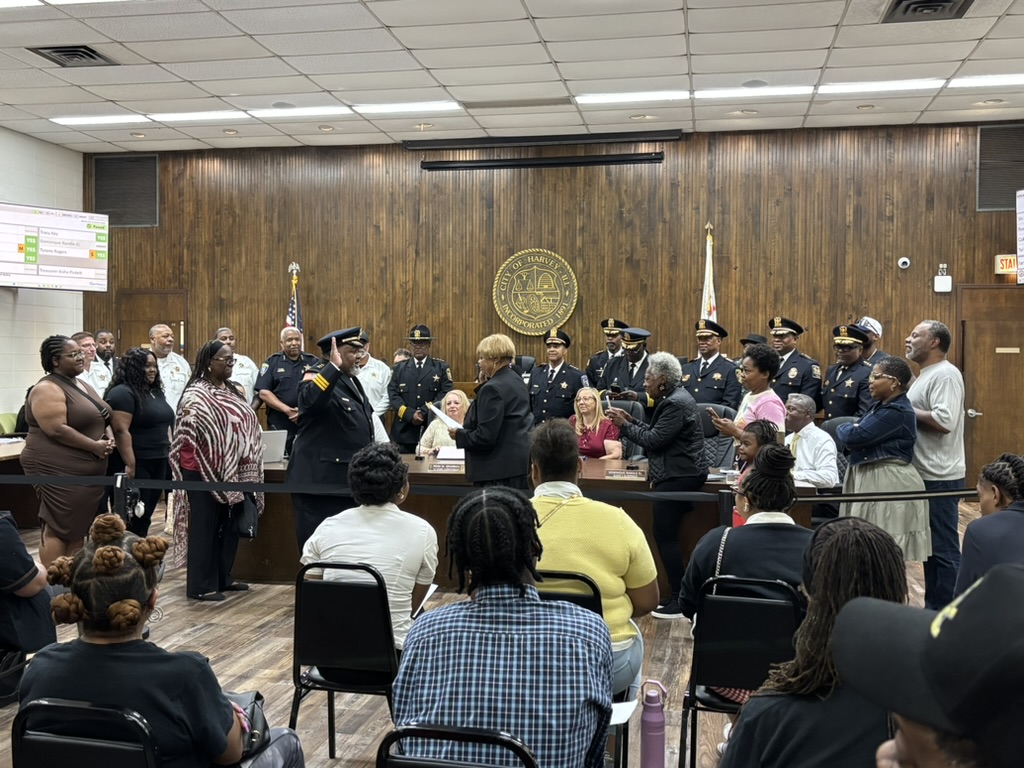
City Council addresses flood response efforts
Several government officials reported on the city’s ongoing emergency response efforts after the severe storms and flooding on the weekend of July 4.
Fire Department Chief Howard Fisher said that the city weathered 60 mile per hour winds and over six inches of rain during the storms. He said the department was able to see some incidents in real time with the city’s Flock camera system, and that they responded to 41 emergency calls. Calls included reports of downed power lines and trees, fires, and residents trapped by water or in basements.
Fisher also noted the Proclamation Declaring a Local State of Disaster that the Mayor signed on July 9 and has submitted to Cook County for approval. Once signed, the proclamation will be submitted to Governor Pritzker, who can send it to Washington, D.C. for presidential approval.
The proclamation is the first step in greater disaster assistance to Harvey. According to the Federal Emergency Management Agency, if President Donald Trump determines a natural disaster is beyond the capabilities of state and local government response, he can declare a major disaster. The declaration triggers eligibility for federal assistance programs, including funds for emergency and permanent work.
“Trump and the governor don’t have a good relationship, so he already denied a lot of the requests from the state of Illinois,” said Fisher. The city hopes it can get state and county approval to get local assistance. “We’re not reacting. We’re not waiting for Illinois to declare this a natural disaster. We’re active on our own,” Fisher said.
Fisher and Drewenski urged residents affected by the storm to keep a journal with lists of trashed items and to take photographs to document damage. Residents can also contact ComEd to be reimbursed for expenses related to power outages, like spoiled food, and residents should keep every related receipt if possible.
The Red Cross is assessing damage and distributing cleanup kits to Harvey residents in need, said Yasmin Clinton from the American Red Cross. Their south suburban office typically fields 300 calls in a year, Clinton said, but received 258 calls from Harvey residents alone after the storm. After FEMA certification, the Red Cross can provide additional resources and also bring in other non-profits to help with tree removal and other individualized needs, she added.
Public Works Superintendent Rick Seput said the department has removed 47,180 tons of debris and 18 trees and branches from the storms, so far. He also said that the Mayor asked for and received used vehicles and water pump donations from the Village of Homewood to aid cleanup efforts. Mayor Drewenski also said she is discussing acquiring additional surplus vehicles with neighboring towns.
Free lead pipe removal for Harvey residents
Harvey is working to comply with Illinois’ Lead Service Line Replacement and Notification Act, requiring municipalities to find and eliminate all lead service lines. Interim City Administrator Crystal Richardson said the city is quickly approaching the deadline to identify lead service lines, “in the Phase One area, which encompasses 150th to 154th Street from Page to Loomis.”
City officials will be knocking on doors and host a town hall to answer questions on July 29 at 6:00 P.M.
Lead pipes can typically cost $17,000-$20,000 to replace Richardson said, but the service is free through this program. She also said participating residents will receive a $25 gift card or water bill credit. Residents can learn how to self-identify their pipes via the July 29 town hall or the city’s website. They can also schedule a representative to identify them by calling (708) 331-0032.
Water and garbage fees increase
Comptroller Louis Williams addressed resident concerns on increased utility bills, namely water and garbage. Rising rates from suppliers can be passed on to residents, although Harvey has tried to avoid that as much as possible, Williams said.
“Our view on water is only trying to make enough profit where it can maintain the water system, and a small amount is set aside for hopefully what they call reserve or replacement,” he said. Williams said they hope to move water mains from the street to the parkway, both to improve water quality and to make servicing leaks easier.
Harvey purchases its water from Chicago and has increased water bills by 220 percent since 2000, Williams said. Harvey has tried to absorb those increases where it could and not pass on costs to residents. However, this year the water bill increased by 1.89 percent.
Williams said that dumping puts strain on the city’s finances, and they average $15,000 a month on dumping cleanup. He also said that Republic International has increased trash removal rates by 26 percent from 2020 to 2026, and Harvey has increased utility rates by 26 percent from 2017 to 2026.
We’re filling the void after the collapse of local newspapers decades ago. But we can’t do it without reader support.
Help us continue to publish stories like these
Author

Related Articles
South Holland police seeking help in fatal hit-and-run near Babe Ruth baseball field
Officers responded to a call of a man lying along railroad tracks on 173rd St on August 15. It is believed he was struck and dragged some distance, a village spokesperson said in a news release.
After enforcement concerns rise, Harvey City Council sends animal ordinance to legislative committee
The bill would reduce the total allowable number of household pets in Harvey from seven to three. But disagreement emerged over whether the city actually possessed abilities to enforce the ordinance.
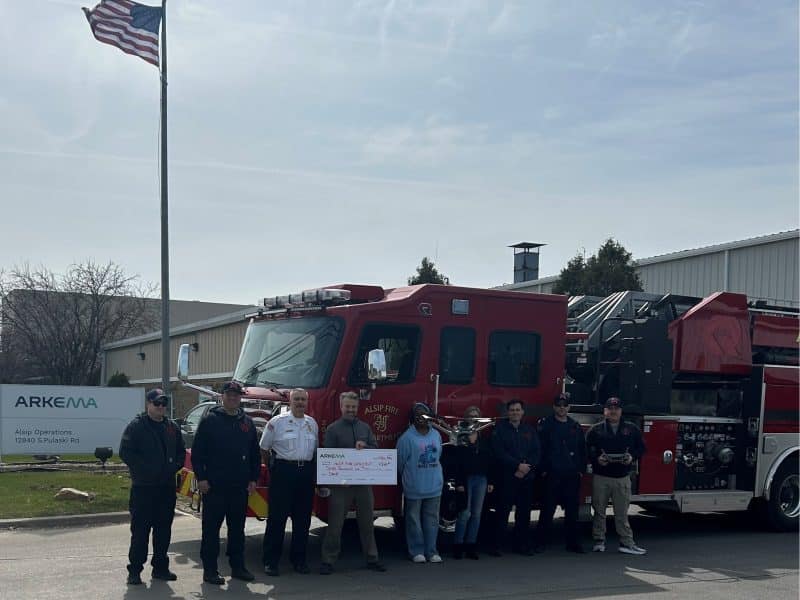
Arkema manufacturing donation elevates drone technology at Alsip Fire Department
The global company made a $7,000 donation to the department toward the purchase of a new drone. It’s the latest move in a longstanding relationship that supports public safety.


